
My first closet was 30 inches wide, one rod, one shelf, and a light bulb that worked when it felt like it. For two years I managed it by what I called “the avalanche method”: shove everything in, close the door fast, and hope nothing fell on me.
Every morning I stood in front of it holding a sweater that had been folded into a shape I did not recognize, wondering where my other boot was.
What finally fixed it wasn’t a custom closet system or a weekend of luxury shopping. It was about $60 in cheap, boring supplies and one slightly humbling afternoon of taking everything out.
If you’re looking for closet organization ideas on a budget, that’s the good news: most of the improvement comes from using the space you already have more cleverly, not from buying a bigger one.
For the broader picture, my guide to home organization ideas covers the rest of the house, and this post zooms in on the closet. If you’re new to living on your own, my apartment living for beginners guide explains what to tackle first.
Below are 20 ideas, roughly in the order I’d do them, with rough costs and the honest trade-offs. Almost everything is renter-friendly, which matters if you can’t drill into the walls. There’s a comparison table of budget organizers in the middle, a sample budget by price tier, and FAQs at the end. Prices are rough and vary by store and city, so use them as a guide.
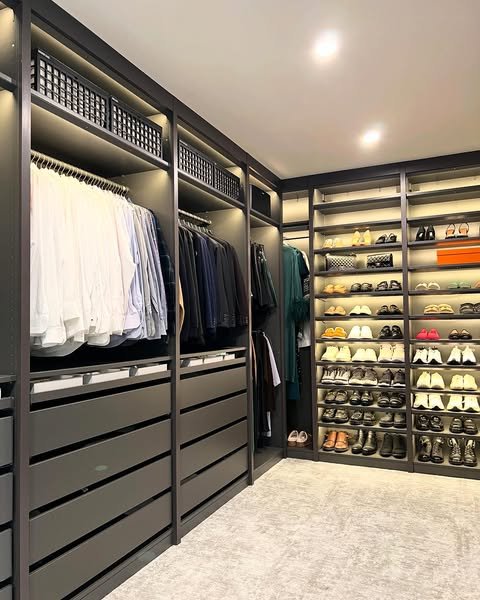
1. Empty the Closet and Declutter Before You Buy Anything
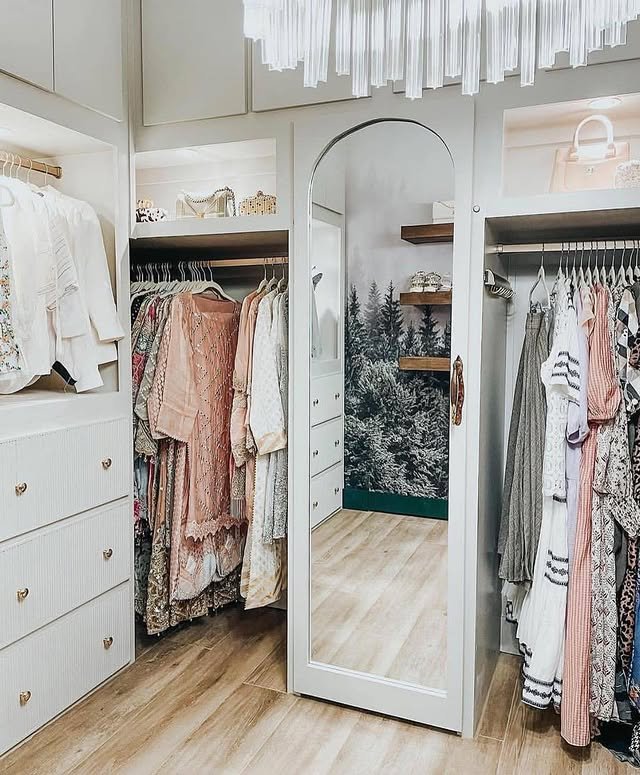
This is the step everyone skips, and it’s the one that saves the most money. Take everything out, put it on the bed, and sort it into four piles: keep, donate, sell, and toss. You can’t organize what you haven’t edited, and buying bins for clothes you never wear is just expensive storage for clutter.
A good test is simple: if you haven’t worn it in a year and it doesn’t have a clear reason to stay, let it go.
Be gentle with special-occasion pieces and sentimental items, and store those separately if you want to keep them. If you’re setting up your first place, my first apartment checklist shows what you actually need to own in the first place.
Pro tip: Turn all your hangers backward and flip them the right way after you wear something. In three months you’ll see exactly which clothes you never touch.
2. Measure the Closet and Plan Zones Before Shopping
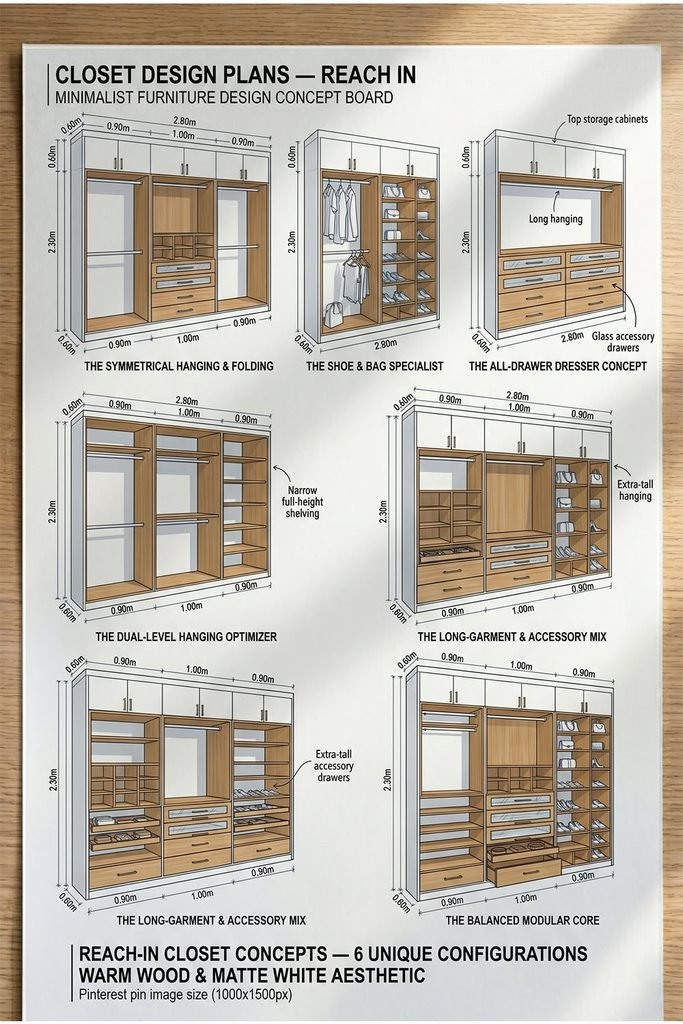
Measure the width, depth, and height of the closet, the rod height, and the shelf depth. Write the numbers down, because organizers are sold in fixed sizes and “fits most closets” is a gamble.
Then divide the space into zones: hanging clothes, folded clothes, shoes, accessories, and seasonal items.
I draw a quick sketch on paper and note what goes where. It takes ten minutes and prevents the classic mistake of buying three bins that almost fit. Planning around real measurements also lets you spot wasted space, like the empty gap above the top shelf or below short hanging items.
Note where the closet door swings too, since it affects where the bed and dresser can go, a point I cover in my studio apartment layout ideas.
3. Swap Bulky Hangers for Slim Ones
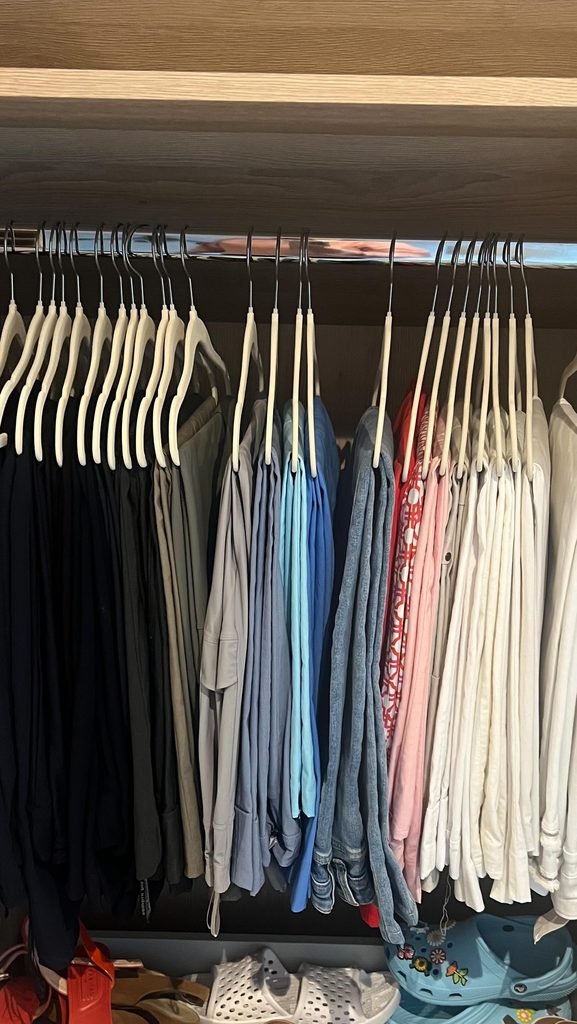
This is one of the cheapest upgrades with the biggest return. Thick plastic or wooden hangers take up a lot of rod space, and switching to slim, non-slip hangers can free up several inches and make the closet look instantly neater. A pack of 30 to 50 slim hangers usually runs about $10-30.
A friend of mine, Rosa, did this in her tiny rental closet and said it was like gaining an extra foot of rod space for the price of a pizza. Use matching hangers throughout so everything hangs at the same height, which also makes the closet feel calm.
Avoid cheap wire hangers for heavy coats, since they can stretch shoulders.
4. Double Your Hanging Space With a Second Rod
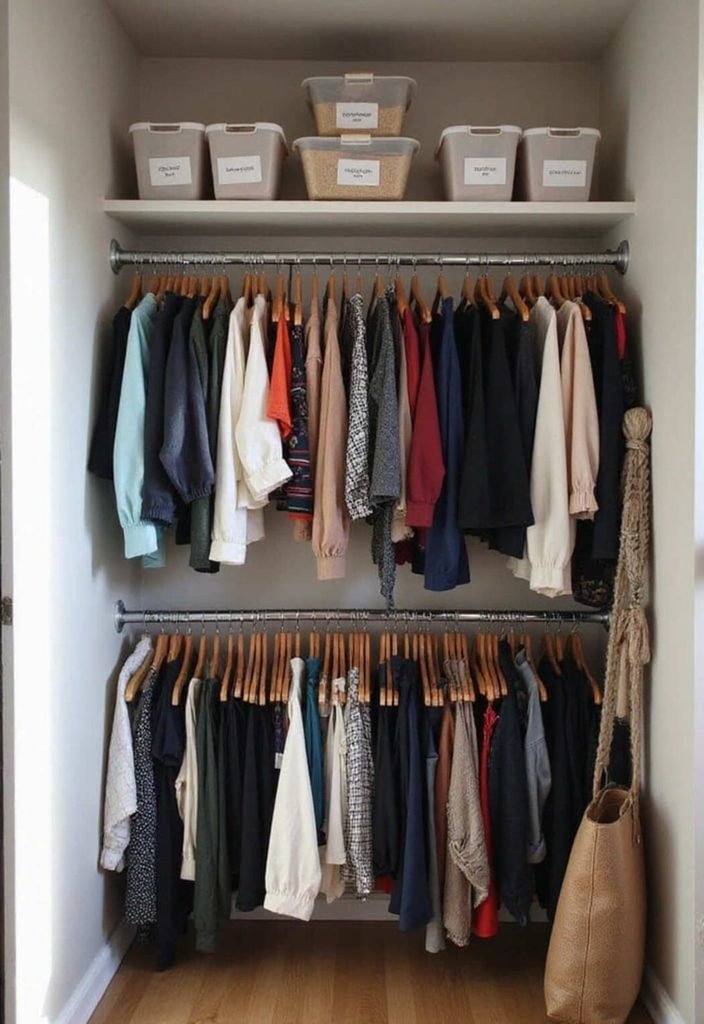
Most closets have a lot of wasted vertical space under short items like shirts and skirts. A hang-over or hook-on double rod adds a second level for about $10-30 with no tools. It can nearly double what you can hang in the same footprint.
Check the weight limit and make sure the closet rod can support both levels. Keep heavier items on the top rod and lighter ones below.
For more ideas about using height, my guide on how to maximize vertical space in a small apartment goes through safe, renter-friendly ways to use your walls and ceilings.
5. Add a Tension Rod for Extra Hanging or Shelf Support
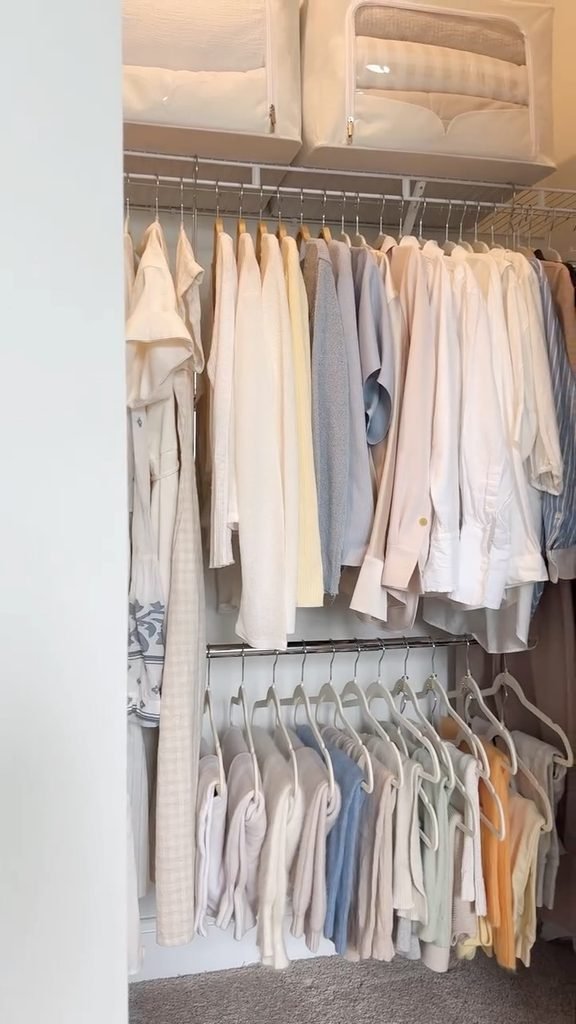
A tension rod wedged between the closet walls costs about $8-25 and needs no drilling. Use it to hang scarves, to create a second rod for short items, or to hold a row of cleaning supplies if you use the closet for more than clothes.
In a very narrow closet, a tension rod can be the only practical way to add anything.
Check the weight rating and don’t overload it. Tension rods work best for lightweight items and can slip if you push their limits.
If you rent, it’s also a good way to avoid the damage that leads to many of the common apartment renter mistakes I see people make with drilling and adhesives.
6. Use Shelf Dividers to Stop Stacks From Collapsing
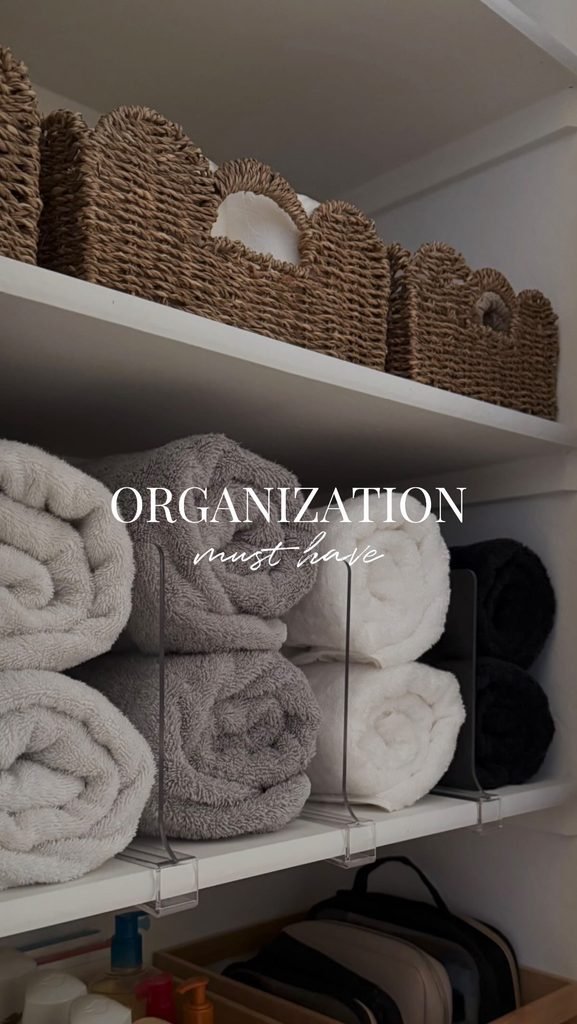
Folded sweaters and jeans on an open shelf tend to slump into each other. Simple acrylic or metal shelf dividers keep stacks neat and separate, and they cost around $8-20 for a set.
They also make it easier to pull out one item without wrecking the pile.
If you don’t want to buy dividers, use sturdy bookends or a few upright magazine holders. Stack heavier folded items like jeans at the bottom and lighter ones like tees on top, and don’t stack higher than you can comfortably reach.
7. Hang a Fabric Organizer With Shelves From the Rod
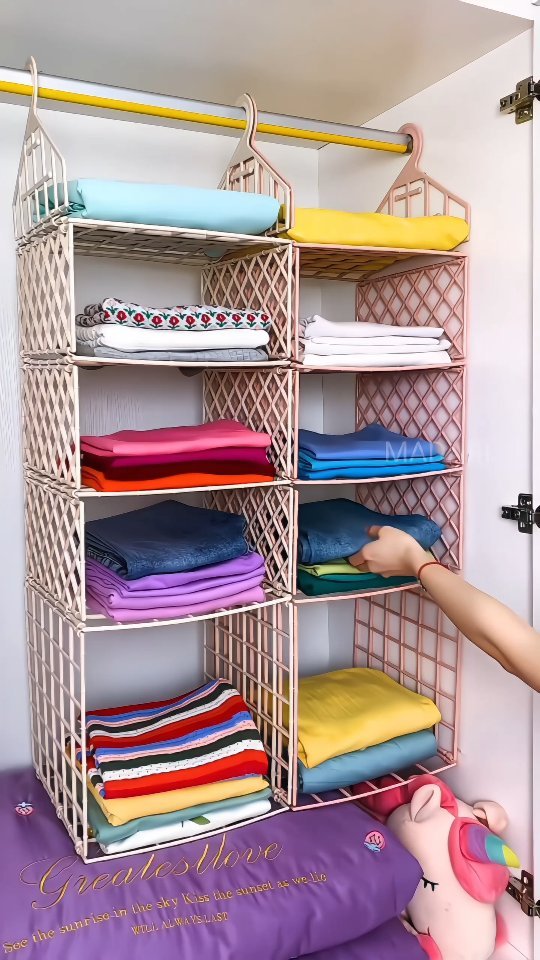
A hanging organizer with three to five fabric shelves turns the vertical gap in your closet into folded-clothing storage.
It’s a great choice when you have no room for a dresser, since it uses the rod you already have. Prices run about $10-35.
It works best for lightweight items like tees, scarves, or workout clothes. Heavier items like jeans can make the organizer sag, so check the weight limit. Pair it with other organizers from my guide to storage furniture for apartments if you need even more capacity.
8. Install an Over-the-Door Shoe Organizer
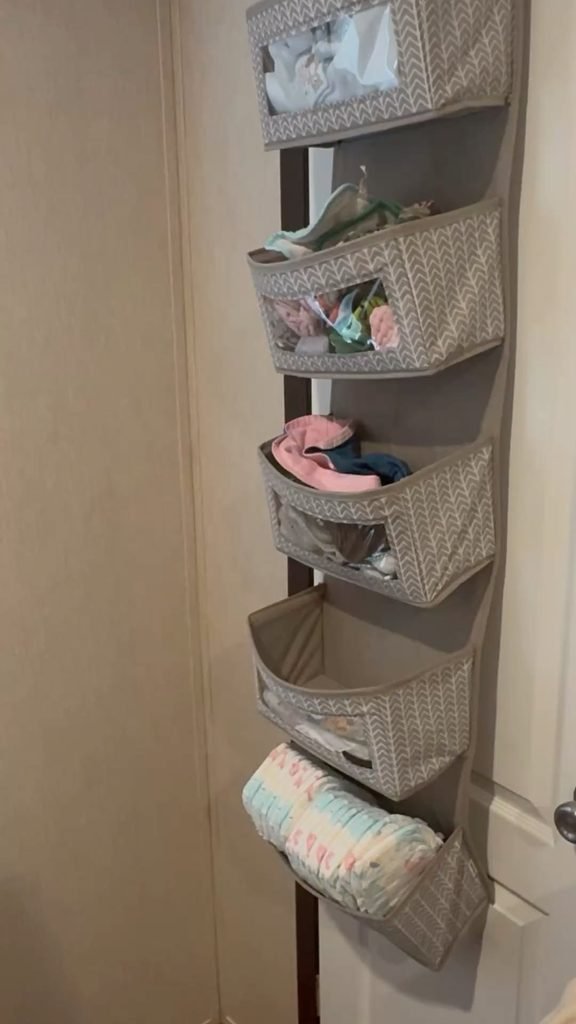
An over-the-door organizer with pockets holds shoes, but it’s also a solid solution for scarves, belts, hats, socks, or cleaning supplies. It uses the back of the door, which is almost always empty. Expect to pay about $10-25.
Check that the door still closes properly with the organizer in place, and avoid overloading it, since heavy boots can strain the hooks. If you use it for shoes, put the ones you wear most at eye level and the least-used ones at the bottom.
9. Use a Stackable Shoe Shelf or Rack
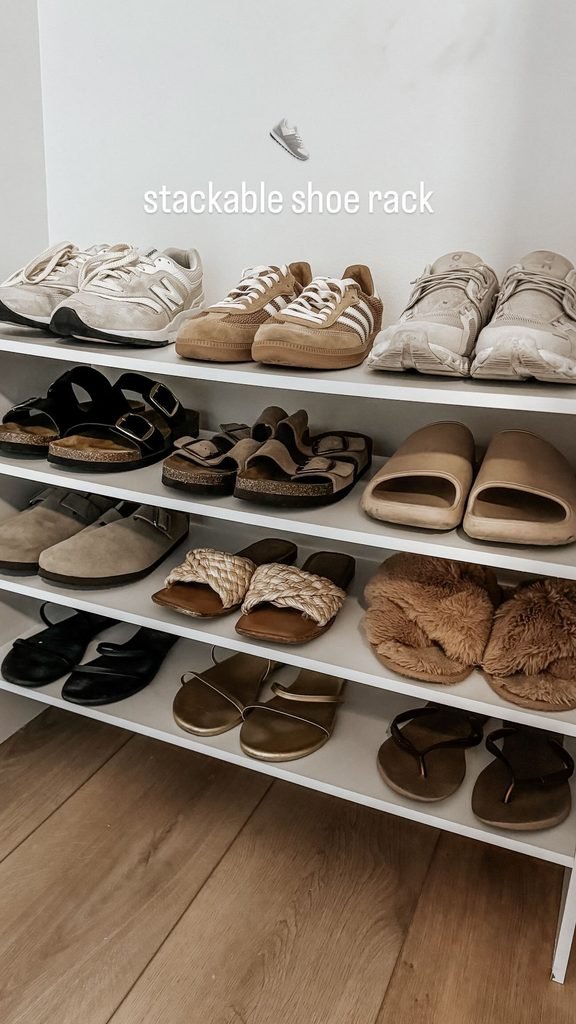
A simple stackable shoe rack lifts shoes off the floor and doubles the number of pairs you can store in the same footprint. Tiered racks, angled shelves, and expandable models run about $15-40. They also stop the pile of shoes by the door that every small apartment seems to collect.
If your closet is small, store only the shoes you wear regularly in it and move off-season pairs to under-bed bins.
If shoes keep piling up near the couch, my small living room ideas post shows where a slim shoe cabinet can fit. For more space-saving shoe and entryway ideas, my guide to space-saving furniture has pieces that fold or stack to fit tight spots.
10. Use Bins and Baskets on the Top Shelf
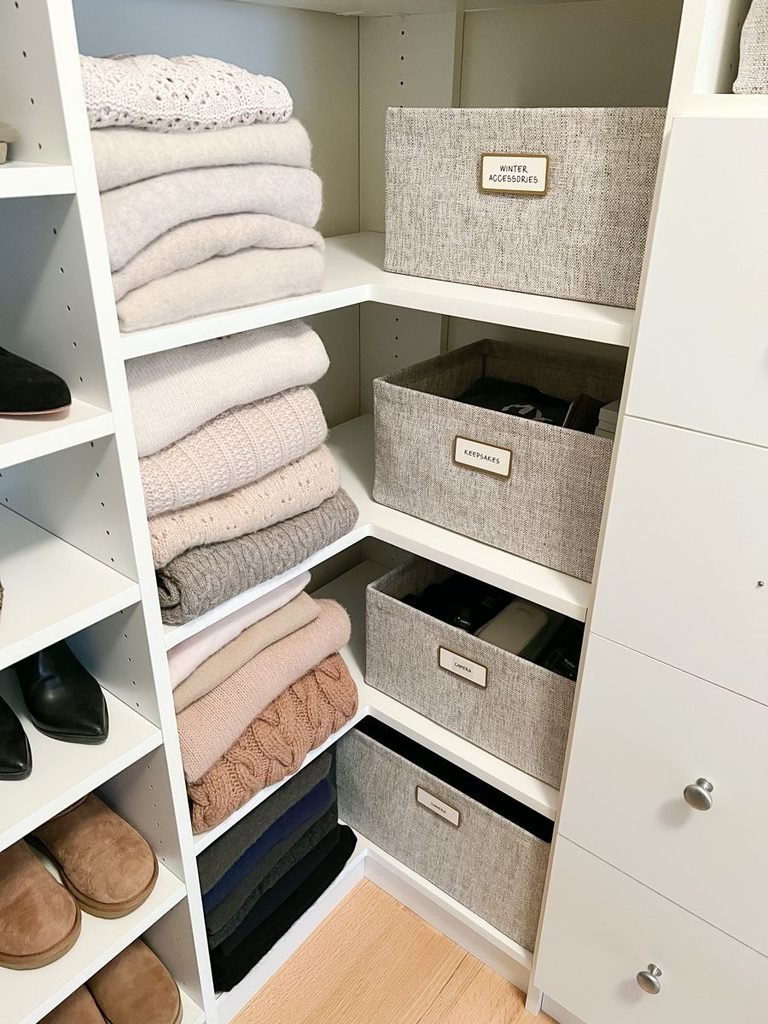
The top shelf is prime storage for items you don’t use daily, like off-season clothes, spare bedding, or bags, but it quickly turns into chaos without containers. Fabric bins, plastic totes, or woven baskets with handles keep things contained and easy to pull down. They run about $5-15 each.
Choose bins that match, since uniform containers make the whole closet look tidier. Label them with a simple tag so you know what’s inside. If a bin is heavy, keep it on a lower shelf, and keep lighter ones up high so nothing falls on you.
11. Add Drawer Dividers or DIY Shoebox Organizers
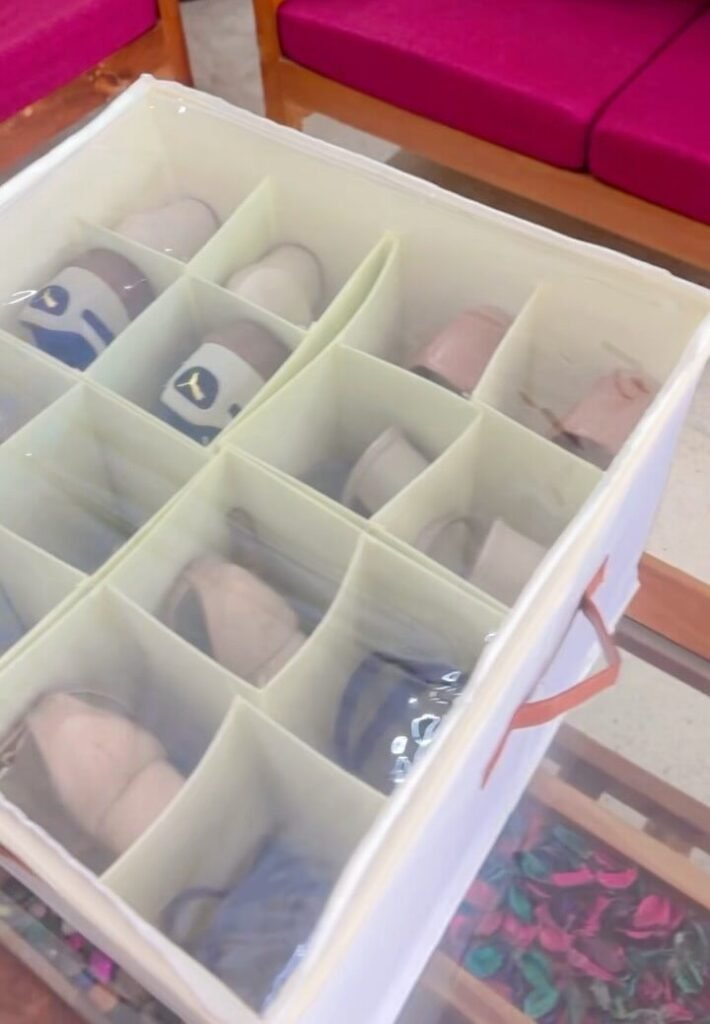
If you have drawers, even in a freestanding unit, dividers make a huge difference for socks, underwear, and small items. Store-bought dividers cost about $8-20, but empty shoeboxes, cut cardboard, or small containers do the same thing for free.
Lay items upright so you can see everything at a glance, instead of stacking them. This is a small habit with a big payoff, because you stop digging through a pile every morning and start seeing what you own.
If you need drawers but have no floor space, pieces from my multi-functional furniture guide, like a bed with storage or a bench with a lift-up lid, can fill the gap.
12. Use Hooks and S-Hooks for Bags and Belts
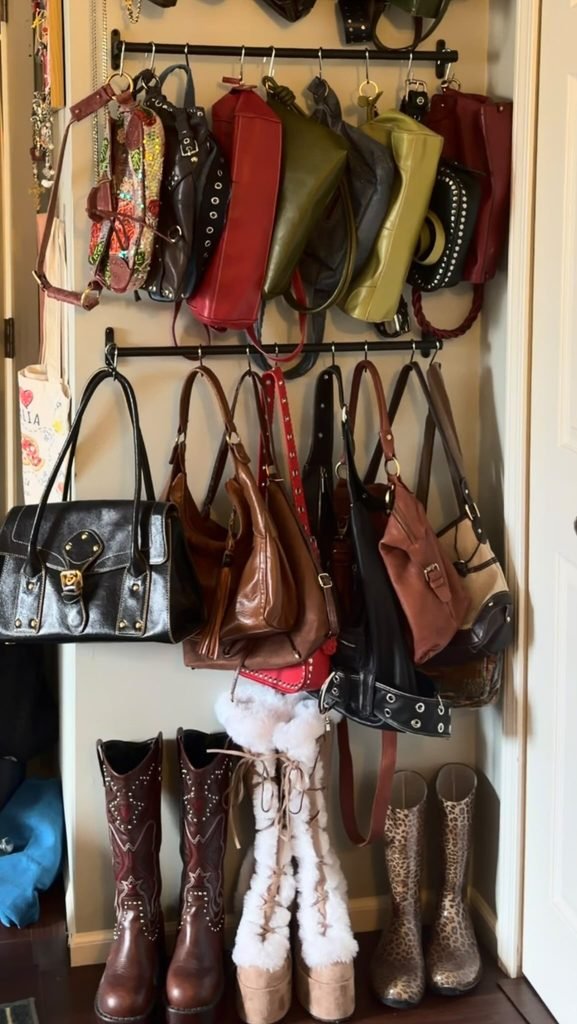
Bags are awkward to store, and they tend to end up in a heap on the floor. Adhesive hooks on the inside of the closet wall, or S-hooks on the rod, keep bags, belts, and hats visible and off the ground. Hooks cost about $5-15 for a pack.
Check the weight rating on adhesive hooks and test one in a hidden spot first, especially in a rental. Don’t hang heavy bags by thin straps, which can stretch over time, and keep the bags you use most at the front.
13. Fold Clothes Vertically So You Can See Everything
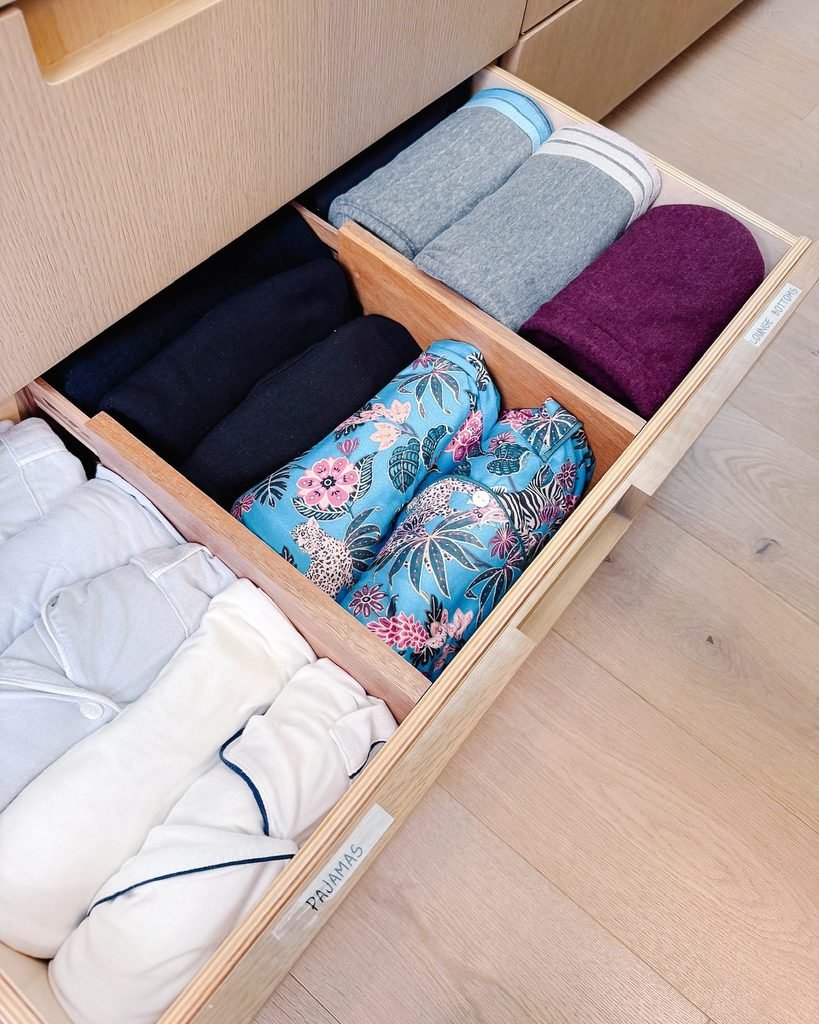
File folding means folding clothes into small rectangles and standing them on their edges, like files in a drawer. It lets you see every item at once and pull one out without disturbing the rest, and it often fits more in the same space. It’s free to try.
It works best for tees, leggings, and soft knits, and less well for stiff fabrics that won’t hold their shape. Use dividers or small boxes to keep the rows from tipping over.
A reader named Mia told me she fit nearly twice as many tees in a single drawer after switching.
14. Sort by Category, Then by Color
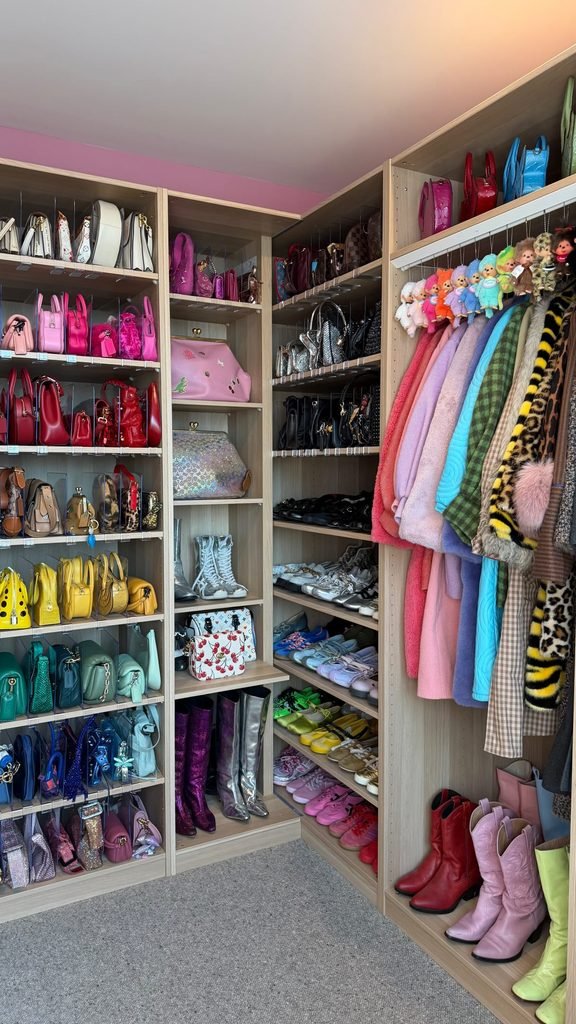
Group your clothes by type first (shirts, pants, dresses, jackets), then arrange each group by color or length. This makes it easier to find things and to notice when you have too many of one item. It also makes the closet look organized even if you haven’t bought a single organizer.
Put the things you wear most at eye level, and the rarely worn items higher or lower. A closet that matches how you actually dress each day is far easier to maintain than one organized only by looks. For more tips on making a tight space feel bigger and calmer, see my guide to make a small apartment feel bigger.
15. Use the Back of the Door for a Mirror and Hooks

The back of the closet door is valuable space. A full-length mirror, a row of hooks, or a slim organizer turns it into a dressing station. If you don’t have a mirror elsewhere in your bedroom, this one move can replace a floor mirror and save space.
Use removable adhesive hooks or an over-the-door mirror that hangs on hooks to avoid drilling. Test the door’s weight capacity, especially if it’s a lightweight hollow door, and check that the door still closes smoothly.
16. Rotate Seasonal Clothes Into Under-Bed or Top-Shelf Storage
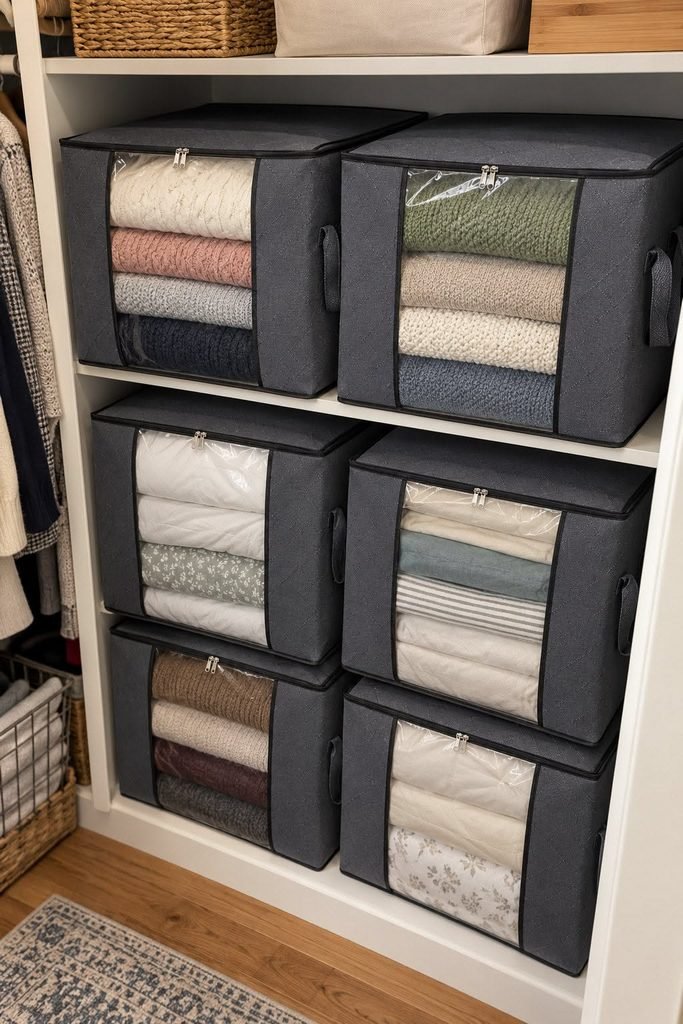
You don’t need winter coats taking up rod space in July. Move off-season clothes to under-bed bins or top-shelf boxes, and swap them twice a year. This frees up room and keeps your daily closet focused on what you’ll actually wear.
Be careful with vacuum storage bags, since compressing delicate fabrics, down, or wool for long periods can damage them.
Use breathable containers for natural fibers. If you like to rotate your decor with the seasons too, my fall apartment decor ideas are easy to store the same way.
17. Add Stick-On Lighting So You Can Actually See
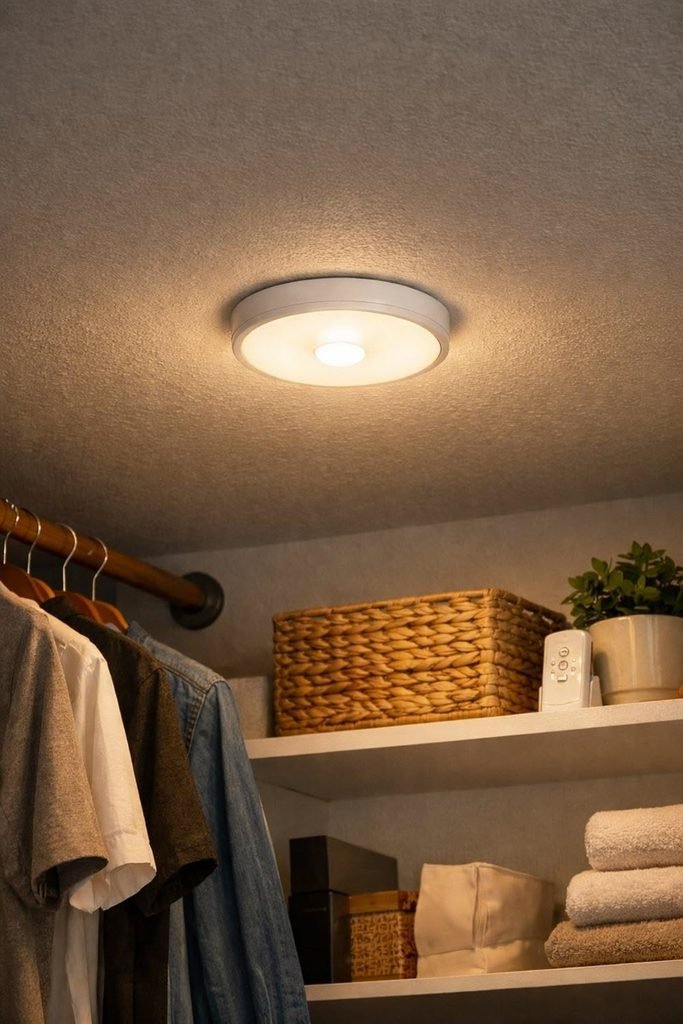
A dark closet makes everything look messier. Battery-powered stick-on LED lights or motion-sensor puck lights cost about $10-25 and install in seconds with no wiring.
Suddenly, you can see colors, spot missing items, and avoid wearing mismatched socks.
Place lights near the top of the closet and aim them downward. Choose a warm white tone, which shows clothing colors more accurately than very cool white light.
Good lighting matters just as much if you turn a spare closet into a work nook, which I go through in my guide to a home office in a small apartment.
18. Use Labels and Small Baskets for Accessories
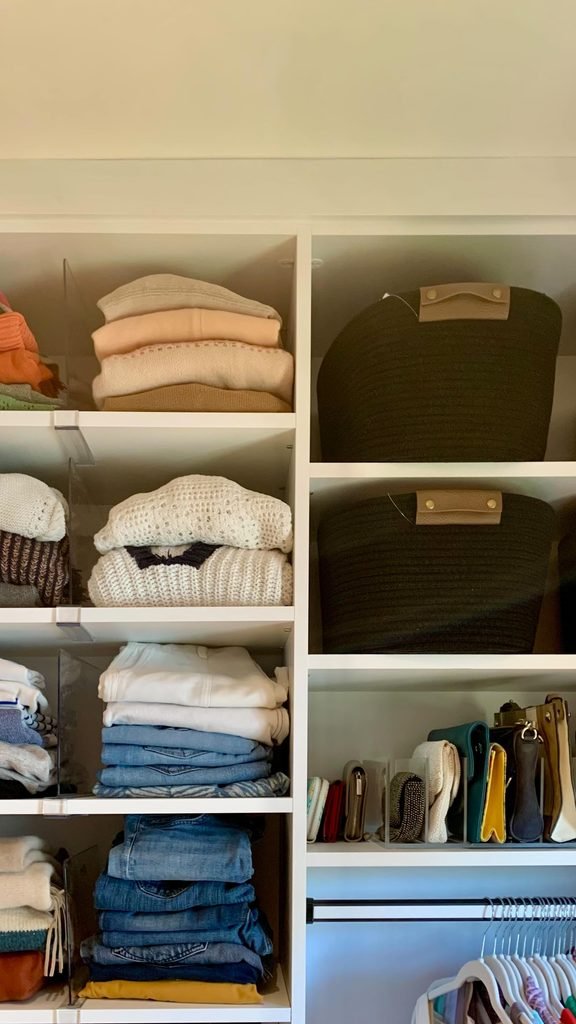
Small items like belts, scarves, jewelry, and hair accessories disappear in a closet. Small baskets, trays, or shallow bins with labels give each category a home. Labels can be as simple as masking tape and a marker.
It’s a small step, but it prevents the daily hunt for a missing item. Keep the baskets shallow so you can see what’s inside, and put the things you use daily at the front.
19. No Closet? Use a Freestanding Garment Rack With a Curtain
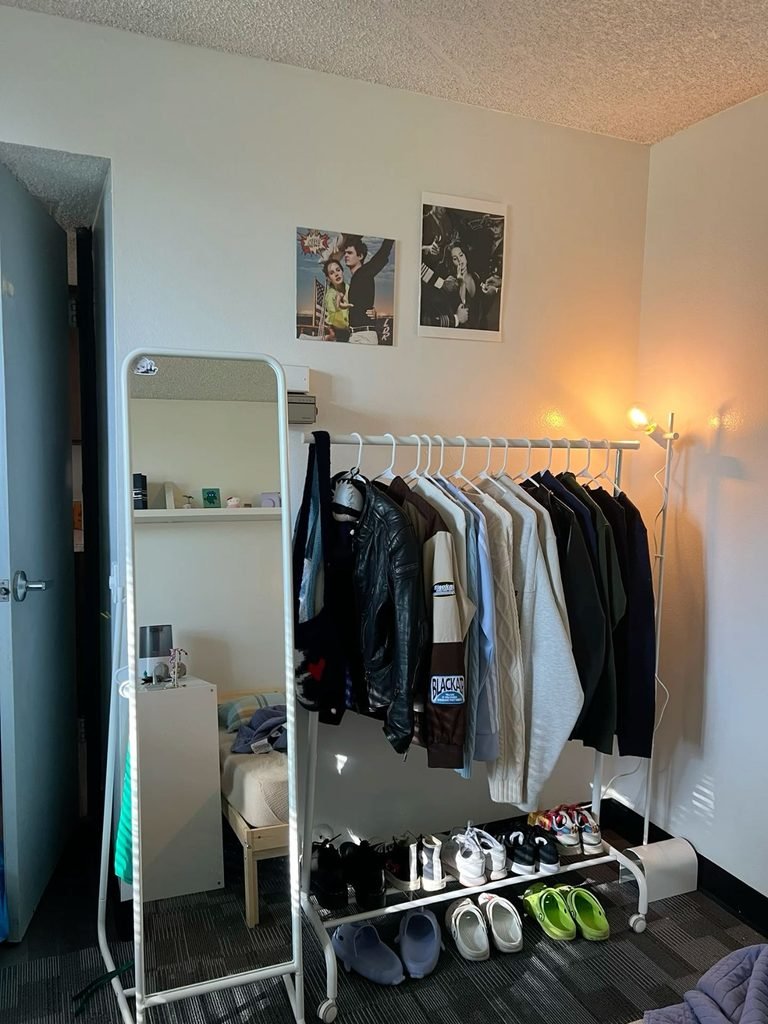
Some apartments, especially studios and older buildings, have no closet at all. Closet space is one of the biggest differences between layouts, as I explain in my studio vs one-bedroom apartment comparison.
A freestanding garment rack with a shelf at the bottom costs about $25-80 and gives you hanging space anywhere. A tension rod and a curtain or a folding screen can turn it into a hidden “closet.”
This ties into the zoning tricks in my guide to how to zone a studio apartment, since a curtained rack can double as a divider. For fabric and hanging tips that work with this, my guide to hanging curtains to make a small room look bigger covers rods and panels in detail.
20. Keep It Organized With a One-In, One-Out Habit
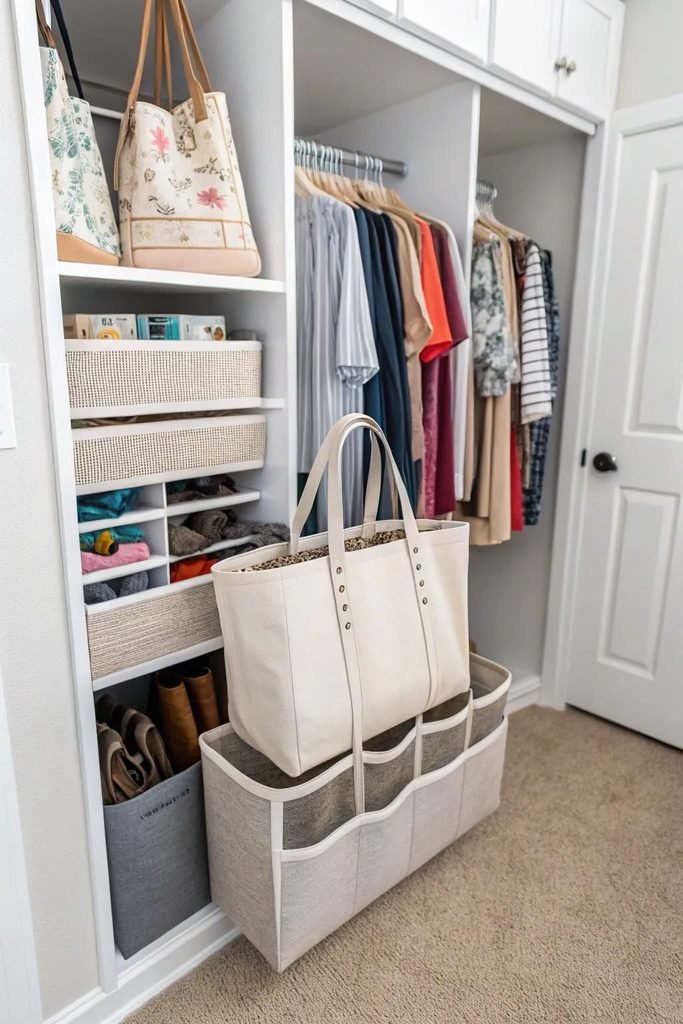
The best closet system fails if it fills up again. Adopt a simple rule: when you bring something in, something goes out. Keep a donate bag in the closet, and drop things in as you spot them. Once a season, do a five-minute edit.
The habit costs nothing and keeps the closet from slowly turning back into the avalanche. It also helps you spend less on clothes, since you start to notice what you really wear.
If you’re making space for guests as well, my guide to convertible sofa beds for small spaces shows how to store bedding and extra linens neatly.
Budget Closet Organizers Compared
| Organizer | Approx. Cost | Renter-Friendly? | Best For | Main Trade-Off |
|---|---|---|---|---|
| Slim hangers | $10-30 per pack | Yes | Gaining rod space | Not ideal for very heavy coats |
| Double-hang rod | $10-30 | Yes | Short items like shirts | Weight limit on the main rod |
| Tension rod | $8-25 | Yes | Narrow closets, extra rod | Can slip with heavy loads |
| Hanging fabric shelves | $10-35 | Yes | Tees, scarves, workout clothes | Sags with heavy items |
| Over-the-door organizer | $10-25 | Yes | Shoes, accessories | Door may not close fully |
| Stackable shoe rack | $15-40 | Yes | Shoe-heavy closets | Takes floor space |
| Bins and baskets | $5-15 each | Yes | Top shelves, seasonal items | Heavy bins are hard to lift down |
| Garment rack | $25-80 | Yes | No-closet apartments | Takes room floor space |
Sample Budgets for a Small Closet
| Budget | What You Can Get |
|---|---|
| About $25 | Slim hangers, shelf dividers, a pack of hooks |
| About $60 | Slim hangers, double-hang rod, over-the-door organizer, two bins |
| About $120 | All of the above plus a hanging shelf organizer, shoe rack, and stick-on lights |
These are rough numbers, and you can lower the cost with secondhand finds, free boxes, and what you already own. If you’re furnishing a whole place on a tight budget, my guide to furnishing a small apartment on a budget shows how to spread spending across rooms.
If I Were Starting My Closet Over
I’d empty everything, donate half, and spend about $50 on slim hangers, a double-hang rod, an over-the-door organizer, and a few bins.
That’s it. I’d skip the fancy systems and see how the space worked for a month before buying more. Most of the change comes from editing and using height, not from buying more stuff.
The best closet organization ideas on a budget share one trait: they make it easier to put things back than to leave them out. Once the system is simple enough that you’ll actually use it, the closet stays tidy and your mornings get a lot calmer.
When you’re ready to move on to styling the room around it, my small apartment decorating ideas and small apartment decor trends are good next reads, and for holiday storage, my small apartment Christmas decor guide shows how to pack away decorations neatly.
FAQs
How can I organize a small closet on a budget?
Start by decluttering, then add slim hangers, a double-hang rod, an over-the-door organizer, and a few bins. These changes usually cost under $60 and can nearly double your usable space.
What is the cheapest way to add closet storage?
Slim hangers, tension rods, hooks, and reusing boxes cost the least. Decluttering and folding clothes vertically are free and often make the biggest difference.
How do I organize a closet in a rental without drilling?
Use tension rods, hang-over rods, over-the-door organizers, adhesive hooks tested in a hidden spot, and freestanding racks. These all install without damaging walls.
How do I organize a closet with no shelves?
Use a hanging fabric organizer, stackable bins on the floor, a freestanding shelf unit, or a tension rod to create a shelf-like support. You can also use a garment rack outside the closet.
Should I fold or hang my clothes?
Hang items that wrinkle easily, like dresses and blouses, and fold knits, tees, and jeans. Folding knits prevents stretching, and vertical folding makes it easier to see everything.
How often should I reorganize my closet?
A quick five-minute edit each season keeps things under control, and a full declutter once or twice a year is usually enough. A one-in, one-out habit helps it stay organized between edits.








Leave a Reply