
For the first six months in my studio, I looked at the floor. Every storage decision I made was about what could sit on it: another bin, another cart, another slim cabinet that technically fit.
Then a friend visited, glanced up, and said, “You know you have eight feet of wall, right?” The top four feet of my apartment had been empty the entire time.
That’s the thing about learning how to maximize vertical space in a small apartment: the floor runs out fast, but the walls, the door backs, the space above your cabinets, and even the ceiling are mostly free.
Using them well is the difference between a place that feels packed and one that feels organized, and it doesn’t require tearing anything apart. If you want the bigger picture of working with limited square footage, my small apartment decorating ideas post is a good starting point.
I’ve organized this room by room and surface by surface, with renter-friendly options and rough costs for each. There’s a mounting-method comparison table in the middle (this part matters, because the wrong hardware is how things end up on the floor) and a safety section, plus FAQs at the end.
1. Start With a Vertical Space Audit
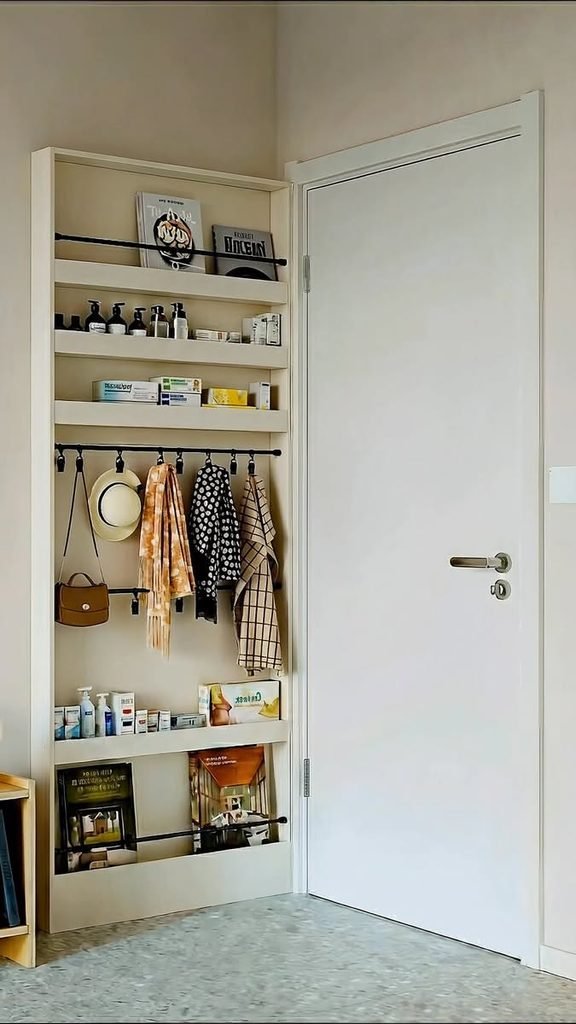
Before buying anything, walk through your apartment and look up. Check the wall space above your door frames, above windows, above the fridge and kitchen cabinets, behind doors, and the corners where two walls meet.
Most small apartments have at least five or six “dead” vertical zones that nobody uses.
Take a quick photo of each room from the doorway and mark where your eye stops, because that’s usually where your storage ends. Everything above that line is untouched potential.
Pro tip: Measure ceiling height and the gap between the top of your tallest furniture and the ceiling. That gap tells you exactly how tall a shelf, cabinet, or hanging system can go.
2. Buy Taller Furniture Instead of Wider Furniture
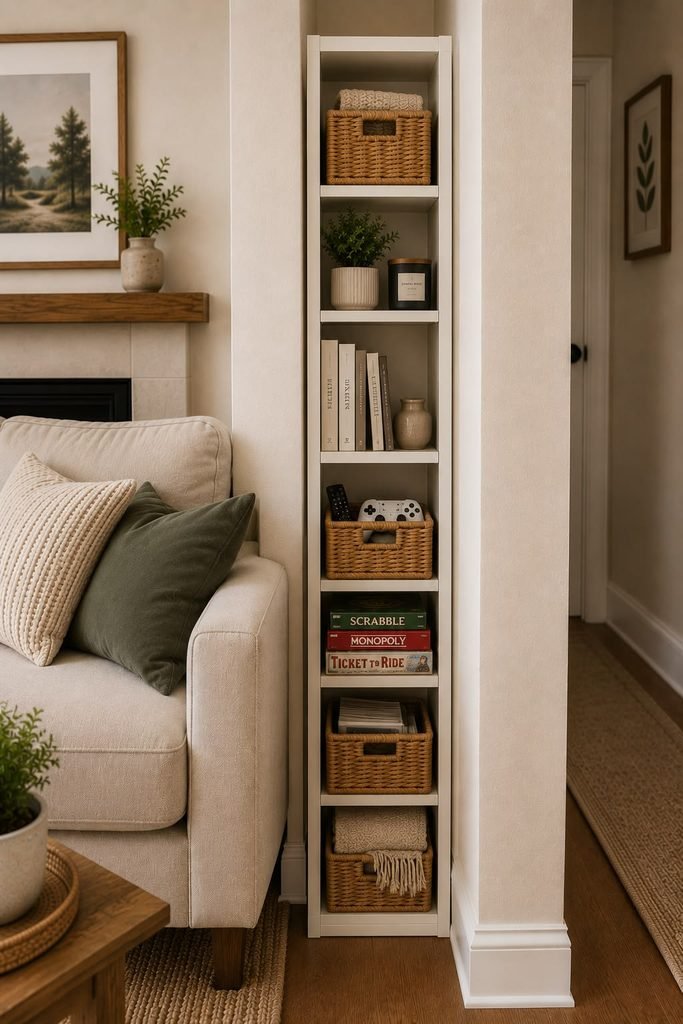
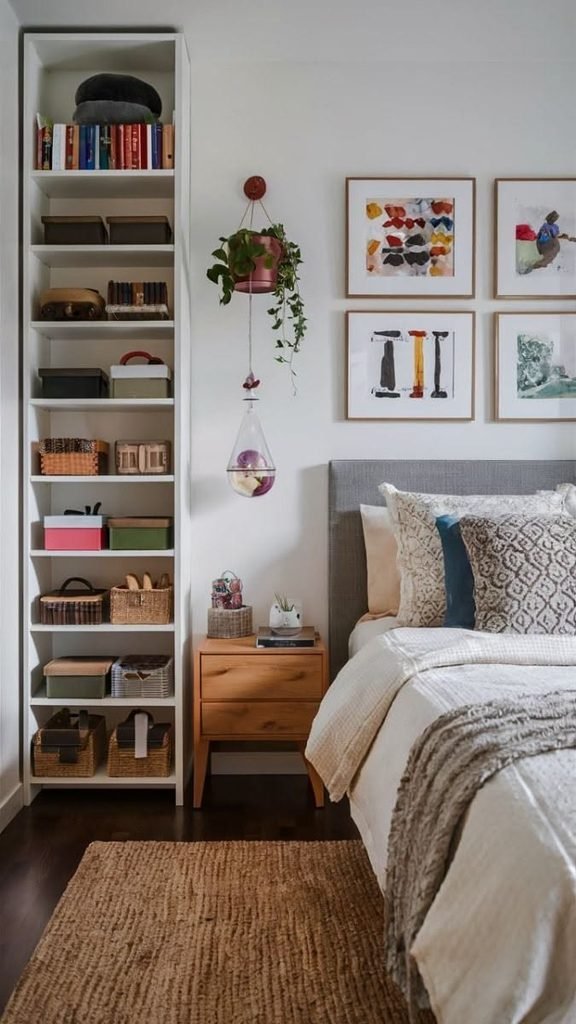
When floor space is the constraint, height is your friend. A narrow, tall bookcase holds as much as a wide, low one while using half the floor. The same goes for dressers: a tall chest of drawers beats a wide, low one if you have the ceiling clearance.
Look for pieces around 10 to 12 inches deep, which slides into walkways without crowding them. If you’re picking furniture that does more than one job, my multi-functional furniture guide will help you choose pieces that earn their footprint.
3. Use the Space Above Door Frames
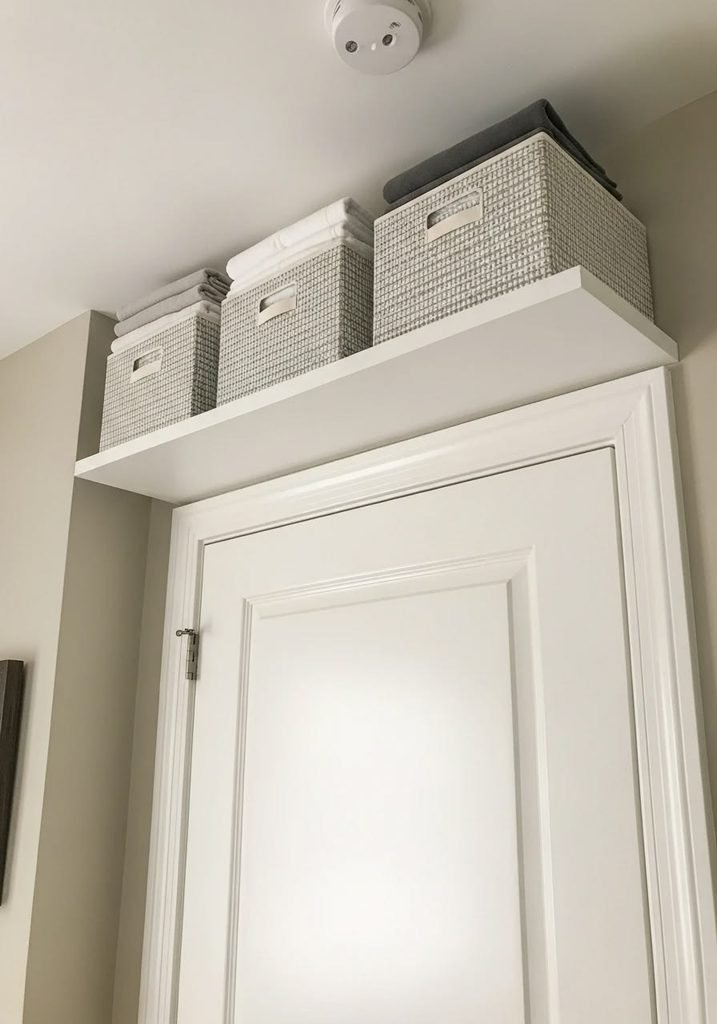
The strip above a door is one of the most overlooked spots in any apartment. A narrow shelf mounted over the bedroom or closet door can hold off-season blankets, baskets, or books, and because it’s high and out of the way, it doesn’t compete with anything else in the room.
If you can’t drill, use a tension-style shelf or a lightweight adhesive shelf rated for the load you plan to put on it. Keep what goes up there light, like baskets of linens, since anything heavy is a hazard at that height.
4. Add Over-the-Door Storage on Every Door You Have
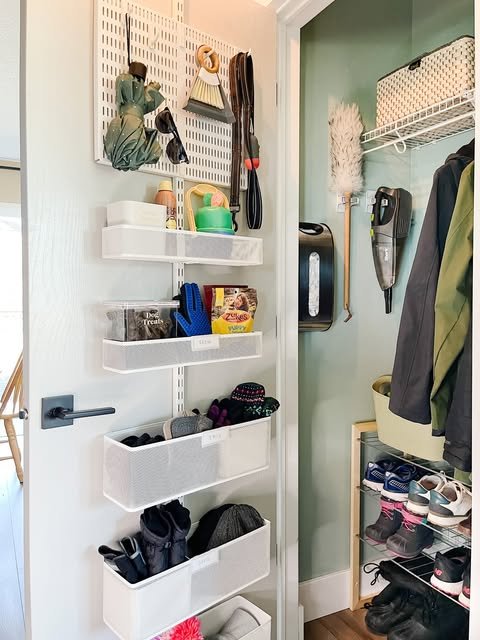
Closet doors, bathroom doors, and the back of the entry door are free storage. Over-the-door organizers with pockets hold shoes, cleaning supplies, or accessories, and over-the-door hooks handle bags, coats, and towels. Most cost $10-25 and need no tools.
Pro tip: Check door clearance before buying. Some over-door units are too thick to let the door close fully, which defeats the purpose and can scratch the frame.
5. Install a Wall-Mounted or Fold-Down Desk
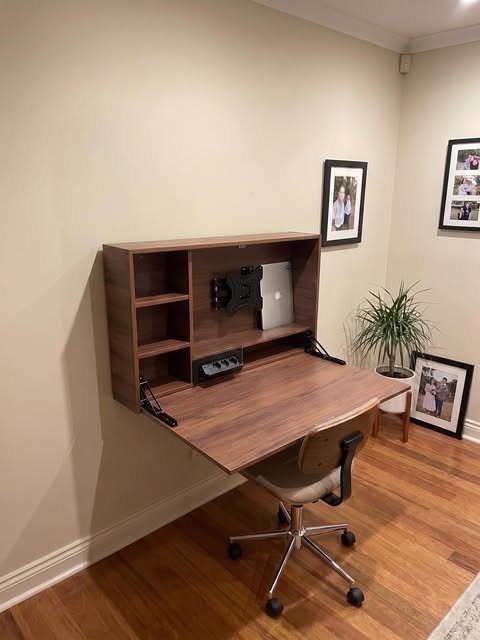
If you work from home in a small space, a desk that folds against the wall frees up floor when you’re not using it. Wall-mounted desks run about $60-200 depending on size and whether they need to be drilled in.
A fold-down version also lets you hide your work setup at the end of the day, which helps separate work from rest. If you’re working with an open layout, my guide on how to zone a studio apartment shows where a desk like this fits best.
6. Consider a Loft Bed or a Raised Bed With Storage Below
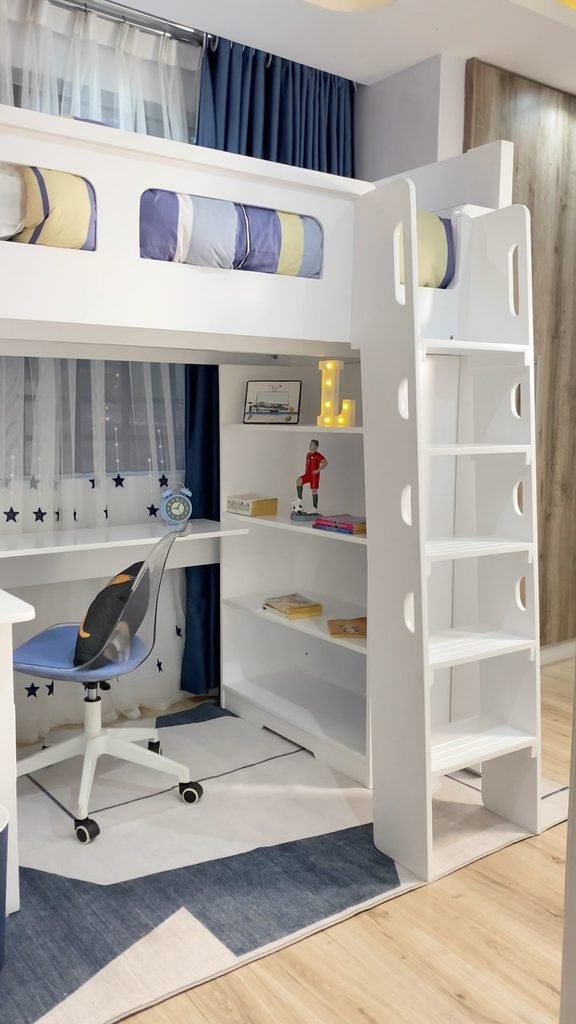
The bed is usually the biggest floor hog in any apartment. A loft bed frees the entire area underneath for a desk, a sofa, or a closet, but it requires adequate ceiling height (usually at least 8.5 to 9 feet) and a landlord who allows it.
A simpler alternative is a bed frame raised on risers or one with built-in drawers, which turns the space beneath into storage.
The trade-off with a loft bed is airflow and headroom. Heat rises, so in summer the upper bunk can get noticeably warmer, and some people find the low ceiling uncomfortable. Test the clearance by sitting up on a chair or ladder at that height before committing.
7. Double Your Closet With a Second Rod and Stackable Shelves
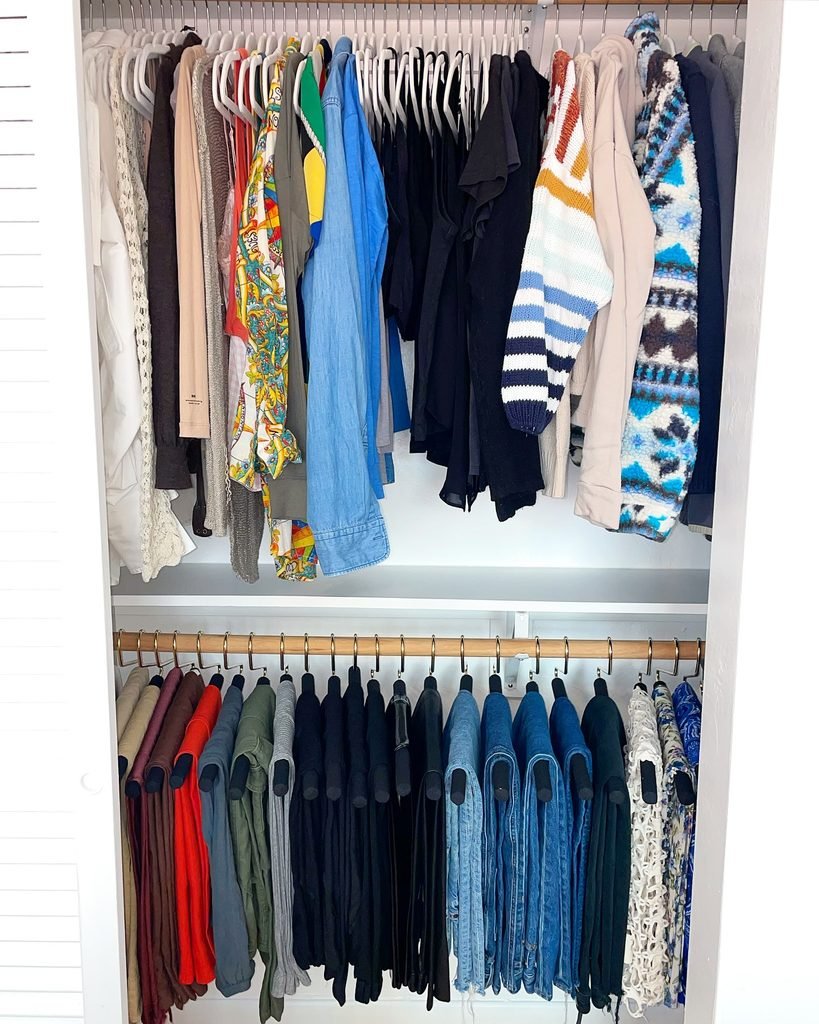
Most small closets have one rod at about 5.5 feet and a lot of empty space above and below.
Add a second hanging rod below the first for shirts and folded items, a shelf unit stacked on the floor, and a shelf above the rod for bins. The result is two to three times the storage in the same footprint.
A friend of mine, Jess, did this in her one-bedroom closet with a $20 hanging organizer and a $15 tension rod, and said she suddenly had space for the shoes she’d been keeping under the bed.
Use matching hangers and uniform bins, which make the vertical stacking look intentional instead of chaotic.
8. Make the Kitchen Work Upward
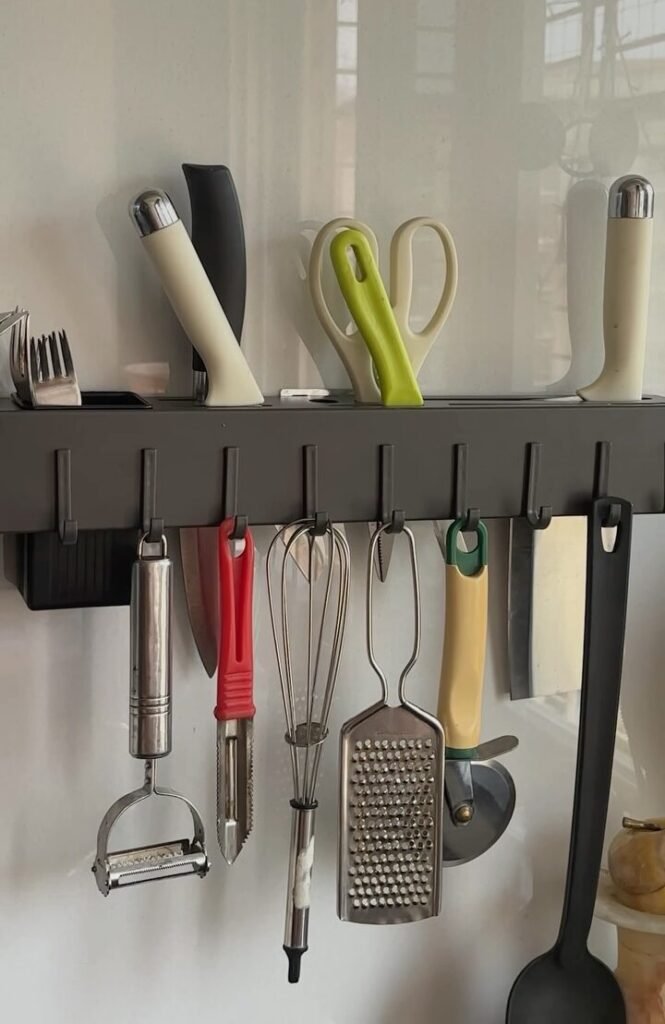
Kitchens in small apartments run out of counter and cabinet space almost immediately, and walls fix that.
A rail with S-hooks for utensils, a magnetic knife strip, a hanging rack for pots and pans, and a shelf above the stove or sink add storage without taking any counter.
Use stackable organizers inside cabinets to double usable shelf height, and a riser shelf to keep plates and bowls from piling up awkwardly.
Tension-rod shelves under the sink make use of the vertical gap above pipes. None of this needs drilling, and most items cost under $25.
9. Install a Pegboard for Flexible Wall Storage
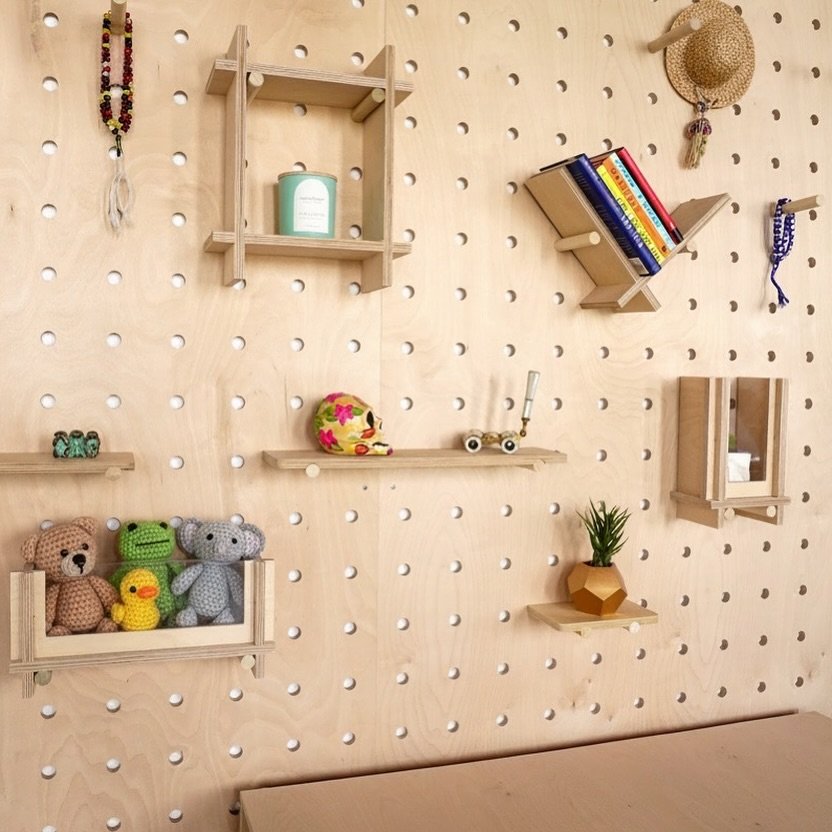
A pegboard is a modular wall storage system you can reconfigure endlessly. It works well in a kitchen for tools, near a desk for supplies, or in an entryway for keys and bags. Boards cost about $20-50, and hooks and shelves are cheap add-ons.
If you can’t mount it to the wall, you can lean a freestanding pegboard behind a desk or inside a closet door. Paint it the same color as the wall, and it blends in rather than looking industrial.
10. Hang Plants From the Ceiling or Shelf Edges
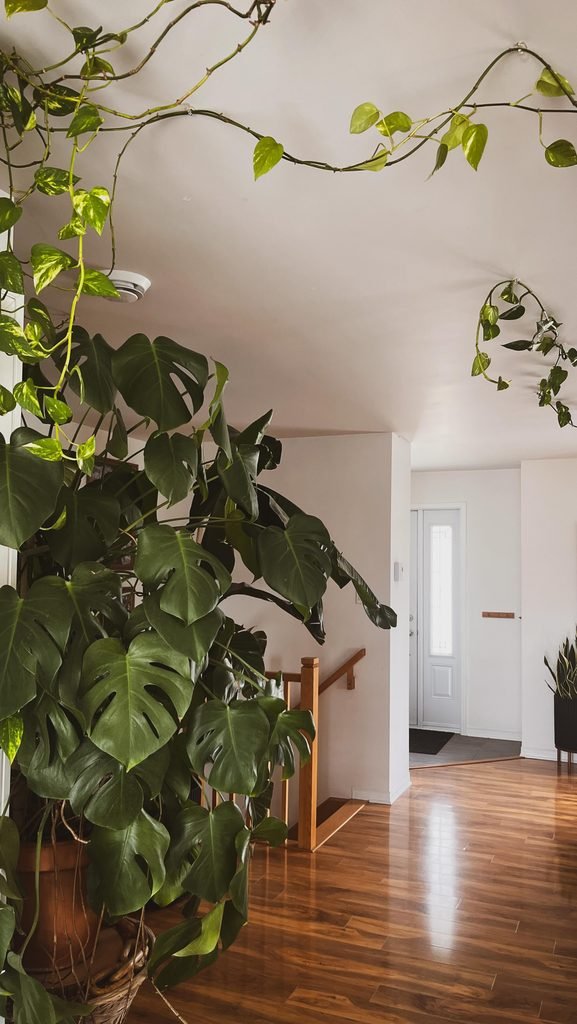
Plants add life and don’t need any floor space if you hang them. A ceiling hook, a curtain rod, or a wall-mounted bracket gives you a place for trailing pothos, spider plants, or ivy. Hanging plants also draw the eye upward, which makes a room feel taller.
Check the weight of the pot when watered, since wet soil is much heavier than dry soil, and choose hooks rated well above that weight. In a rental, use a tension rod or a hook that doesn’t require drilling a ceiling.
11. Hang Curtains High and Wide to Make Ceilings Look Taller
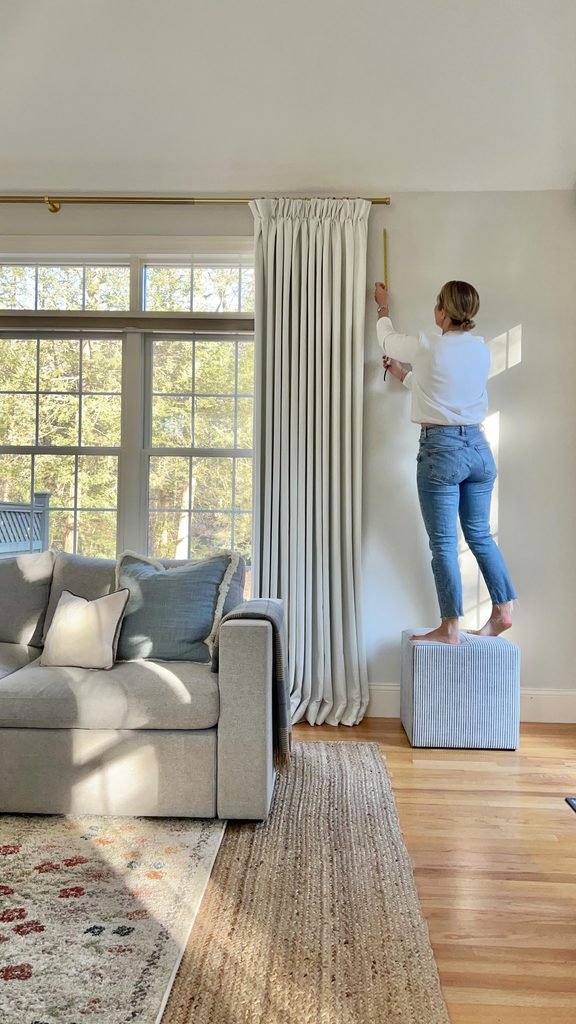
Mount the curtain rod a few inches below the ceiling or crown molding, rather than right above the window frame, and extend it past the window edges on each side. This makes the window appear larger and the ceiling feel higher. Floor-length curtains reinforce the effect.
It’s one of the cheapest vertical tricks there is, and it ties into the visual ideas in my make a small apartment feel bigger post. Use a rod that’s sturdy enough for the fabric, and make sure the curtains just brush the floor instead of puddling.
12. Go Tall With Art and Gallery Walls
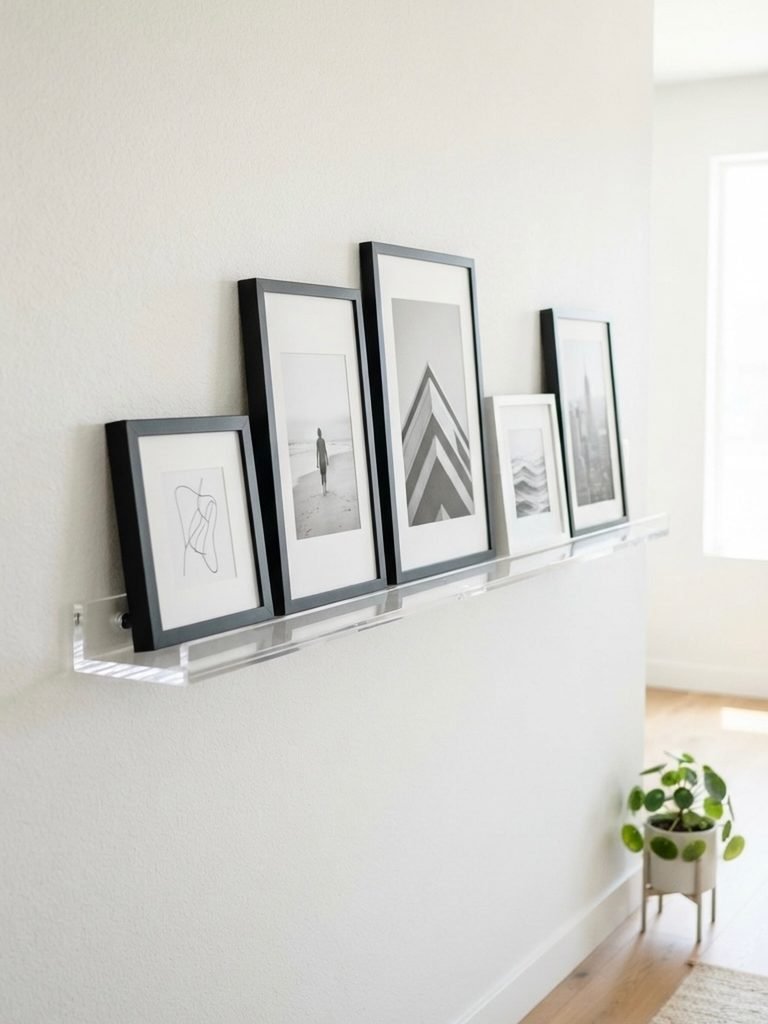
Hanging art higher than usual, or arranging frames in a tall vertical column rather than a wide rectangle, draws the eye upward.
A pair of tall, narrow prints beside a window or a vertical gallery arrangement over a console can fill a wall without eating floor space.
Pro tip: Keep the center of a gallery wall around 57 inches from the floor, but extend it upward if you want to emphasize height. Use removable hanging strips rated for each frame’s weight.
13. Use the Space Above Cabinets and the Fridge
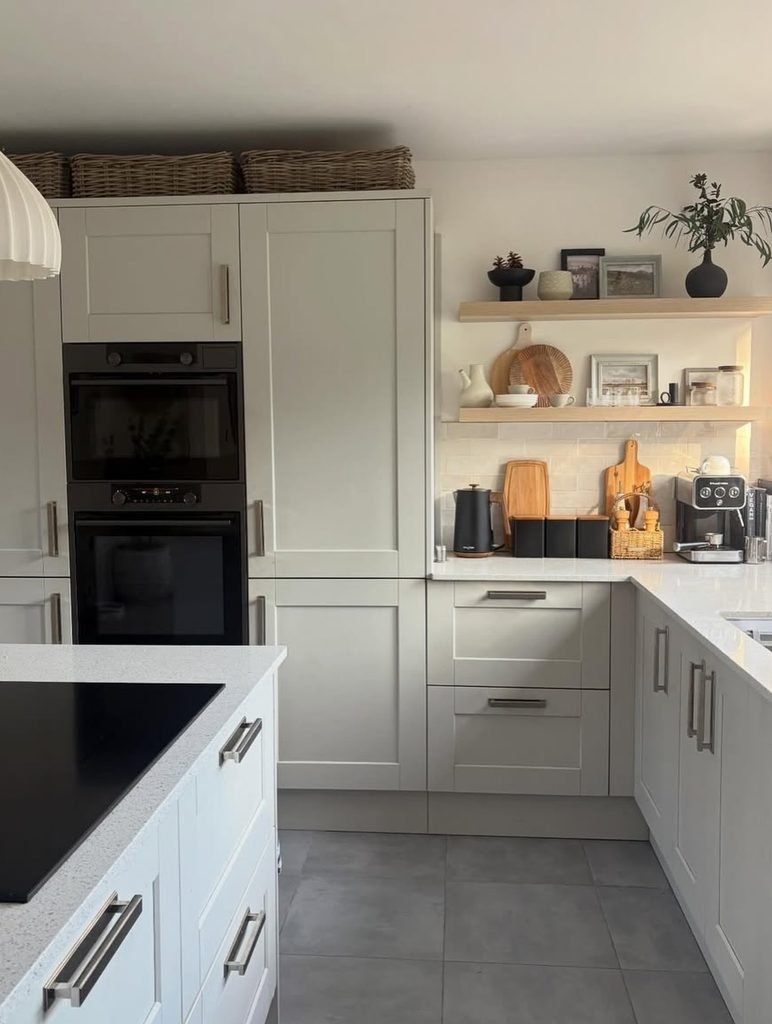
The gap above kitchen cabinets and the refrigerator is perfect for baskets of items you use rarely: serving platters, extra paper goods, holiday dishes. Baskets with lids keep dust and grease off, and uniform baskets look tidy rather than cluttered.
Keep heavier items lower, and don’t stack anything above a stove, where heat and grease can damage stored items and create a fire risk.
14. Make the Bathroom Work Upward Too
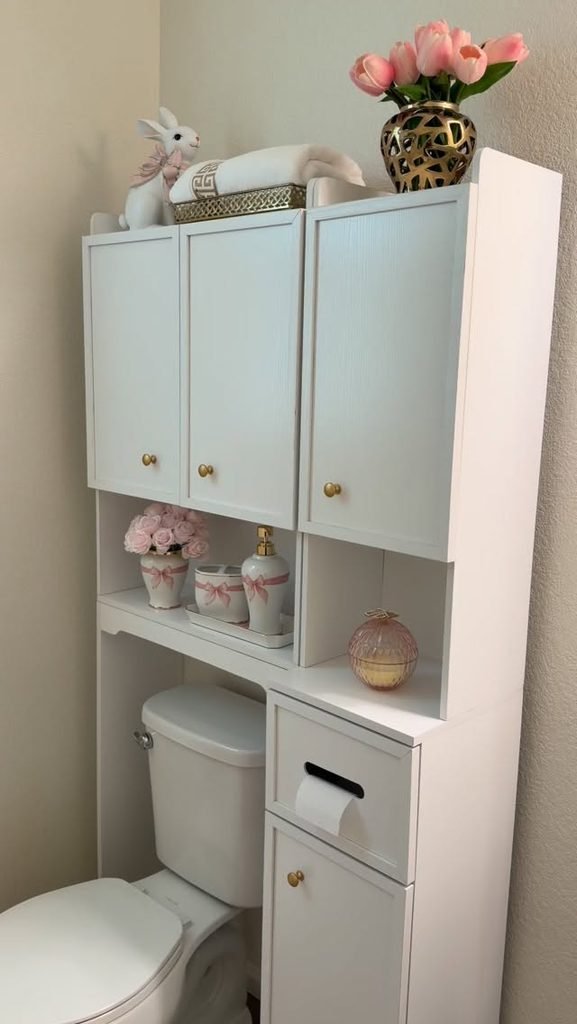
An over-the-toilet shelf unit, wall-mounted hooks for towels, and a tall narrow cart or shelf beside the vanity add storage without crowding a bathroom that’s probably the size of a closet.
Shower caddies that hang from the showerhead or tension poles that run floor to ceiling make use of dead corners.
Choose rust-resistant materials, and check that anything over the toilet won’t interfere with the lid or tank access. Baskets on a high shelf are good for extra toilet paper and towels you don’t use daily.
15. Build an Entryway That Goes Up Instead of Out
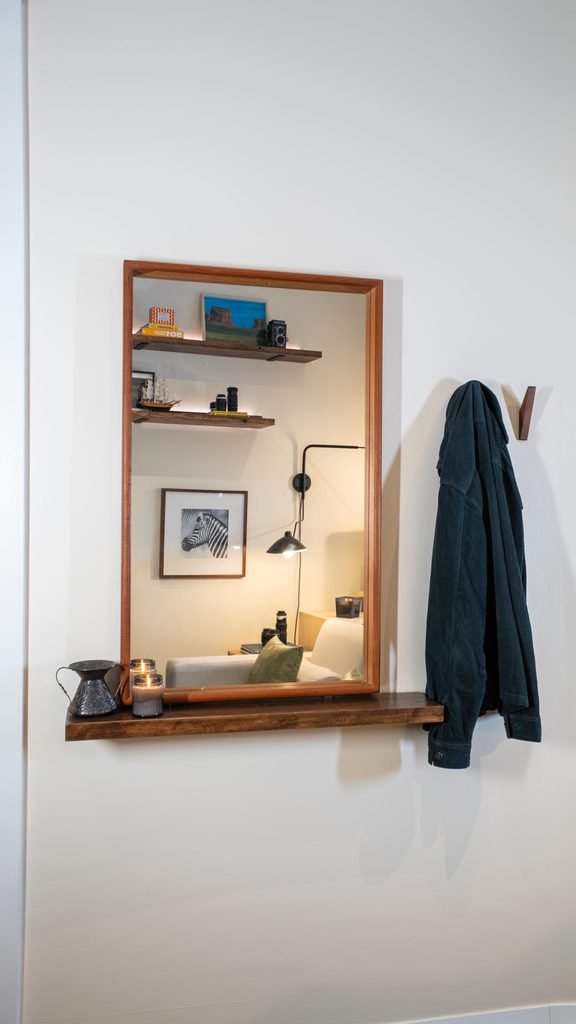
Most apartment entries have no floor space for a console or bench, but a wall can do plenty: a row of hooks for coats and bags, a narrow shelf above for keys and mail, and a tall, slim shoe rack beside the door. A mirror hung above the shelf adds light and a final check before you leave.
If your entry is also your living area, as in many studios, this keeps the first thing you see tidy and organized. My studio apartment layout ideas post has more on handling entries in open layouts.
16. Stack Instead of Spreading: Cubes, Crates, and Modular Units

Stackable cubes and crates let you build storage upward and rearrange it as your needs change. They work as shelves, nightstands, or room dividers, and they can be taken apart when you move.
Look for units with a stable base and secure connectors, especially if you’re stacking more than three high.
Vertical Storage Options Compared
| Option | Approx. Cost | Drilling Needed? | Best For | Watch Out For |
|---|---|---|---|---|
| Tall narrow bookcase | $50-200 | Anchor strap recommended | Books, decor, general storage | Tipping if not anchored |
| Over-the-door organizer | $10-25 | No | Shoes, supplies, accessories | Door clearance and weight |
| Floating or adhesive shelf | $15-60 | Sometimes, or adhesive only | Light decor, small items | Weight limits, adhesive failure |
| Wall-mounted desk | $60-200 | Usually yes | Home offices in tiny spaces | Lease rules, wall type |
| Pegboard | $20-50 | Often, or freestanding | Kitchen, desk, entry | Hook weight limits |
| Tension-pole shelving | $30-80 | No | Corners, bathrooms, kitchens | Needs solid floor and ceiling |
| Loft bed | $250-700 | No, but heavy and bulky | Studios with high ceilings | Headroom, heat, lease rules |
17. Know the Weight Limits and Anchor Anything Tall
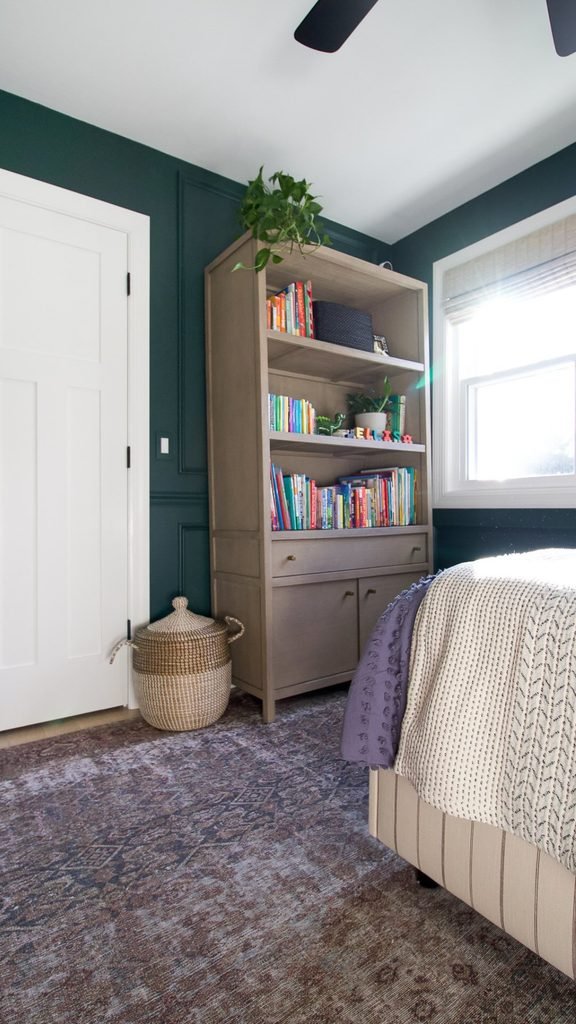
This is the unglamorous but important part of vertical storage. Tall furniture can tip, and overloaded shelves can pull away from the wall, so anchor bookcases and dressers with the straps that usually come in the box or are sold separately, and check the weight rating on every adhesive hook, shelf, and bracket. Round down, not up, and keep heavy items near the bottom.
If you rent and aren’t allowed to drill, ask your landlord about anti-tip anchors, since many will allow small holes for safety purposes.
If not, choose lower, wider-based pieces, and avoid placing anything tall near a bed, a crib, or a spot where kids or pets might climb. When in doubt, check the manufacturer’s instructions and consult a professional for anything structural.
18. Keep It Cohesive So Vertical Doesn’t Mean Cluttered
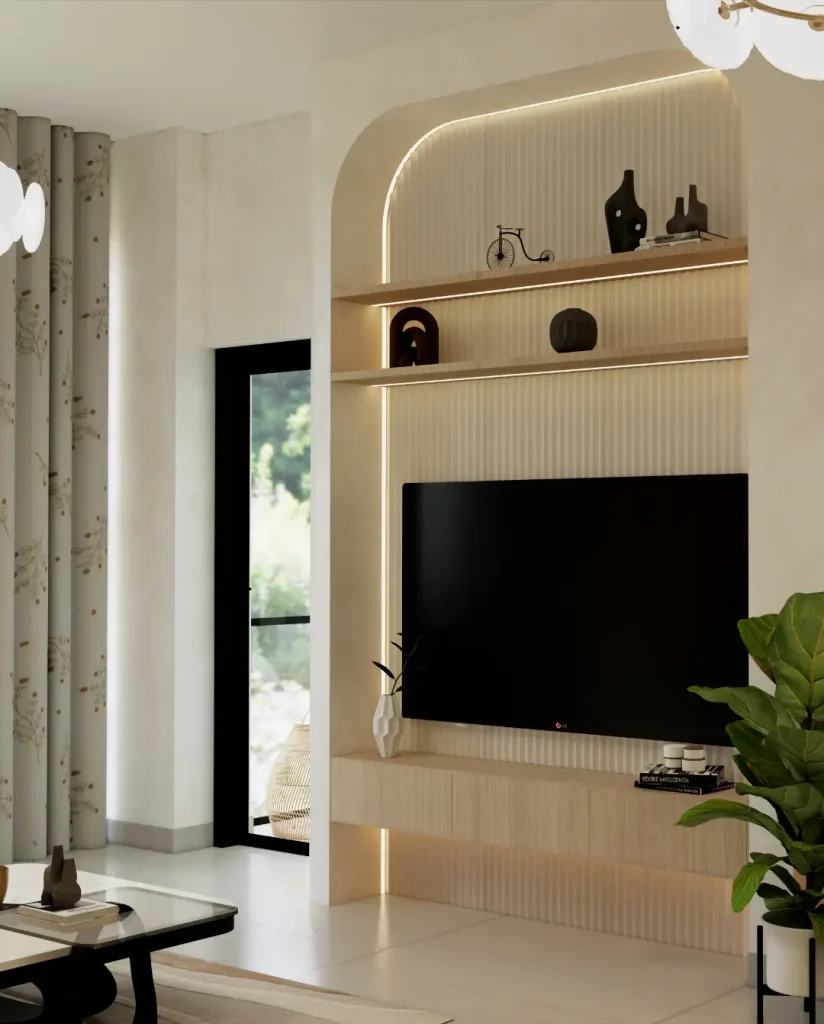
Going vertical can backfire if every wall is packed. Leave some bare wall space, use matching baskets and bins, and stick to a limited palette so the eye can rest. The goal is a room that feels taller and calmer, not busier.
Current looks, like warm neutrals and hidden storage, are worth browsing in my roundup of small apartment decor trends.
It also helps to rotate what’s displayed up high with the seasons. I swap my high shelf baskets between fall and winter items, using ideas from my fall apartment decor ideas and small apartment Christmas decor guides, which keeps the walls from feeling static.
If I Were Starting Over, Here’s What I’d Do First
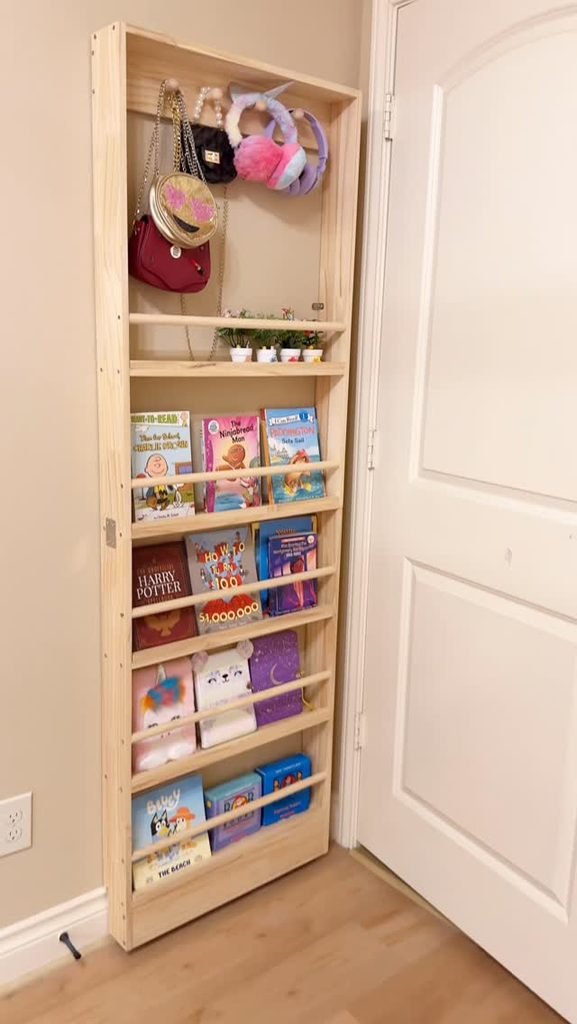
I’d start with the cheapest, fastest wins: a second closet rod, an over-the-door organizer, and a few hooks in the entry. That’s roughly $50 and a single afternoon.
Then I’d add one tall, narrow bookcase anchored to the wall, and hang curtains higher than the window frame. Only after those would I think about wall-mounted desks or loft beds.
Learning how to maximize vertical space in a small apartment is mostly about changing where you look.
Once you start seeing walls, door backs, and the gap above cabinets as usable space, your floor gets to breathe, and the whole apartment feels bigger without a single extra square foot.
If you’re still deciding whether a small place is the right fit at all, my studio vs one-bedroom apartment comparison walks through the trade-offs, and my small living room ideas post pairs well with everything above.
FAQs
How can I add storage in a small apartment without drilling?
Use over-the-door organizers, tension-pole shelves, freestanding tall bookcases, adhesive hooks rated for the load, and stackable bins. Check weight ratings carefully and test any adhesive on a hidden spot first.
What is the best vertical storage for a studio apartment?
A tall, narrow bookcase, a double-rod closet setup, and wall hooks or a pegboard in the entry cover most needs. If your ceilings are high enough, a loft bed can free up the most floor space.
How do I make a small room look taller?
Hang curtains close to the ceiling, use tall narrow furniture, arrange art in vertical groupings, and keep sightlines clear. Light colors and mirrors help too.
Is it safe to put tall furniture in a rental?
Yes, if you anchor it properly. Use anti-tip straps, keep heavy items on lower shelves, and ask your landlord if small anchor holes are allowed. If drilling isn’t possible, choose stable, low-profile pieces.
How much does it cost to add vertical storage to a small apartment?
You can make a big difference for about $50-100 with hooks, an over-the-door organizer, and a second closet rod. Larger pieces like a loft bed or wall-mounted desk can push the total to several hundred dollars.
What should I avoid storing up high?
Heavy, fragile, or frequently used items. Keep heavier things low, and reserve high shelves for light, rarely used items like off-season linens or decorative baskets.









Leave a Reply