
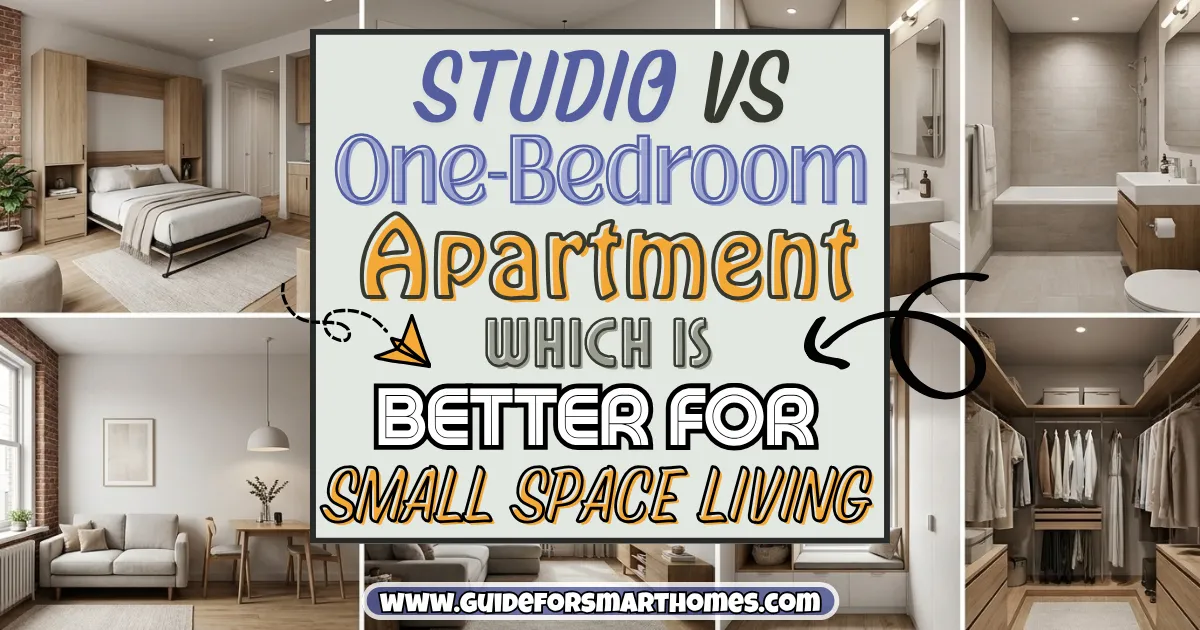
I lived in a 410-square-foot studio for two years and then moved into a 520-square-foot one-bedroom, and the funny part is that the extra 110 square feet was not the thing I noticed most. What I noticed was a door.
The first night in the new place I closed the bedroom door, sat on the couch with my laptop, and realized I hadn’t been fully “off” in my own home for two years, because my bed had always been about eight feet from my desk.
If you’re trying to decide between a studio and a one-bedroom, most comparisons stop at rent and square footage. Those matter, but they’re only part of the picture.
The real question is how you live: whether you host, work from home, cook strongly scented food, share the space with a partner, or just need one room you can walk away from.
I’ve put together the comparison I wish I’d had, covering cost, layout, storage, privacy, furniture, and who each option suits best. Along the way I’ll point to my studio apartment layout ideas for anyone who goes the studio route.
There’s a side-by-side table in the middle, a furniture checklist, and a short decision guide at the end, plus FAQs. I’ve kept the numbers general because rent and square footage vary a lot by city, so please check actual listings in your area before deciding anything.
The Short Answer: Who Each One Is Really For

A studio tends to suit one person who values a lower cost, a simpler space to maintain, and doesn’t mind the sleeping area being part of the main room.
A one-bedroom tends to suit people who need separation, whether for sleep, work, guests, or a partner, and who can absorb a higher monthly cost.
That said, the dividing line is more about habits than headcount. I’ve seen couples thrive in a well-planned studio and solo renters who were miserable in a one-bedroom because they ended up paying for a room they rarely used. Let your routine decide, not just your budget.
Cost: What You Actually Pay Beyond Base Rent
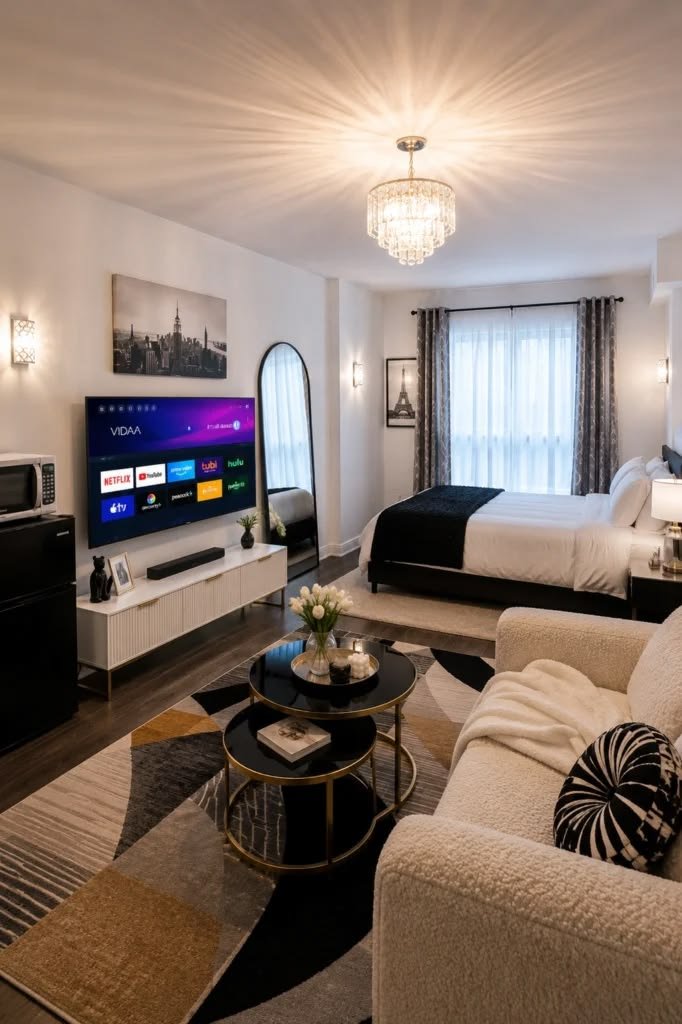
A one-bedroom usually costs more per month than a studio in the same building, and that gap is the first thing most people look at. But rent isn’t the full cost.
Utilities usually run higher in a bigger unit because there’s more space to heat and cool, and a one-bedroom often needs more furniture, which is a one-time cost that adds up quickly.
On the other side, a studio can cost you in less obvious ways, like needing a room divider, extra storage furniture, or a work setup that makes your living area feel cramped.
Before you decide, add up rent, estimated utilities, and a realistic furniture budget for each option, and compare the totals, not just the monthly rent number.
Pro tip: Ask the leasing office what the average utility bill was last winter and last summer for the specific unit type. Many will tell you, and it removes a lot of guessing.
Square Footage vs. How the Space Actually Feels
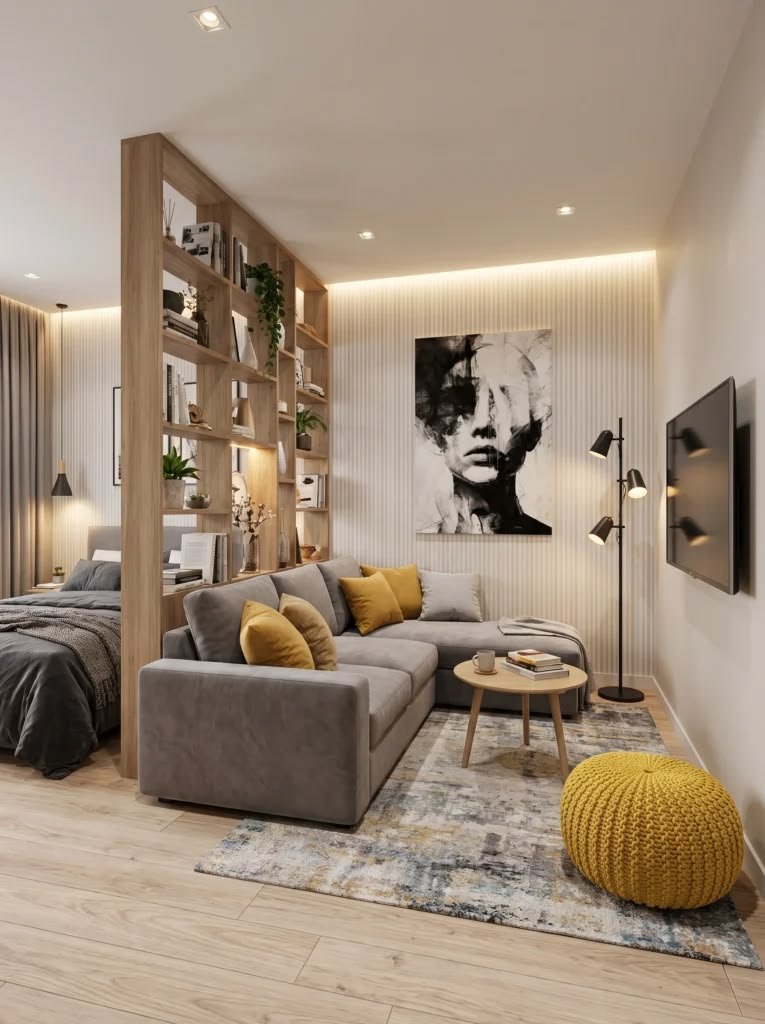
A well-designed studio of 450 square feet can feel more open than a poorly laid-out one-bedroom of 550, because layout matters as much as raw size. Look at the floor plan for wasted space: long hallways, awkward corners, and walls that block light all shrink the usable area.
Natural light is the other big factor. A studio with two large windows can feel airy, while a one-bedroom where the bedroom swallows the only window can leave the living area dim.
If you’re touring, visit at the time of day you’ll actually be home, and check where the light falls. My tips in make a small apartment feel bigger work for both layouts, but they work best when the space starts with decent light.
Layout and Zoning: Defining Areas Without Walls
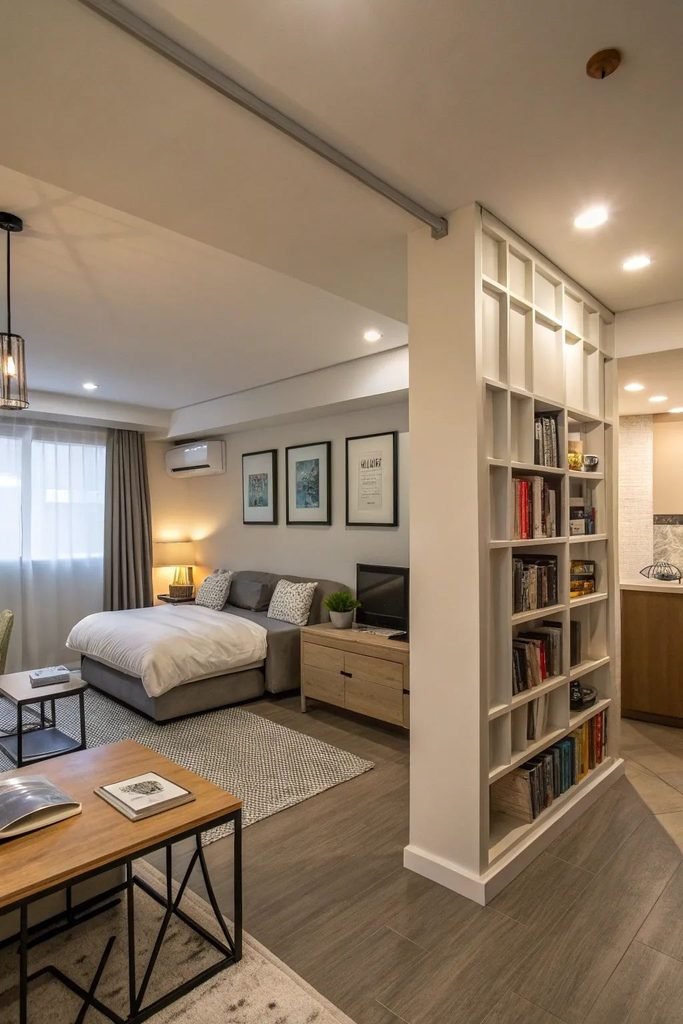
This is where studios ask the most of you. With no walls, you have to create zones for sleeping, living, eating, and working using furniture, rugs, lighting, and sometimes a divider. A bookshelf placed perpendicular to the wall, a rug under the sofa, and a lamp in the sleep corner can make one room read as three.
In a one-bedroom, the walls do most of that work for you, and the main effort goes into making each room function well. The trade-off is that a one-bedroom living room is often smaller than a full studio, so it still needs smart planning, which I cover in my small living room ideas post.
Pro tip: In a studio, keep the bed out of the direct line of sight from the front door if you can. It’s a small change that makes the space feel more like a home and less like a single room.
Privacy and Hosting Guests
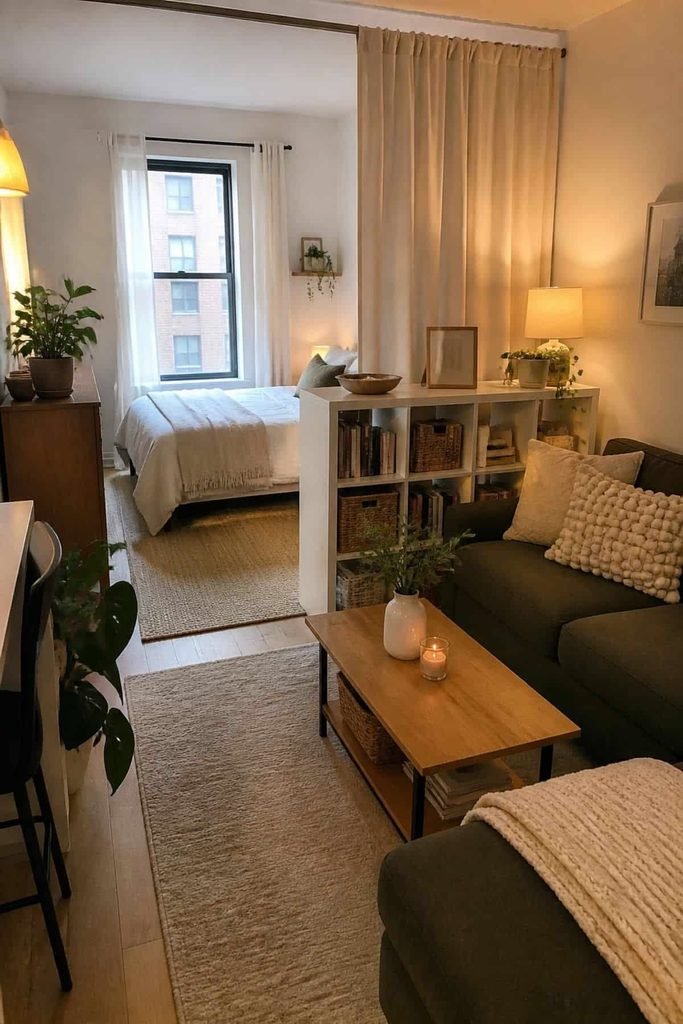
If you host often, a one-bedroom has a clear advantage: guests can sit in the living area while the bedroom stays closed. In a studio, your bed is part of the party, which some people don’t mind and others hate.
A friend of mine, Dana, kept her studio bed hidden behind a curtain on a ceiling track for hosting nights, and said it was the best $60 she spent.
The same logic applies to overnight guests. A one-bedroom with a sleeper sofa gives guests a separate space from your bed, while a studio forces everyone into one shared room. If you host holiday gatherings, my small apartment Christmas decor guide has ideas that work in both layouts.
Sleep and Bedroom Separation
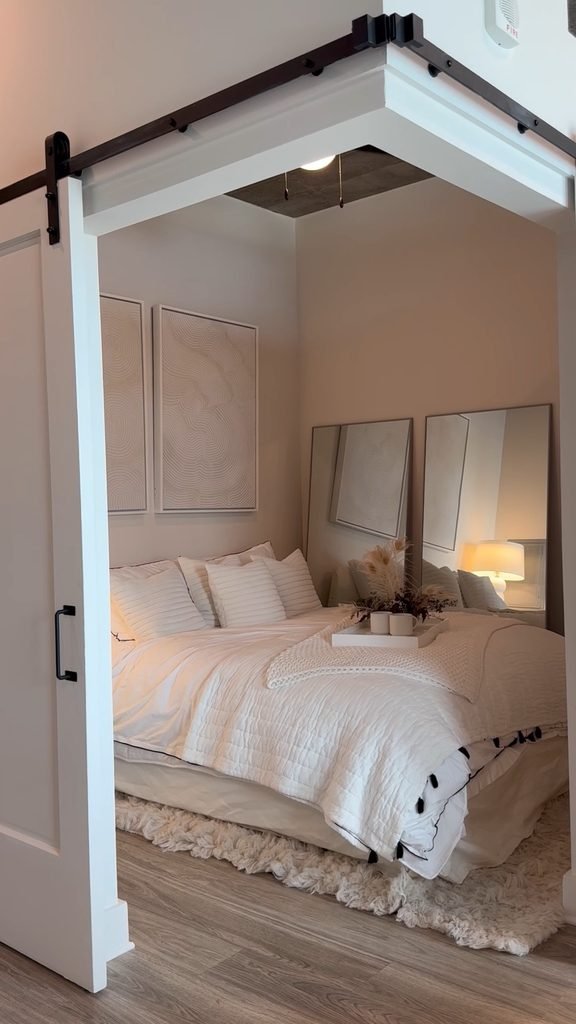
Good sleep is easier with a door between you and the rest of your life. In a studio, light from the kitchen, noise from a roommate or partner, and the glow of a laptop can all disturb sleep.
Blackout curtains, a room divider, and dimmable lamps help a lot, but they only partly replace a real wall.
If you work odd hours or share the space, this is one of the strongest arguments for a one-bedroom. If you live alone and keep regular hours, a studio with a defined sleep zone is usually fine.
Storage: Closets, Kitchens, and Hidden Space
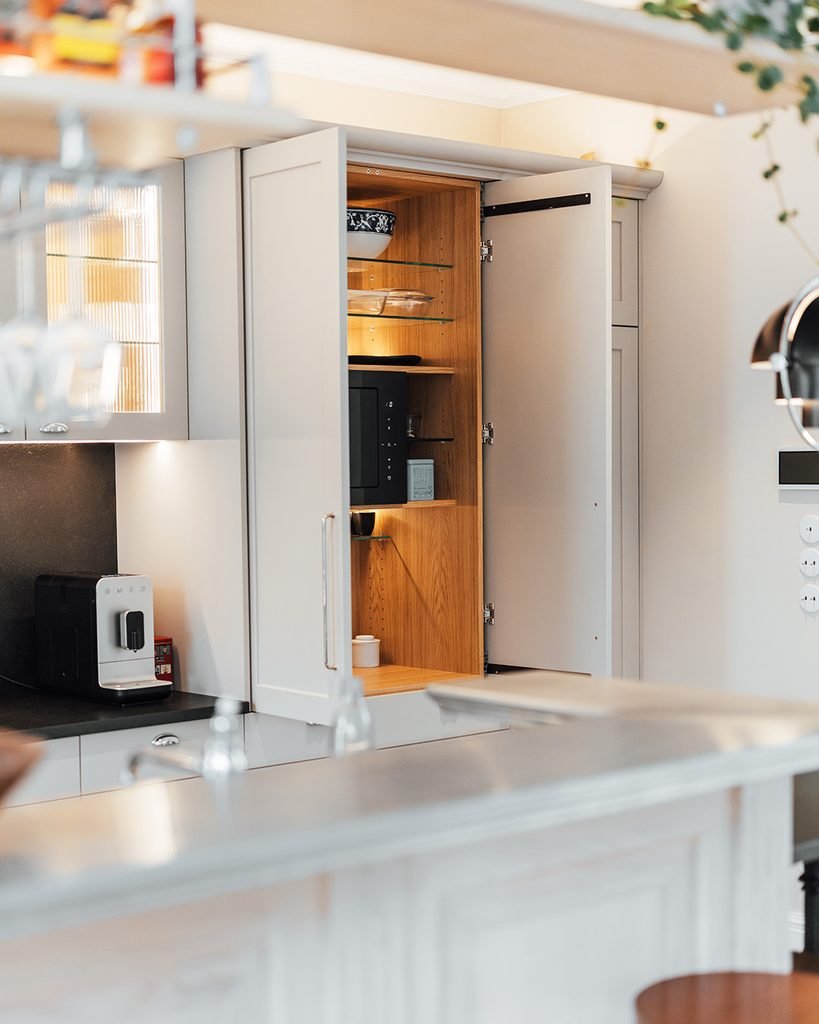
Storage is the silent deciding factor. Studios often have one closet and a small kitchen, so every item without a home ends up in the open. One-bedrooms usually give you at least a bedroom closet plus a living room or hall closet, which makes a visible difference in how tidy the place feels.
If you choose a studio, plan on vertical storage, under-bed bins, and furniture with built-in compartments. My multi-functional furniture guide goes through which pieces actually earn their space.
Pro tip: Count closet shelves and hanging rod length when touring, not just the number of closets. A “walk-in” that’s two feet deep is not the same as a real walk-in.
Furniture: What You Need to Buy for Each
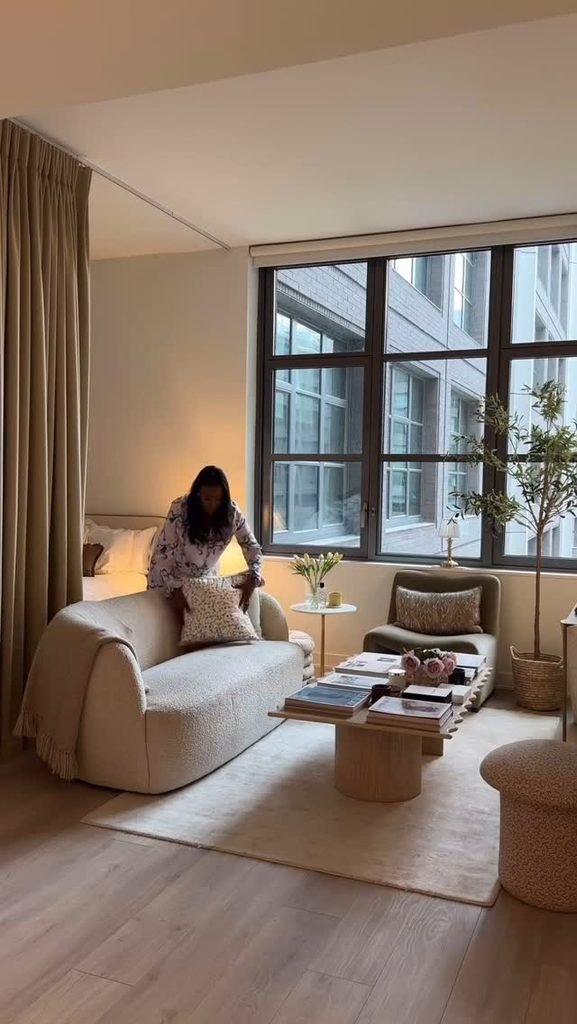
A studio needs fewer pieces overall, but each piece has to work harder. A one-bedroom needs more furniture, but each room has a clearer job, which makes shopping easier even if the total bill is higher.
Furniture Checklist: Studio vs One-Bedroom
| Item | Studio | One-Bedroom |
|---|---|---|
| Bed | Often with storage underneath or a daybed | Any standard bed, plus nightstands and dresser |
| Sofa | Compact or a sofa bed, doubles as seating | Full-size sofa possible, depending on living room size |
| Desk | Fold-down, narrow, or console-style | Standalone desk in bedroom or living room corner |
| Dining | Drop-leaf or bar-height table, or kitchen counter | Small bistro table or a table that fits the nook |
| Storage | Tall shelving, bed storage, ottomans | Dresser, closet organizers, bookshelf |
| Divider | Bookshelf, curtain on track, or folding screen | Usually not needed |
Heating, Cooling, and Utilities
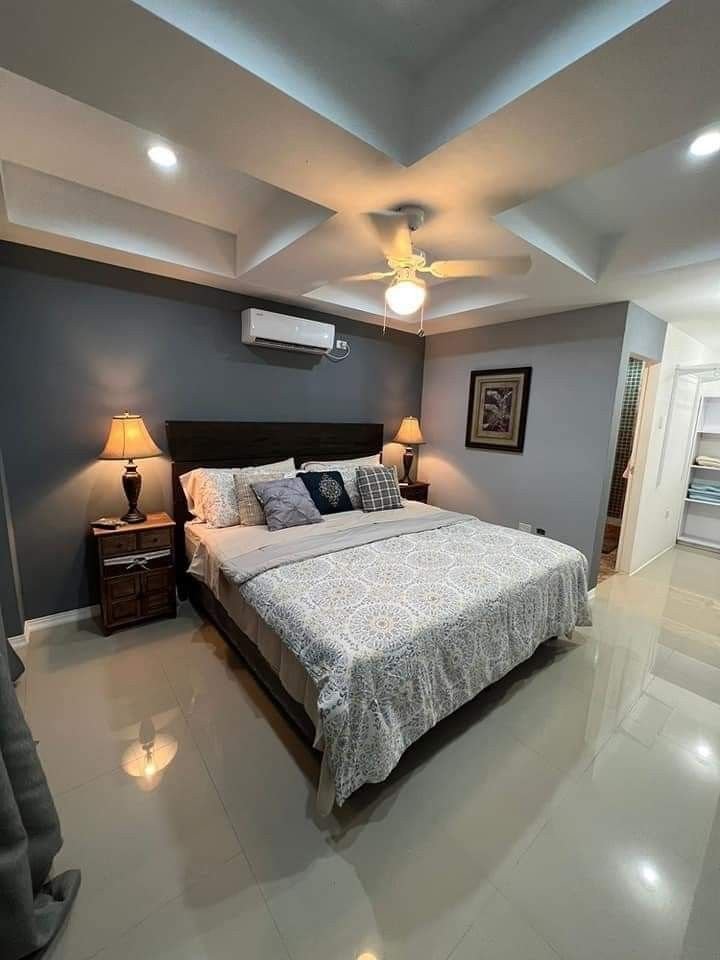
Smaller spaces are generally cheaper to heat and cool, which can offset part of a studio’s savings gap with a one-bedroom.
Open layouts also let air move more freely, so a single window unit or one thermostat setting can cover the whole space.
In a one-bedroom, check whether the bedroom has its own vent or window. A bedroom that runs hot or cold compared to the living room is a common complaint, and it’s worth asking about during a tour.
Cleaning and Maintenance
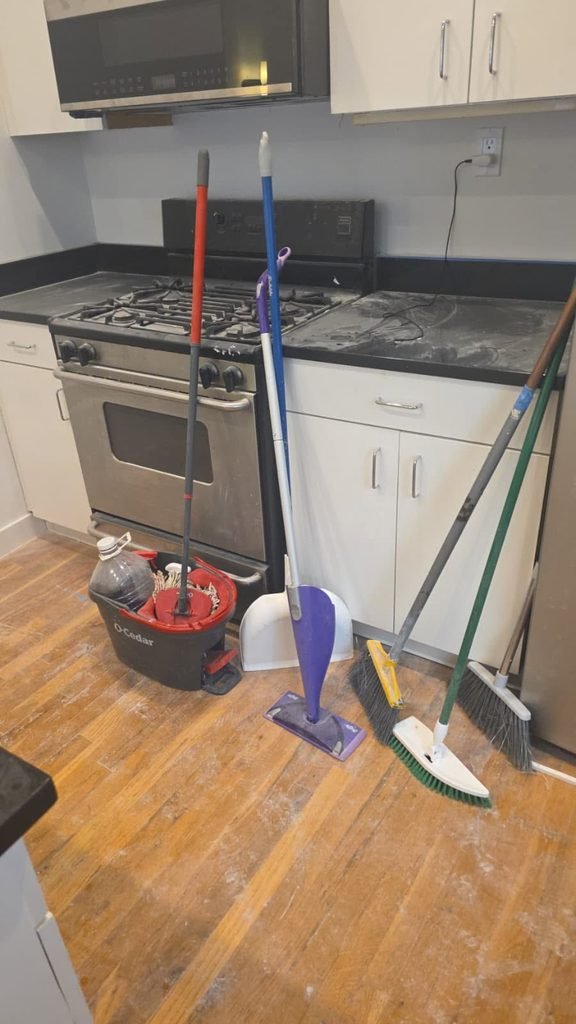
Studios win on sheer cleaning time. Fewer rooms and less floor mean a faster vacuum and a quicker reset.
The flip side is that everything is on display, so clutter shows more quickly and you can’t close a door on a messy room before guests arrive.
With a one-bedroom you get the option to close the bedroom door and hide the laundry pile, which many people consider worth the extra cleaning time.
Working From Home
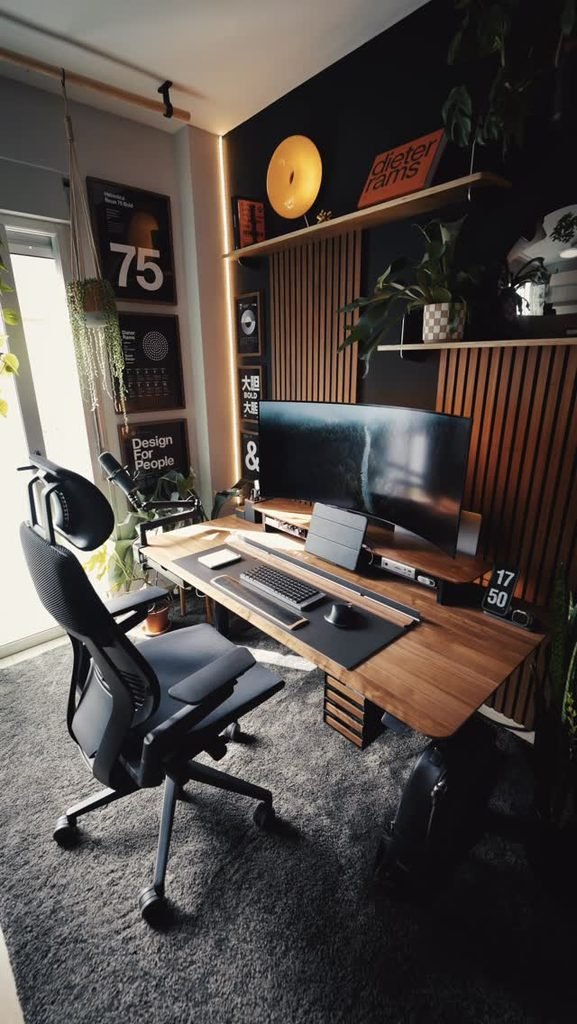
If you work from home even a few days a week, this might be your deciding factor. In a studio, your desk is in your living space, so work and rest blur together unless you actively create a boundary.
A one-bedroom gives you more options: a desk in the bedroom corner, or in the living room, with the other room staying a pure rest zone.
If you do pick a studio, put the desk on the opposite side from the bed and cover or pack away your work setup at the end of the day. That small ritual helps your brain switch off.
Kitchen Smells and Open Layouts
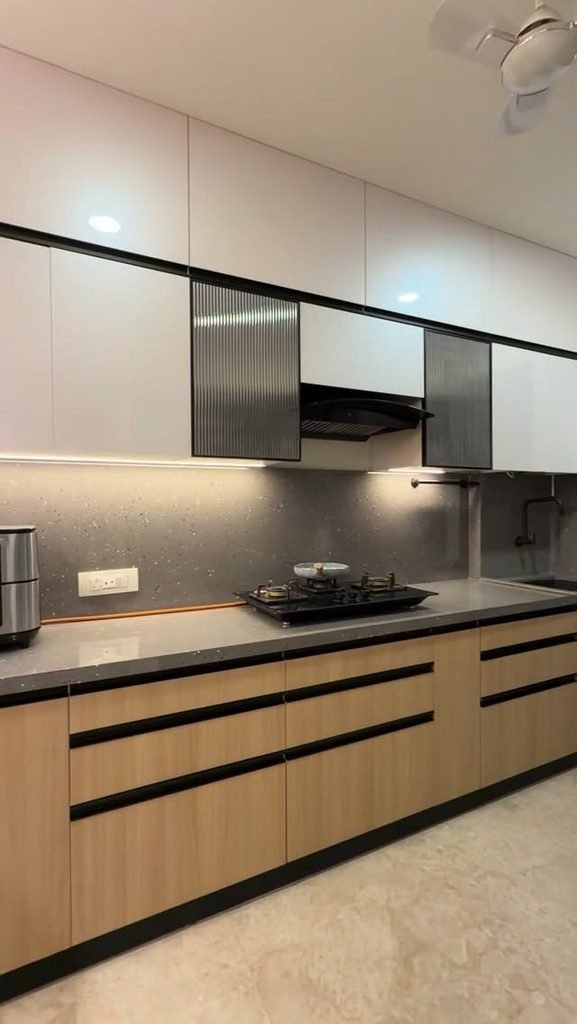
This one surprises people. In a studio, cooking smells reach your bed and your couch within minutes, and your sheets can end up smelling like last night’s dinner. A good range hood or an open window helps, but a one-bedroom keeps most of those smells away from where you sleep.
If you cook strongly scented food often, such as frying, curries, or fish, weigh this more heavily than you might expect.
Solo, Couple, or Roommates
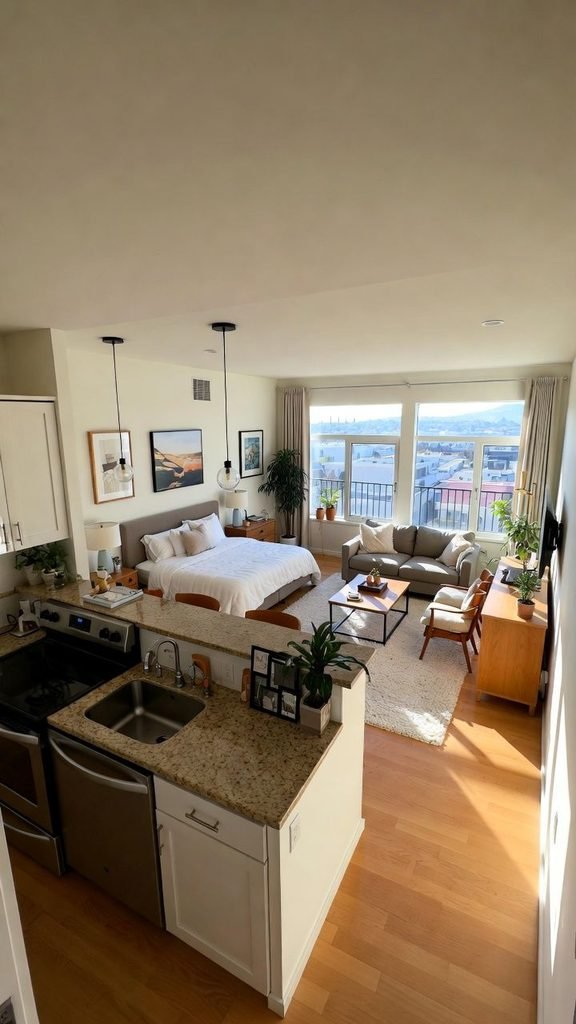
One person usually does fine in either layout. Two people sharing a studio need very good communication and good storage, since there is no room to retreat to.
Roommates in a studio are rarely a good idea unless they’re close friends or partners, while a one-bedroom with a sleeper sofa can work as a short-term shared arrangement.
If you’re a couple, think honestly about your schedules and habits. Different sleep times, or one person working from home, is usually the point where a one-bedroom starts to pay for itself.
Flexibility When Your Life Changes
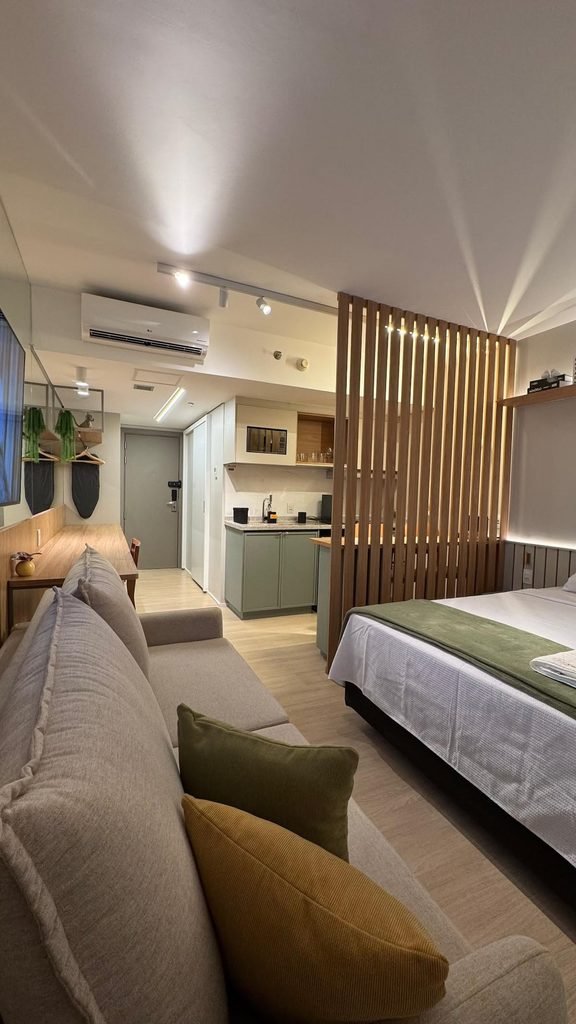
A studio tends to be easier to leave, sublet, or downsize from, and often has shorter or more flexible lease options in some buildings.
A one-bedroom can be a better long-term base, especially if you expect a partner, a pet, or a home office to enter the picture in the next couple of years.
Think about the next 12 to 24 months, not just today. Moving costs money and time, so a slightly bigger place that fits your near future can be cheaper than moving twice.
Decorating Each One So It Feels Like Home
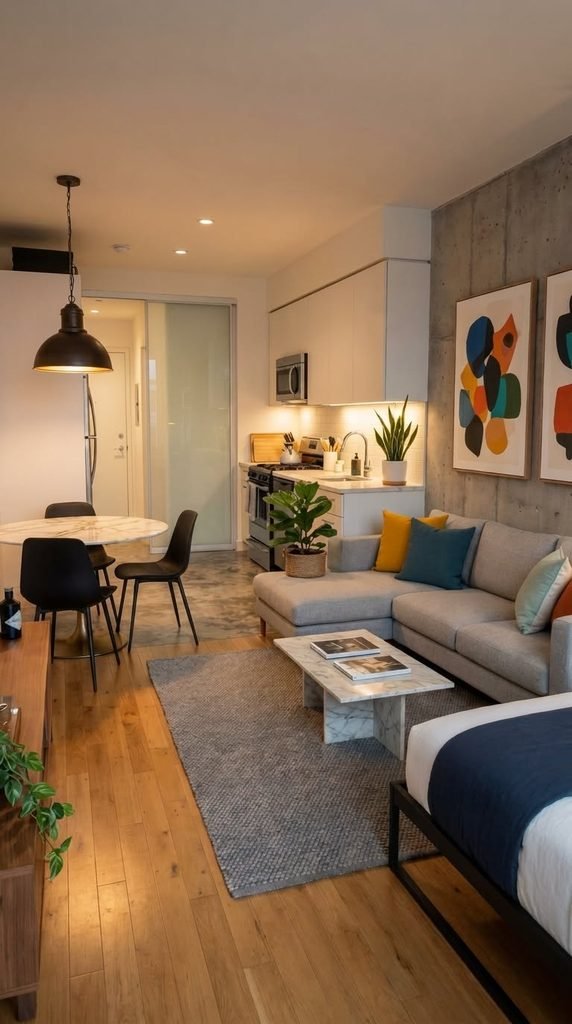
Whichever you choose, the same principles apply: keep the floor as clear as possible, use light colors and mirrors, and make each zone feel intentional.
My small apartment decorating ideas post covers the basics, and my roundup of small apartment decor trends shows what’s working in both studios and one-bedrooms right now.
If you rotate decor with the seasons, my fall apartment decor ideas post has easy swaps that don’t need extra storage.
Studio vs One-Bedroom at a Glance
| Factor | Studio | One-Bedroom |
|---|---|---|
| Monthly rent | Usually lower | Usually higher |
| Privacy | Low, one shared room | High, separate bedroom |
| Hosting | Bed is part of the party | Bedroom can be closed off |
| Storage | Limited, needs smart furniture | More closets and wall space |
| Furniture cost | Fewer pieces, often multi-use | More pieces overall |
| Cleaning time | Shorter | Longer |
| Working from home | Work and rest blur together | Easier to separate zones |
| Cooking smells | Reach bed and couch | Mostly stay in the kitchen |
| Best for | Solo renters, tight budgets, short stays | Couples, remote workers, frequent hosts |
My Honest Take, and What I’d Do First
If I were choosing again, I’d pick based on three questions: Do I work from home more than twice a week? Do I host regularly? Do I cook food with strong smells? If the answer to two of those is yes, I’d pay for the one-bedroom.
If it’s no across the board, I’d take the studio, put the savings toward good lighting and a decent bed, and not look back.
In the end, the studio vs one-bedroom question isn’t really about square feet. It’s about which space lets you rest, work, and host without constantly fighting your own home.
Visit both at the time of day you’d actually be there, picture your routine in each, and trust what you notice, not just the price.
FAQs
Is a studio or a one-bedroom better for one person?
It depends on your habits. A studio is often enough and costs less, but if you work from home, host often, or value a quiet sleeping space, a one-bedroom can be worth the extra cost.
How much more does a one-bedroom cost than a studio?
It varies by city and building, but one-bedrooms generally cost more per month and often have higher utility bills. Compare actual listings and ask about average utility costs before deciding.
Can two people live comfortably in a studio?
It can work for couples who are very organized and don’t mind sharing one room, especially with good storage and clear zones. If one person works from home or keeps different hours, a one-bedroom is usually more comfortable.
How do I make a studio feel like it has separate rooms?
Use a bookshelf or curtain as a divider, place rugs to mark zones, and use different lighting for each area. Keeping the bed away from the entrance and the desk away from the bed also helps.
Is a one-bedroom worth it if I rarely use the bedroom for anything but sleeping?
If you only sleep there and don’t mind a shared space, you might get more value from a well-planned studio. But if you value being able to close a door on the rest of your life, the separation alone can be worth it.
Which is easier to decorate on a budget?
Studios usually need fewer items, so they can be cheaper to furnish, but each piece needs to do double duty. One-bedrooms need more furniture overall, though each room is simpler to plan.










Leave a Reply