
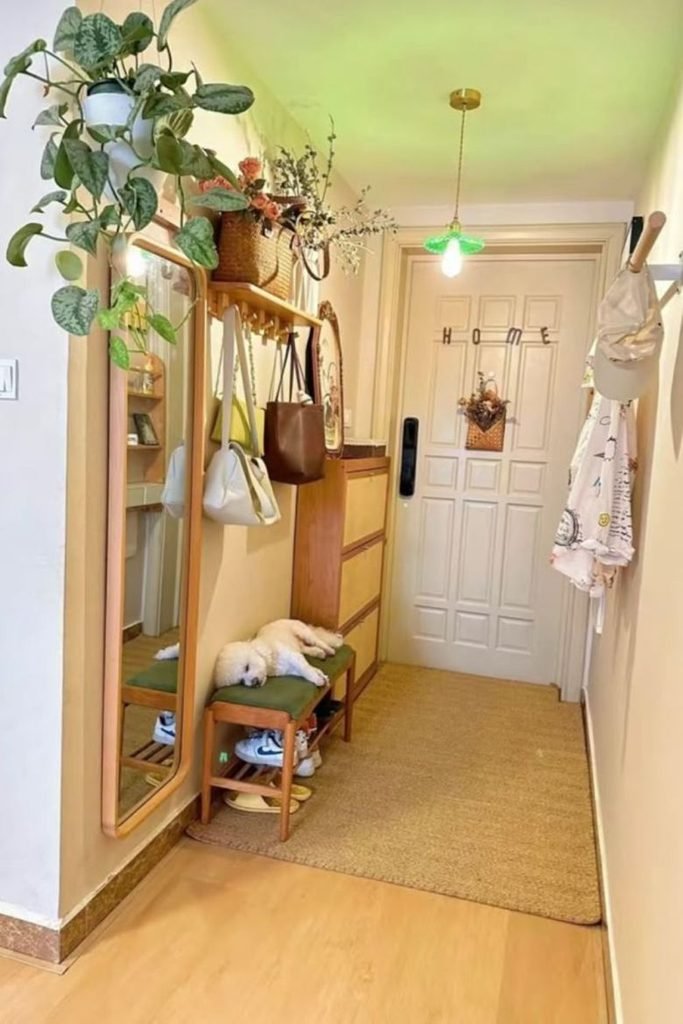
For almost two years, my front door doubled as a shoe avalanche. I’d come home, kick off whatever I was wearing, and then step over the pile every single morning like it was a normal part of the floor plan. My place is a 410 square foot studio, so “a little mess” was never little for long.
Here’s what I learned after reorganizing basically every corner of it: most home organization ideas fail because they’re designed for a styled photo, not for a Tuesday night when you’re tired and just want to put the groceries away.
The ideas below are the ones that survived real life, either in my place or in the apartments of friends and readers who were willing to be honest about what fell apart. If you’re also trying to make your place look good while you’re at it, my guide to small apartment decorating ideas pairs nicely with everything here.
I’ve organized this post room by room, with a mix of $10 fixes and a few worth-it splurges, and I’ve been upfront about what each one costs and where it falls short. Nothing here requires a renovation or a landlord’s blessing. If you’re new to all of this, start with my apartment living for beginners primer, then come back and pick the room that annoys you the most.
The One Rule I Wish I’d Followed Before Buying a Single Bin
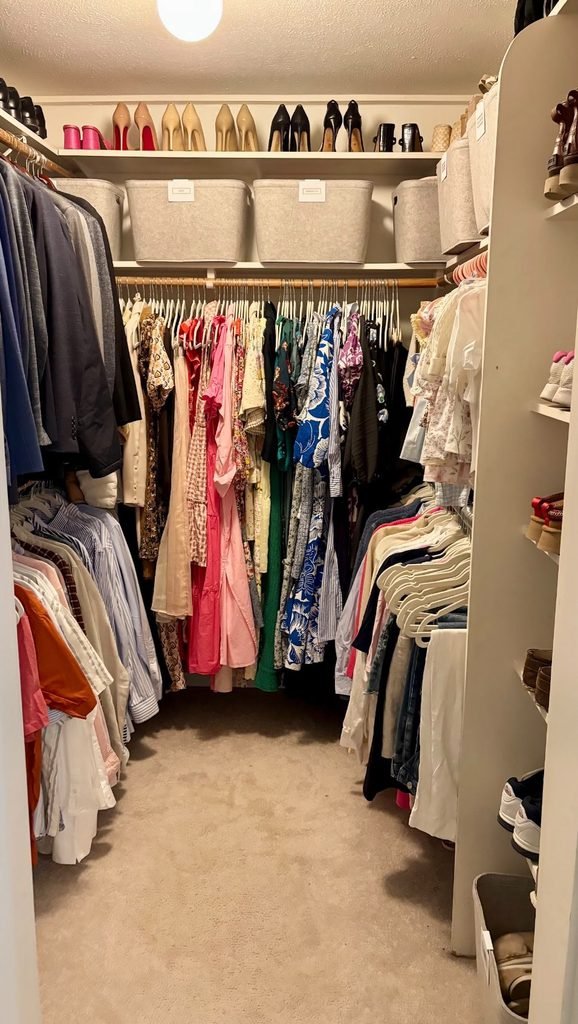
Declutter first, then buy containers. I know, everyone says this, and I ignored it too. I spent about $85 on matching baskets for a closet I hadn’t actually sorted, and I ended up with beautifully organized stuff I didn’t want.
Pull out what you don’t use, then measure the space that’s left, because the right organizer is almost always determined by the measurements and not by what looked good in a store.
Also keep a running note on your phone with the width, depth, and height of every shelf, drawer, and cabinet you plan to organize. It takes ten minutes and saves you from returning three things.
And if you’re working with a very tight footprint, the tricks in how to make a small apartment feel bigger start with exactly this step, which is clearing out what’s crowding the room.
1. Swap the Coat Tree for a Wall Hook Rail (Entryway Organization)
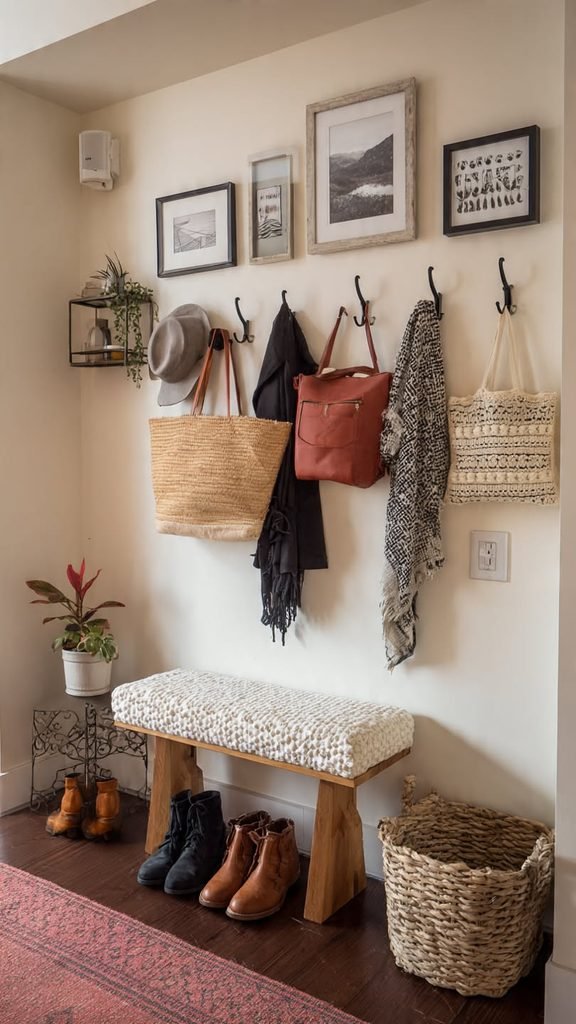
A freestanding coat tree takes up floor space and tips over the moment someone hangs a heavy tote on one side.
Mine fell onto a guest twice before I retired it. A wall-mounted hook rail does the same job from a spot you weren’t using anyway, and it keeps the floor clear, which makes a tiny entryway feel bigger immediately.
Mount it around 60 inches high for adult coats, and if you share the space with kids or want a spot for tote bags, add a second, lower row. Plan on one hook for every 6 to 8 inches of rail, because bulky coats crowd each other.
If you rent, check what your lease says before you drill. I walked through exactly what gets people in trouble in common apartment renter mistakes, and a few small screw holes filled with spackle is usually fine, though adhesive rails work if you buy ones rated well above your actual load.
Pro tip: Look at the weight rating on the package, not the photo. A rail rated for 10 pounds will not survive a wet winter coat plus a laptop bag.
2. Give Shoes a Shallow Cabinet and a Hard Limit (Shoe Storage Ideas)
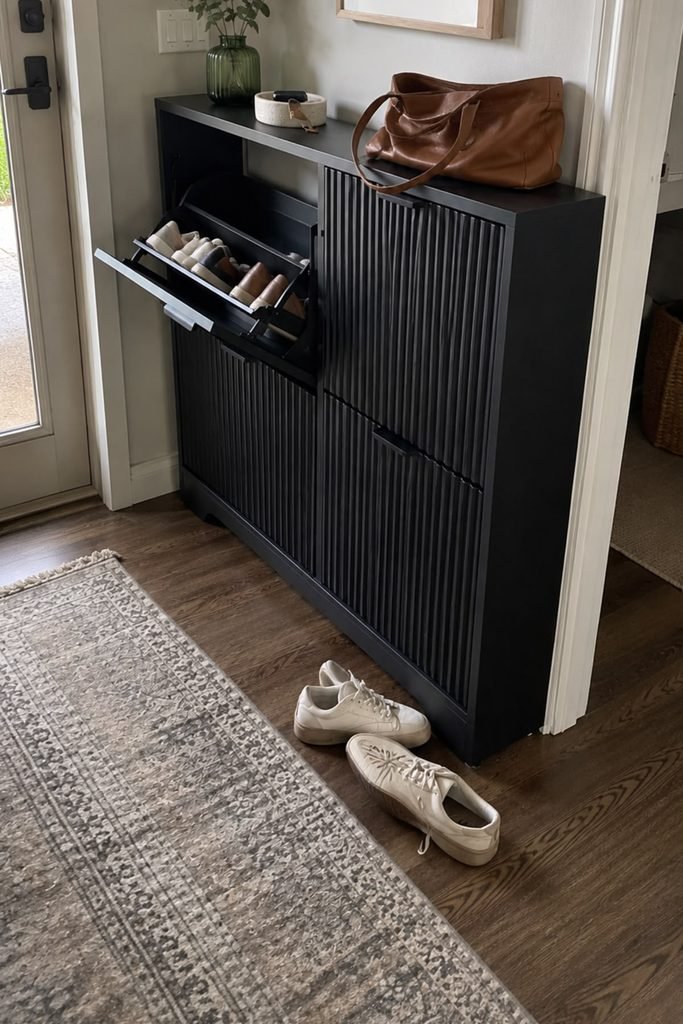
Shoes were my original problem, and a rack alone didn’t solve it, because a rack just gives the pile a nicer shape.
What worked was a shallow tilt-out cabinet, about 8 inches deep, paired with a rule: three pairs per person live by the door, and the rest go to the closet. That limit matters more than the furniture.
If you’re deciding what to buy, this is the comparison I wish I’d had. Prices are rough ranges and depend heavily on the brand and material.
| Entryway Option | Rough Cost | Best For | Downside |
|---|---|---|---|
| Open shoe rack | $15 to $35 | Tight budgets, quick fix | Looks messy fast, collects dust |
| Tilt-out shoe cabinet | $60 to $150 | Narrow entryways | Fits fewer pairs than it looks like |
| Bench with cubbies | $80 to $220 | Households with 2 or more people | Needs more depth, usually 14 inches or more |
| Over-the-door rack | $12 to $30 | Dorms and strict renters | Door may not close fully, strains hinges |
If your entry is truly narrow, look at the options in my roundup of storage furniture for apartments, since a few of those pieces are under 10 inches deep.
3. Build a Landing Strip for Keys, Mail, and Sunglasses
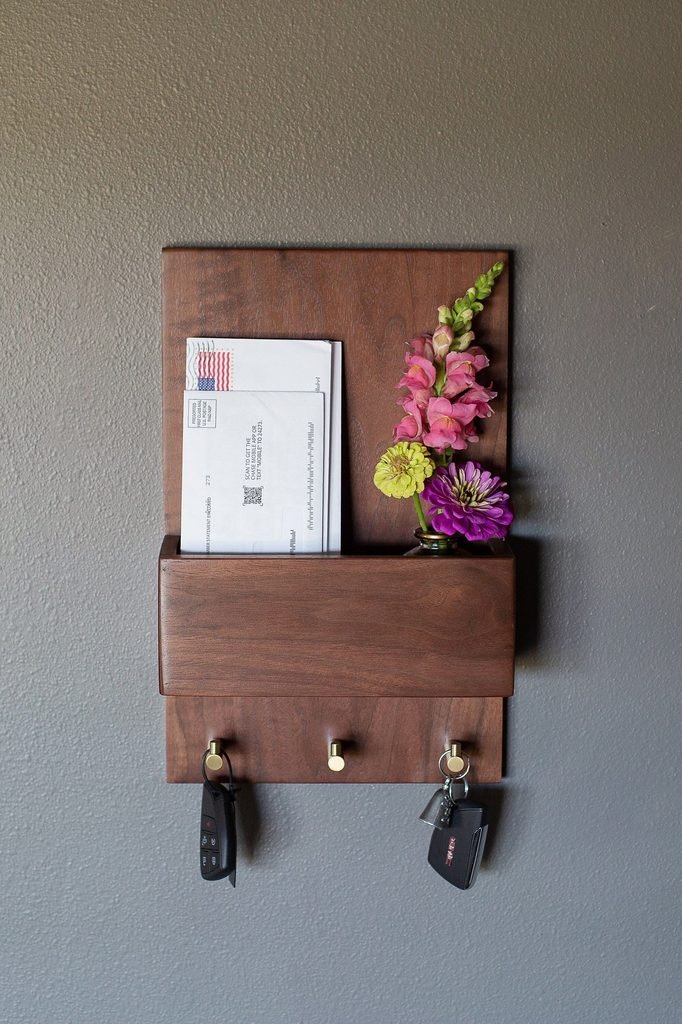
I lose my keys in my own 410 square feet, which feels impressive. A reader named Priya left a comment a while back saying she’d put a small wall shelf with three hooks right at eye level by her door, and the “where are my keys” panic basically vanished.
I copied her setup, and I’m a little annoyed it took a stranger’s comment to get me there.
The idea is to give every item that follows you through the door a permanent address: hooks for keys, a small tray for sunglasses and earbuds, and a slot or file for mail.
Sort the mail right there, standing up, and put a tiny wastebasket or recycling bin nearby so junk mail never makes it past the door. This kind of organizing is also an easy way to use vertical space in a small apartment, since all of it lives on a wall.
Pro tip: Mount a wall organizer a little lower than you think you need to. At eye level it becomes a place to stash random things, and at chest height it stays a place for keys.
4. Assign One Basket Per Person for Bags and Things in Transit
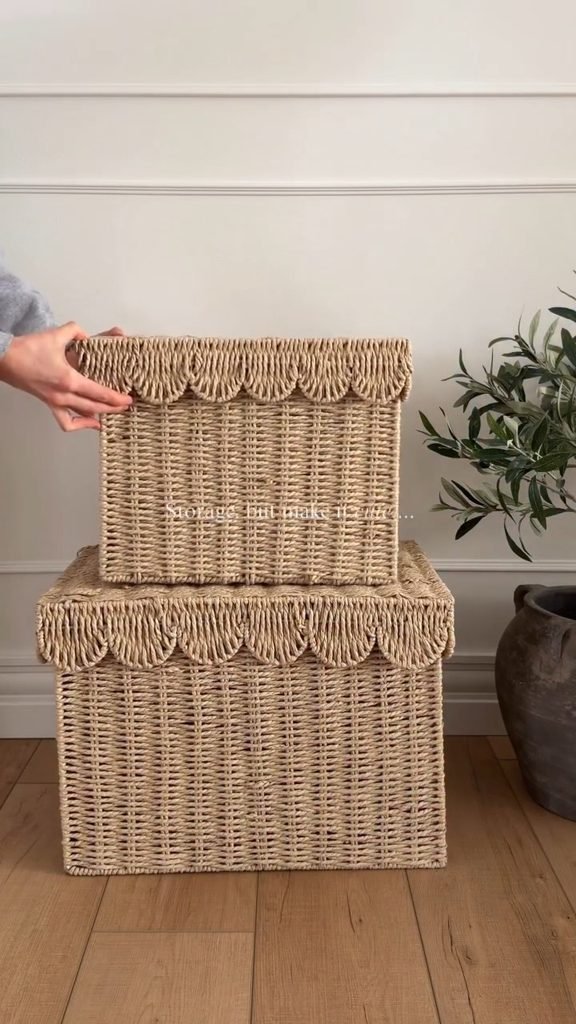
Bags, gym clothes, library books, the package you’re returning. This stuff doesn’t have a natural home, so it lands on the nearest chair. A basket per person, sitting on the floor or on a bench, gives it a legal parking spot, and everyone in the house can see at a glance what’s theirs.
I prefer lidded or deep woven baskets because the contents get hidden, which matters if your entryway is visible from your couch. Flat, open baskets look tidier in photos and messier in real life.
Label them if you live with roommates, because nothing ends a good system faster than arguing over whose scarf it is. If your first place is still half-furnished, my first apartment checklist covers what’s worth buying early and what can wait.
5. Choose a Storage Ottoman That Opens From the Top (Living Room Storage Ideas)
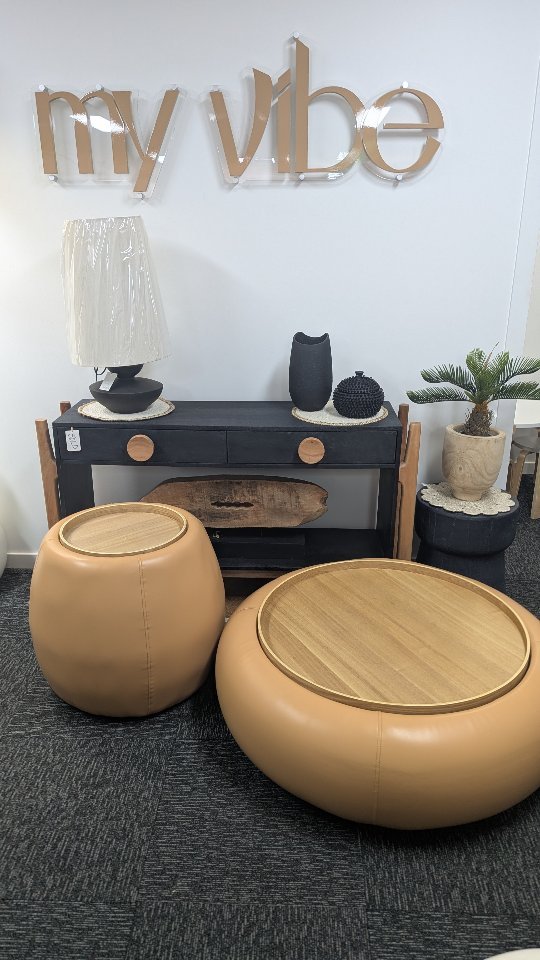
If you only buy one piece of hidden storage for the living room, make it an ottoman. It holds blankets, spare pillows, a game console, or remote controls, and it doubles as extra seating or a footrest. It’s one of the clearest examples I know of the thinking behind multi-functional furniture for a small apartment.
The trade-off is quality. I bought a $45 fold-flat ottoman that sagged in the middle after about three months, and the lid wouldn’t sit flat again. The replacement was around $110 with a solid wood frame, and it has held up for over two years.
Check the lid hinge, check whether the base is rigid, and give it a firm press with your hand in the store or read reviews that mention the lid specifically.
Pro tip: Set a flat tray on the lid so it works as a coffee table. Just keep the heavy stuff, like board games, at the bottom so the lid never has to carry a load.
6. Tame the Cable Nest Behind the TV
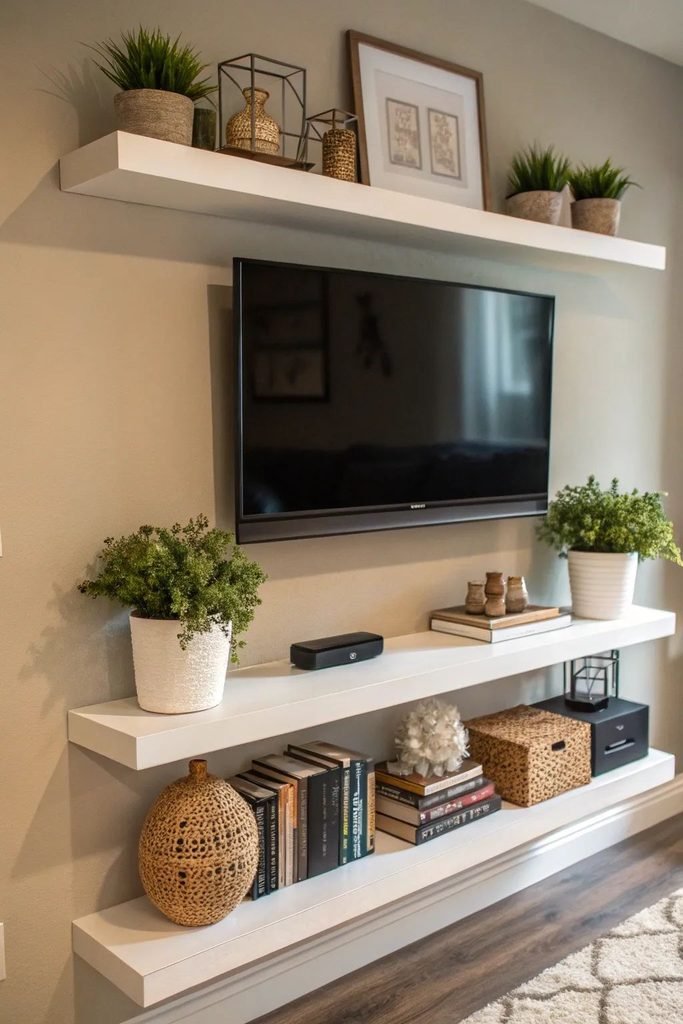
The cords behind my TV used to look like a spaghetti dinner gone wrong. It didn’t hurt anything, but it made the whole corner feel chaotic and made dusting impossible.
A few $10 fixes handle most of it: a power strip mounted under the console, reusable velcro ties, and a paintable cord cover running down the wall.
Before you unplug anything, take a photo of the back so you remember where everything goes. Then label each cord at the plug end with a small strip of masking tape, since six identical black cables are impossible to tell apart three months later.
Cleaning up the cable situation is often the fastest visual win in small living room ideas because it removes noise without adding any furniture.
7. Use Closed Bins on Floating Shelves, Not Just Pretty Objects (Small Space Organization)
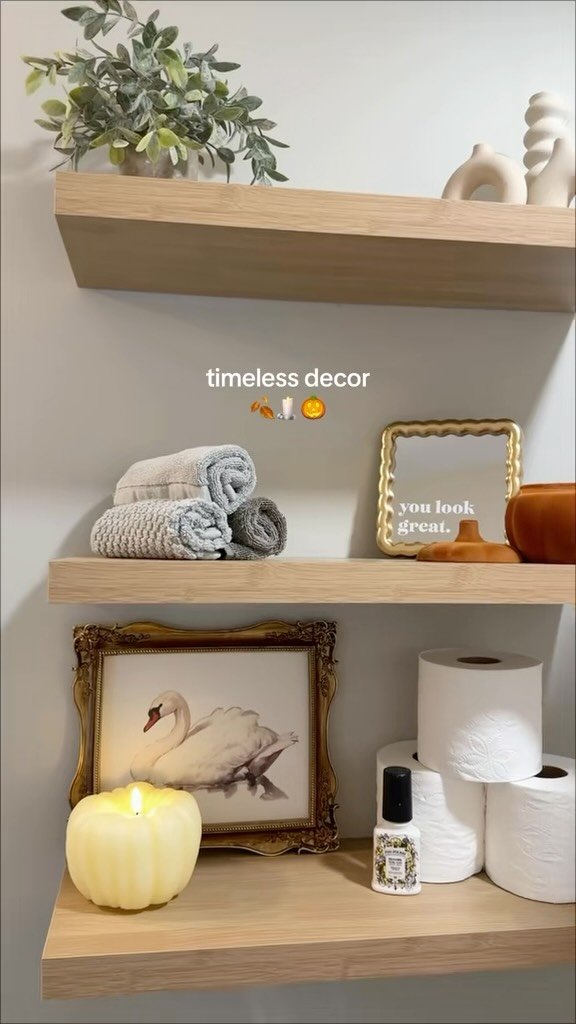
Open shelving is gorgeous and also unforgiving. My friend Dana filled her entire shelf wall with styled books and candles, then realized she had nowhere to put her remote, chargers, or the junk that every living room generates.
Her fix was swapping two thirds of the display items for closed baskets, with the styled pieces on top.
That’s the ratio I’d recommend: about one third decorative, two thirds closed storage. The bins hide visual noise, and the objects on top still give the wall personality.
Open shelving is a big part of what’s shaping small apartment decor trends, and this is the practical way to make it livable. Just know that shelves collect dust, so skip the delicate pieces you’d hate to wipe down every week.
8. Slide Flat Bins Under the Sofa
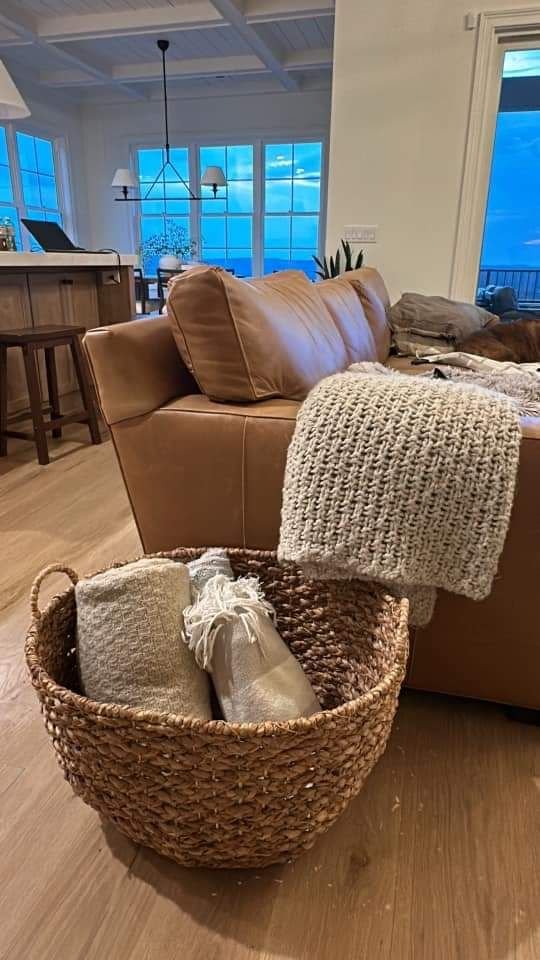
The gap under your sofa is free storage, and most people use it for dust. Low, flat bins with lids hold throw blankets, extra sheets, and board games, and they slide out like drawers.
First measure the clearance from the floor to the bottom of the frame, because you generally need at least 4 to 6 inches.
If your sofa sits too low, furniture risers add about 2 to 3 inches for around $12 a set. Just don’t raise a sofa that has a bed mechanism without checking how it opens.
If you’re working with a pull-out, my guide to convertible sofa beds for small spaces explains which styles leave usable room underneath and which don’t.
9. Install Drawer Dividers for Utensils (Kitchen Organization Ideas)
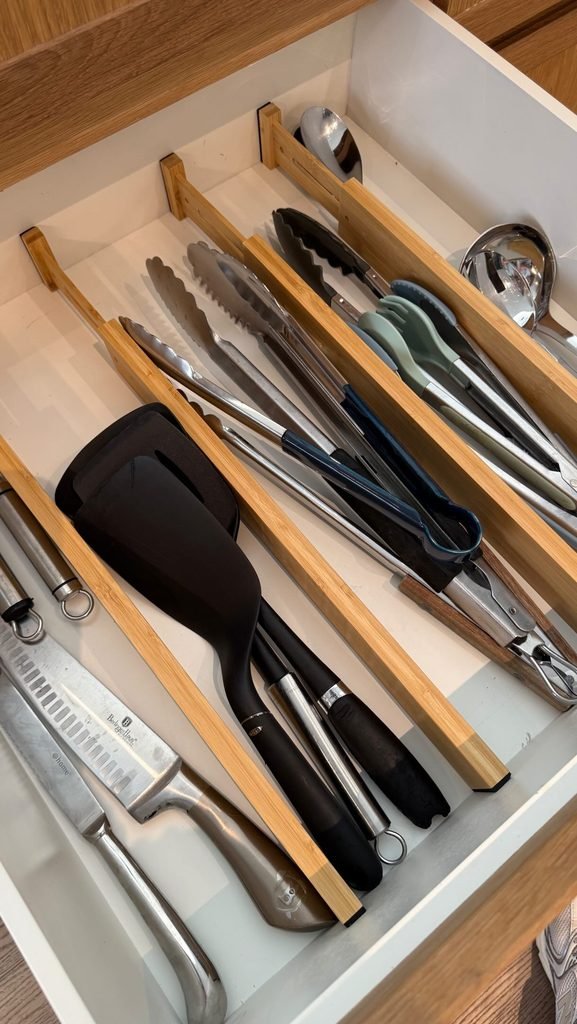
My utensil drawer once contained eleven bottle openers. I counted. Dividers force you to decide what actually belongs, because every category gets a defined compartment, and anything that doesn’t fit gets donated.
Adjustable bamboo trays are the most flexible, while fixed plastic ones cost less but only fit certain drawer widths.
Measure the inside of the drawer, not the outside, and buy a set that lets you resize. Add a sheet of non-slip shelf liner underneath so the tray doesn’t shift every time you open it.
If you’re stocking a kitchen from scratch, the kitchen section of my first apartment checklist will help you buy only what the drawers can realistically hold.
Pro tip: Keep the things you grab daily, like a spatula and a whisk, in the front compartment. Odd tools like the garlic press can live in the back.
10. Put a Lazy Susan in the Corner Cabinet
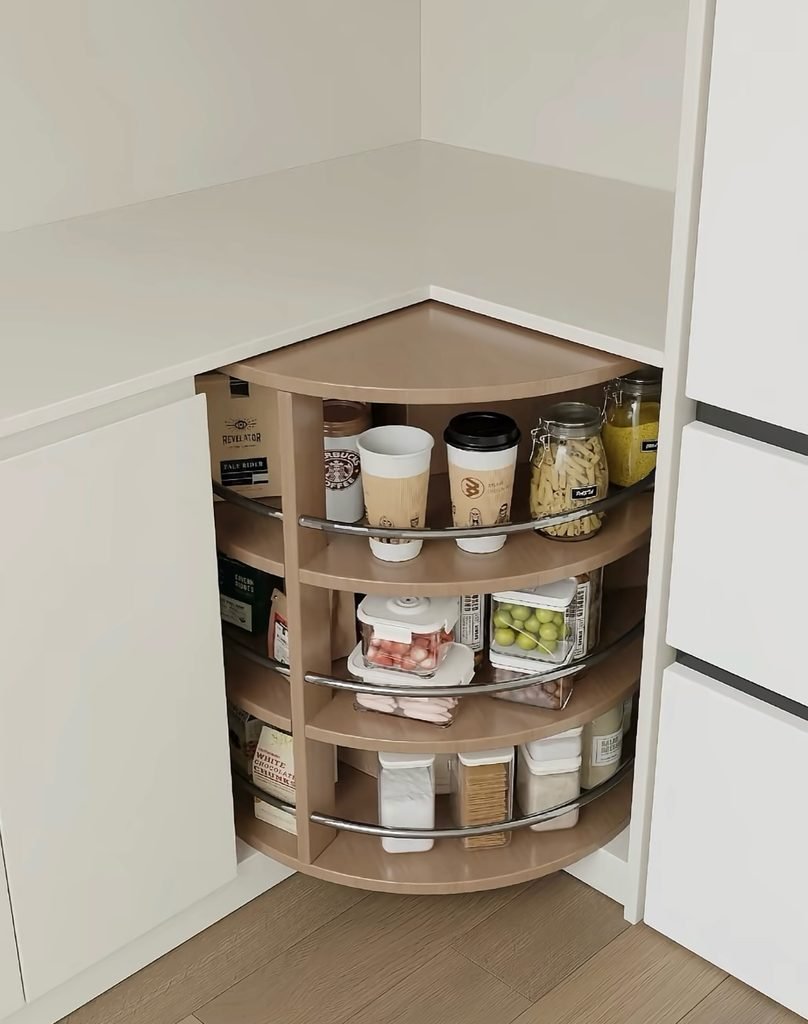
Corner cabinets swallow things whole. Anything you push to the back disappears until you find it, expired, six months later. A turntable brings it all to you with one spin, and it’s one of the cheapest upgrades in this entire post.
Match the size to the job. A 9 inch version suits spices and small bottles, while a 12 to 14 inch version works better in a deep corner for oils and sauces.
Look for one with a raised lip, because spills happen, and avoid tall bottles on the edge where they’ll tip. At roughly $10 to $25, this is the sort of fix I recommend first when readers ask about furnishing a small apartment on a budget.
11. Mount a Door Organizer for Lids and Cutting Boards
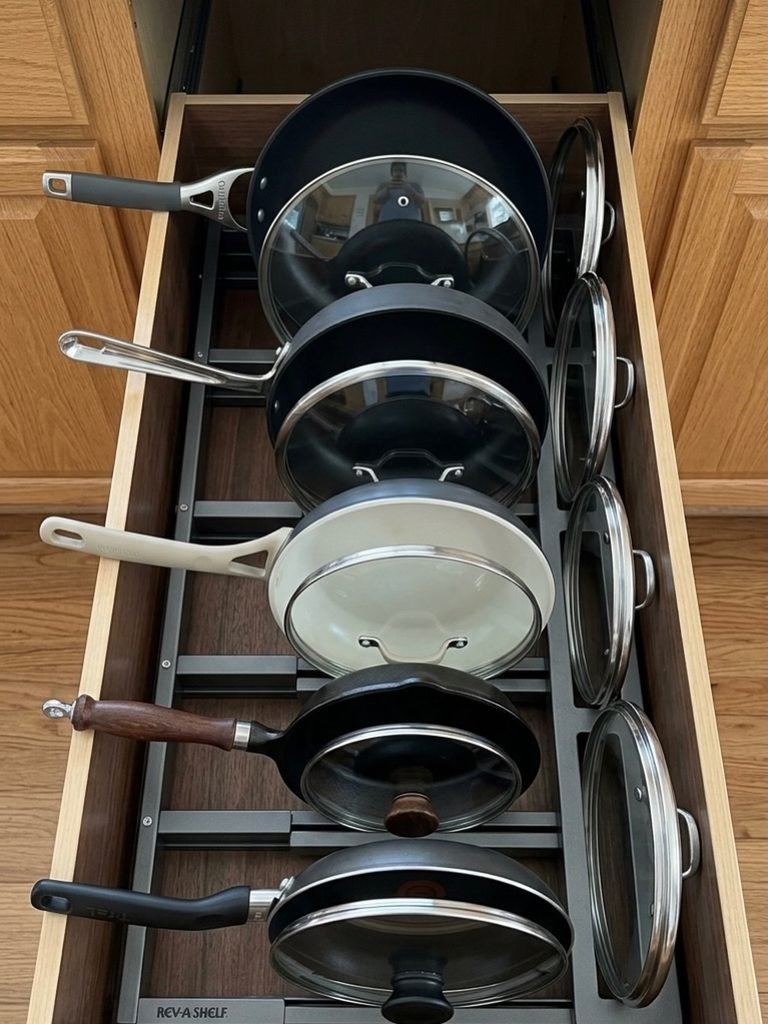
Pot lids are the worst kitchen storage problem because they’re round, awkward, and always sliding out of the stack. A rack on the inside of a cabinet door holds them upright, so you can find the right one without a clatter. The same type of rack also works for cutting boards and baking sheets.
Check how much clearance there is between the door and the shelf inside before you commit, since some cabinets don’t leave enough room. Adhesive-mounted versions work for lighter loads, while screw-in versions can hold a full set of lids.
It’s a smart way to use every inch of vertical space in a small apartment, including the back of a door you never thought about.
12. Add Shelf Risers Inside Cabinets
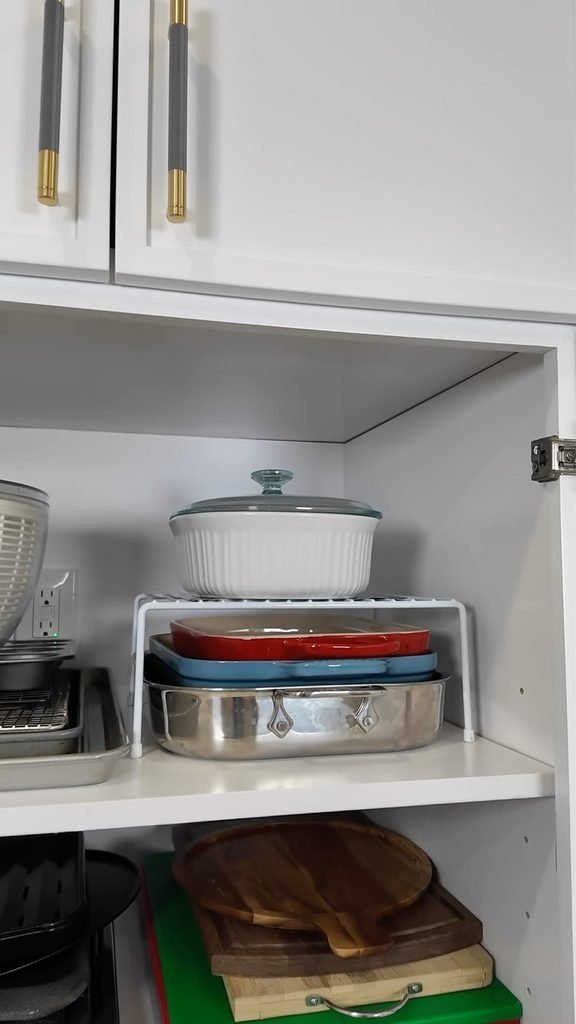
Look into your cabinet and you’ll probably see a stack of plates with six inches of empty air above them.
Expandable risers create a second level, so cups sit above bowls instead of in front of them, and you can reach everything without unstacking. It basically doubles the usable area of a single shelf.
The catch is stability. Cheap wire risers can wobble, so look for ones with rubber feet and a solid base, and don’t stack your heaviest dishes on the upper tier. I’d also avoid risers for anything fragile that you pull out daily, since reaching over a front tier is where chips happen.
13. Decant Pantry Staples Into Clear Containers (Pantry Organization Ideas)
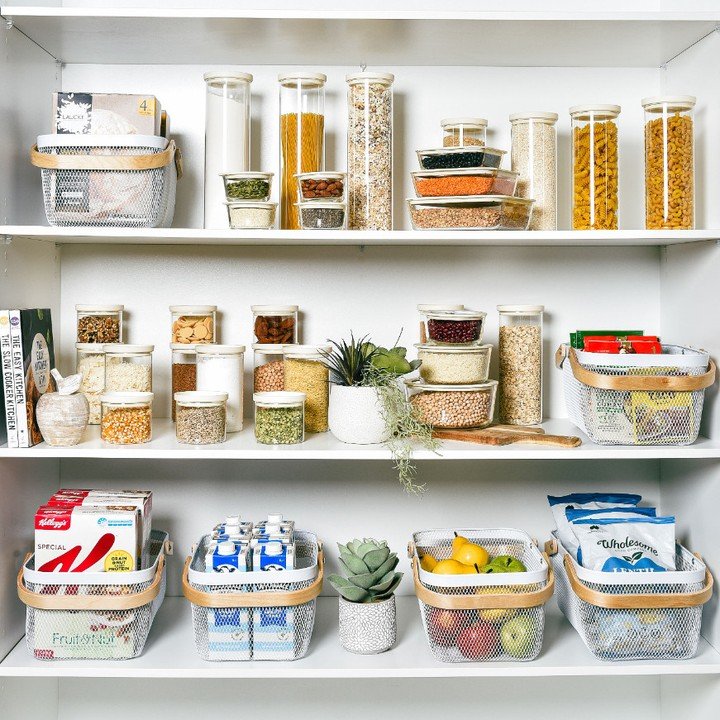
The clear-container pantry look has been all over Pinterest and TikTok for a while, and I’ll be honest, a lot of it is more about looking pretty than working well. The part worth stealing is decanting the items you open constantly, like flour, rice, pasta, and cereal.
Airtight containers keep everything fresh and make it obvious when you’re running low.
My friend Marcus learned this the hard way when pantry moths found an open bag of oats and spread to everything around it. Since then, everything with a short shelf life goes in a sealed container.
You do not need to decant every box you own, though. Six to eight good containers cost about $30 to $60 and handle the staples, and everything else can stay in its original packaging on a shelf or in a basket.
Pro tip: Tape the expiration date and the cooking instructions from the original package to the bottom or back of the container. Otherwise you’ll forget how long the rice takes.
The look is part of the larger shift toward visible, tidy storage covered in small apartment decor trends, but function should win over aesthetics every time.
14. Organize Under the Sink With Tension Rods and Stackable Bins
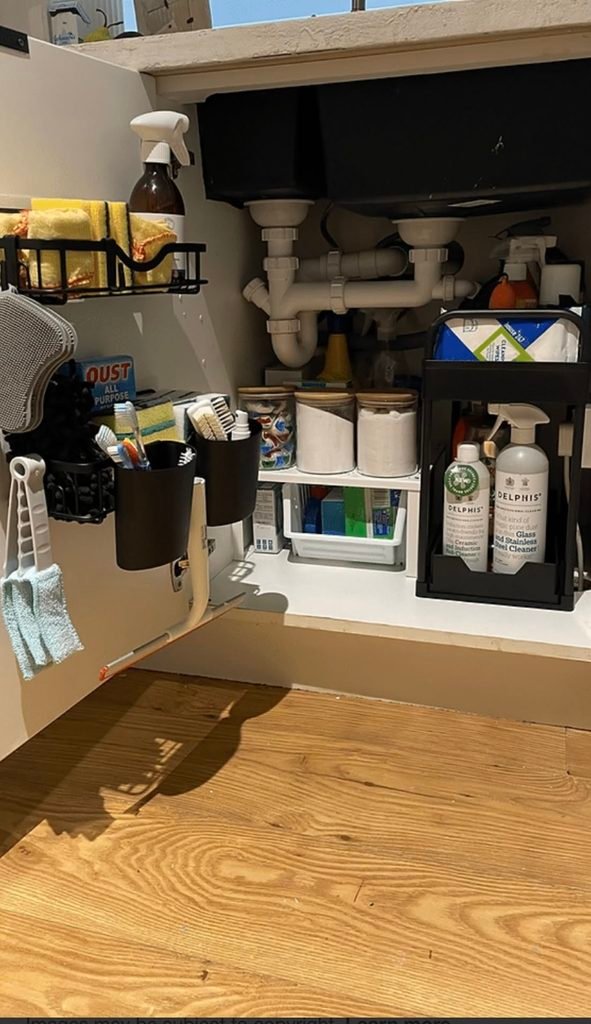
The cabinet under the kitchen sink is where good intentions go to die. Pipes in the middle, a trash bag that has leaked, and a pile of sponges.
A tension rod across the width gives you a place to hang spray bottles by the trigger, and stackable bins on either side of the pipes keep everything else contained.
Tension rods are a great renter move because nothing gets drilled or glued. If you rent, it’s the kind of thing I’d put on a list alongside the points in apartment renter mistakes to avoid, because it leaves zero marks behind.
Put a shallow tray at the bottom as well, so a slow leak shows up as a puddle you see instead of a warped cabinet floor you find months later.
15. Zone the Fridge With Clear Bins
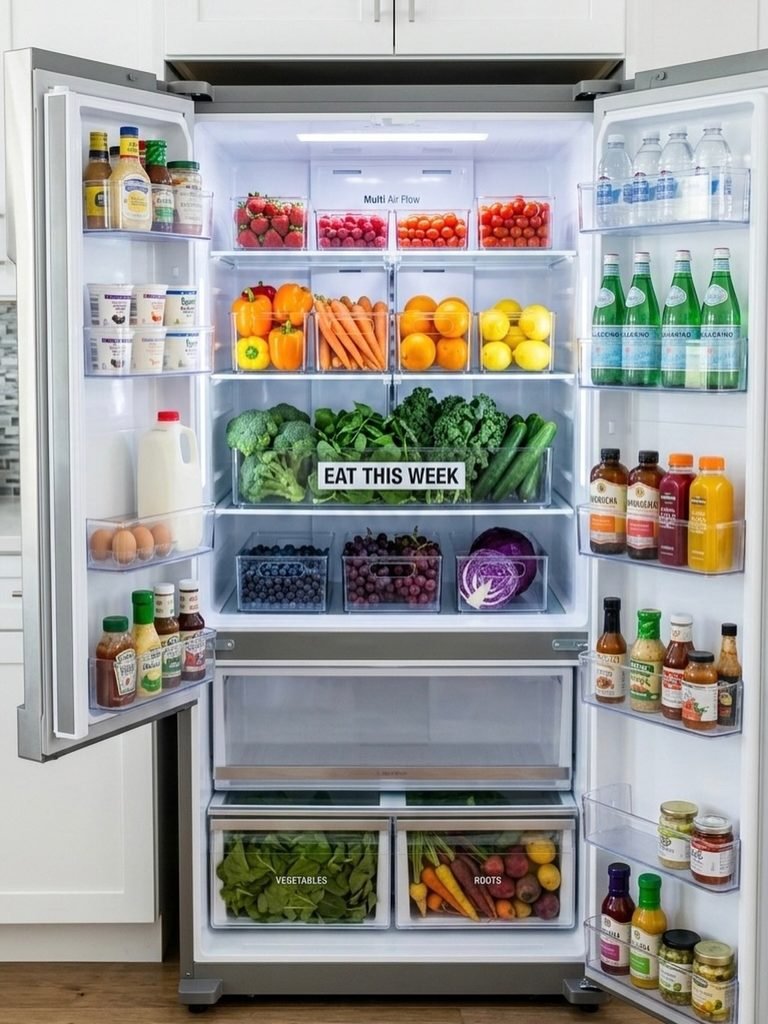
A fridge works like a tiny studio apartment, and the same logic applies as in how to zone a studio apartment. Give each type of food its own zone, and you’ll stop losing things behind the pickle jar.
I use one bin for dairy, one for snacks, one for sauces and one for “eat this first,” which holds anything close to expiring.
That last bin has cut my food waste more than any meal plan I’ve ever tried. Clear, stackable bins with handles work best, since you can pull out the whole bin to see what’s behind it. Skip the bins with solid colored fronts, because the reason you’re doing this is visibility.
16. Slim Hangers and a Closet Rod Doubler (Closet Organization Ideas)
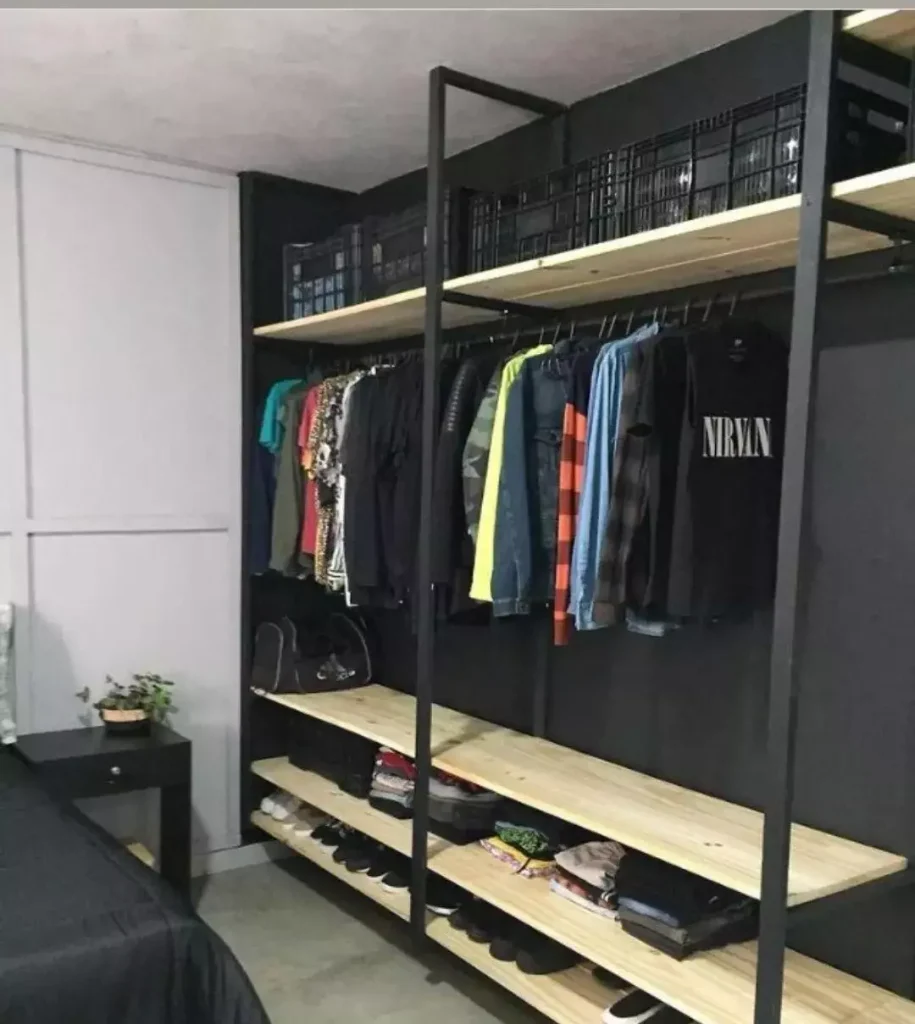
Switching to slim velvet hangers gave me roughly 30 percent more rod space without buying a single new closet piece.
They’re thin, clothes don’t slide off, and everything hangs at a uniform height. A rod doubler then adds a second hanging bar below the first, which is perfect for shirts, skirts, and folded trousers.
There are a handful of closet organizer types worth knowing, and the right one depends heavily on your closet’s shape and your budget. Here’s the quick comparison.
| Closet Organizer Type | Rough Cost | Best For | Trade-Off |
|---|---|---|---|
| Slim velvet hangers | $20 to $40 for 50 | Gaining rod space fast | Heavy coats can strain them |
| Rod doubler | $15 to $30 | Short items like shirts and skirts | Limits hanging long dresses |
| Hanging shelves | $12 to $35 | Sweaters, tees, handbags | Can sag if overloaded |
| Over-door shoe organizer | $12 to $25 | Shoes, scarves, small items | Door may not close properly |
| Modular closet system | $150 to $600 | Long-term setups, owners | Costly, harder for renters |
Not sure what’s worth buying and what’s not? My breakdown of furnishing a small apartment on a budget will help you decide where to spend and where to save.
Pro tip: Turn all your hangers backward at the start. Whenever you wear something, hang it back facing the right way. After three months, whatever is still backward is what you can donate.
17. Hang a Curtain in Front of a Doorless Closet
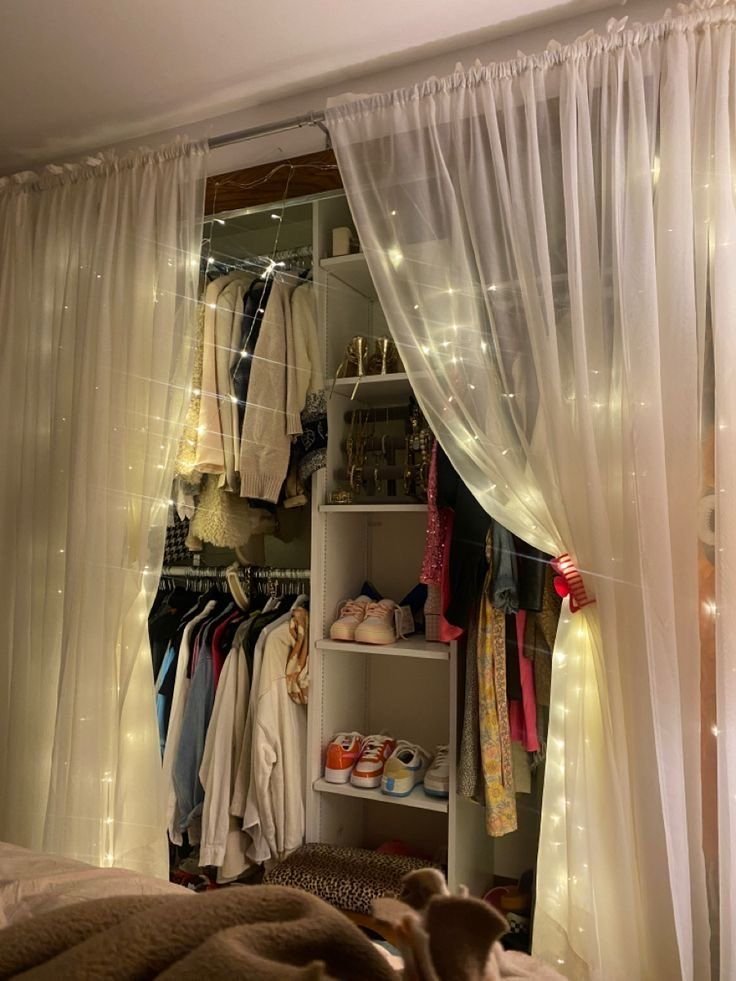
Lots of rentals have a closet with no door, or a bifold door that’s been broken since the last tenant.
A simple curtain on a tension rod hides the whole thing for a fraction of the cost of a door, and it actually looks intentional. It also softens the room, which is something most closets definitely don’t do.
Use rings with clips so you can slide the fabric aside with one hand, because the one thing people hate about curtains is the extra step.
Go with a heavier fabric if you want the closet’s contents to stay invisible, or a lighter linen if you want the room to feel airy. The same principles in how to hang curtains to make a small room look bigger apply here, especially hanging the rod higher than the opening.
18. Use Under-Bed Storage for Off-Season Items
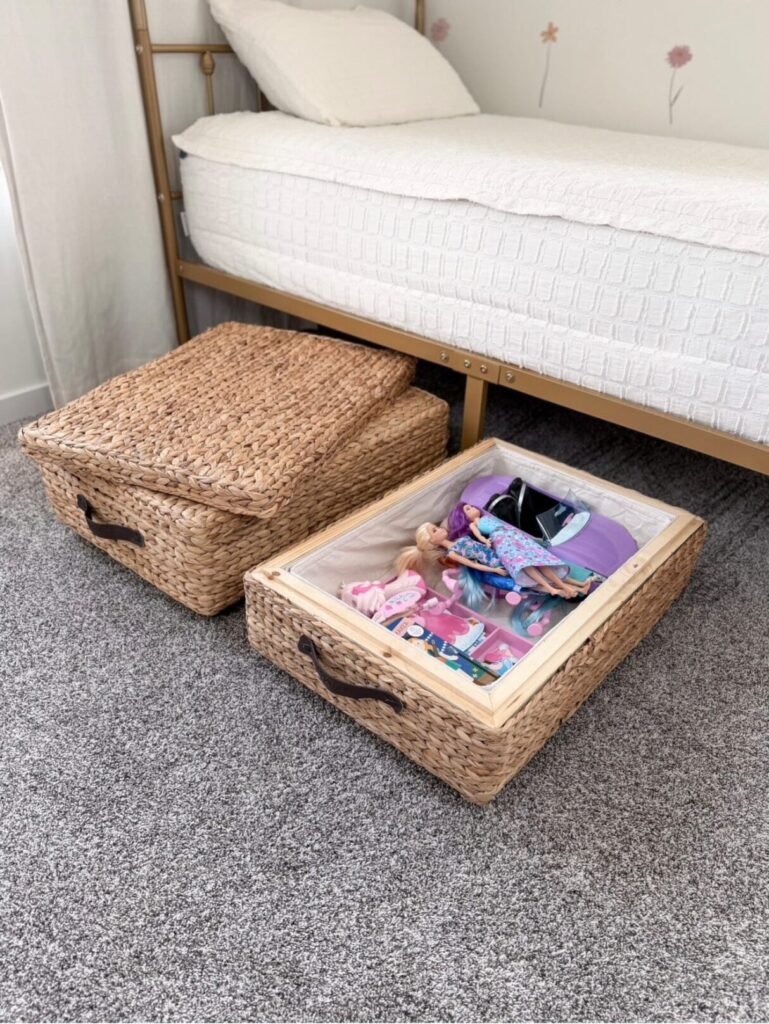
The space under a bed is the biggest hidden storage area in a studio, and I use mine for exactly one thing: seasonal stuff.
Holiday decor, spare bedding, and winter boots live there in labeled bins. If you decorate for the holidays in a small space, my tips on small apartment Christmas decor include ways to keep it from taking over your closet, and this is where most of mine ends up.
Rolling drawers are easy to use but get stuck on thick carpet, so they work best on hard floors. Bed risers lift the frame 6 to 8 inches, which opens up room for taller bins. Zippered storage bags keep dust and pests out, and I’d skip anything without a lid unless you enjoy cleaning under your bed monthly.
19. File-Fold Clothes in Drawers
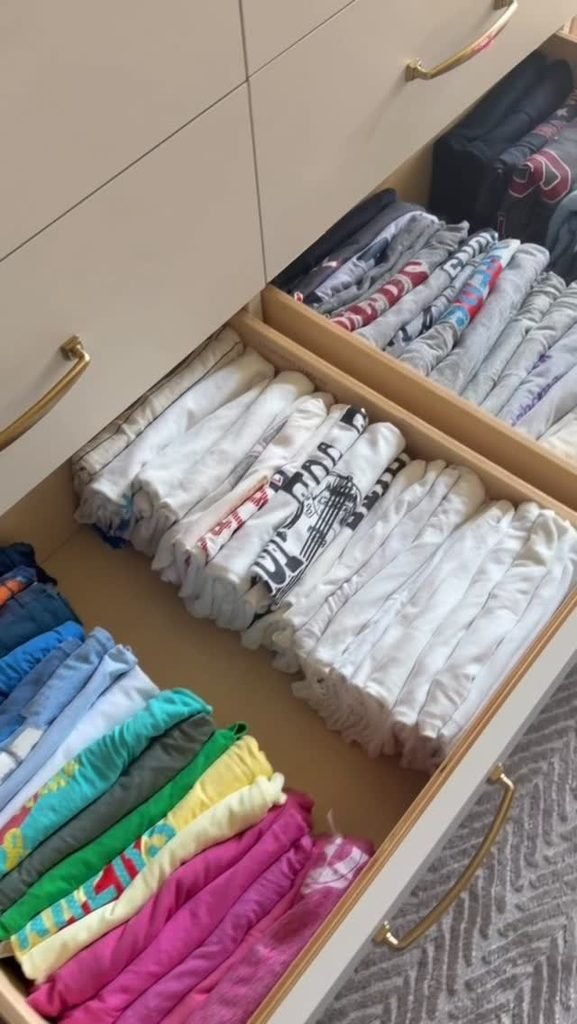
Stacking shirts in a drawer means the bottom of the pile is never seen again. File folding fixes that: fold each piece into a small rectangle and stand it upright, like files in a cabinet. You can see every item at once, and pulling one out doesn’t topple the rest.
It works best for tees, leggings, and lightweight knits, and it does not work for bulky sweaters, which flop over.
If your dresser is the weak link, a narrow, tall model makes better use of a small bedroom, and I list a few in my picks for space-saving furniture. Use drawer dividers to keep the rows from collapsing into each other.
20. Give the Nightstand a Real System
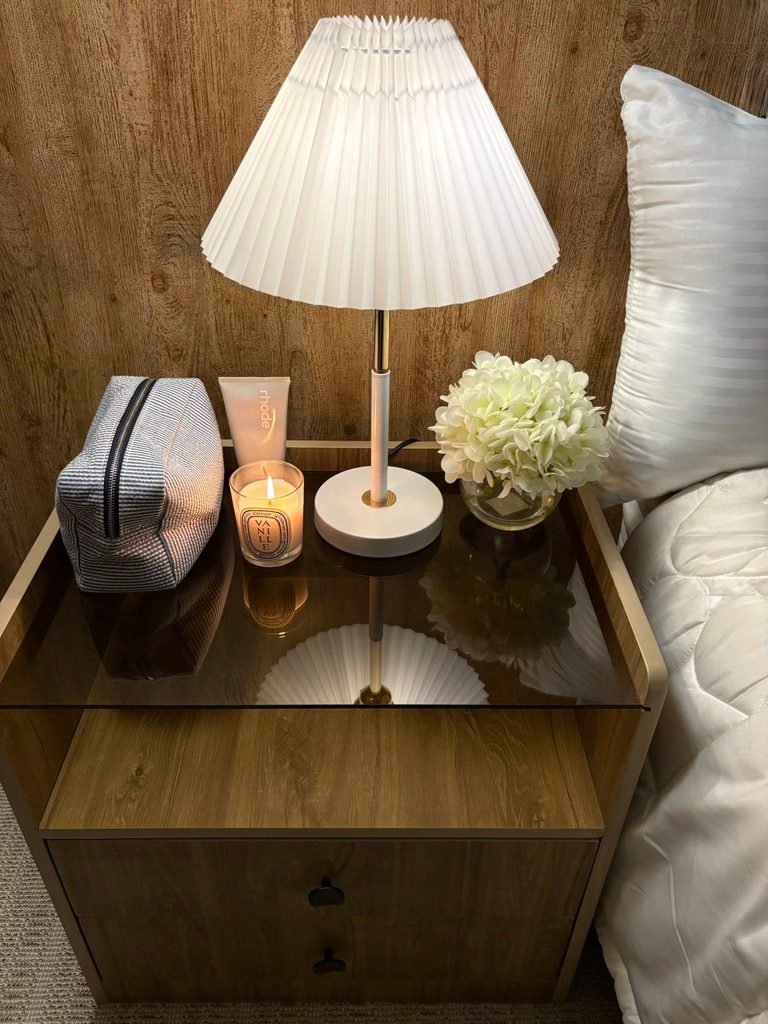
My nightstand used to hold two water glasses, a dying plant, and a skincare product graveyard. Now it has a drawer for the practical stuff, like chargers, lip balm, and hand cream, and a small tray on top for the one book and one glass I actually use. Anything that doesn’t fit gets moved out.
If you have a studio, where the bed sits changes everything about how the bedside area works, and I explain the options in my guide to studio apartment layout ideas. A wall-mounted shelf can replace a nightstand entirely if floor space is precious, though it won’t hide clutter the way a drawer does.
21. Hang Jewelry and Hair Accessories on the Wall
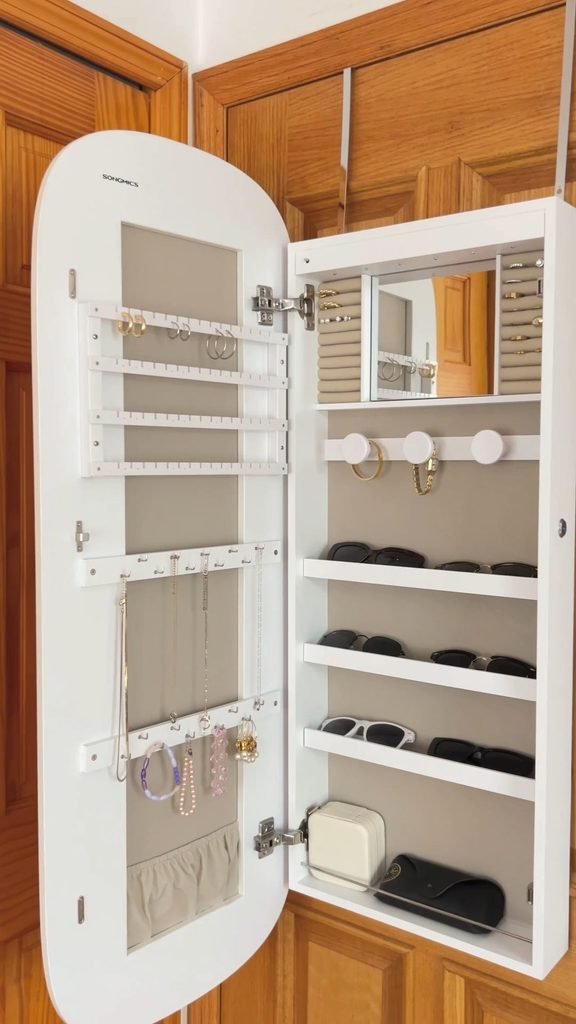
Tangled necklaces and a drawer full of loose scrunchies are the type of small chaos that makes getting ready take twice as long. A wall-mounted jewelry rack or a simple hook strip keeps necklaces visible and untangled, and a small tray handles earrings and rings.
For hair ties, clips, and headbands, a slim pegboard section or a small fabric organizer does the job.
If you share a closet or bathroom, mount it inside the closet door so it doesn’t show. I keep mine on the inside of a wardrobe door, where it uses space that was doing nothing.
For ideas on using walls and doors this way throughout your home, see my guide to maximizing vertical space in a small apartment.
22. Add an Over-the-Toilet Shelf (Bathroom Storage Ideas)
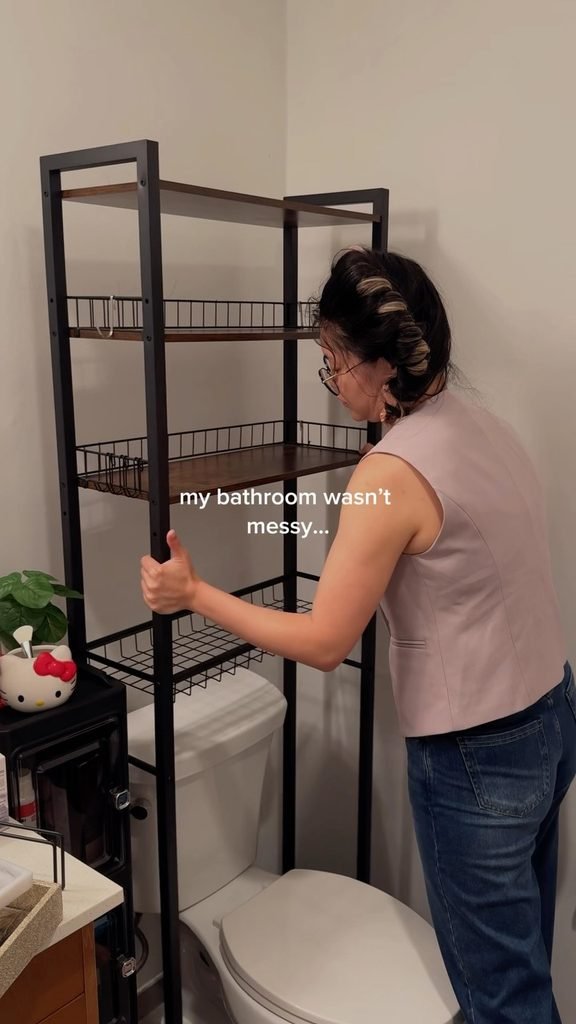
It’s the most overlooked storage zone in a bathroom, and it’s right there.
A freestanding étagère or a wall-mounted shelf above the toilet holds extra toilet paper, towels, and baskets for toiletries. In a small bathroom with no cabinet, it can double your storage on its own.
Freestanding units are notorious for wobbling, so anchor yours to the wall with the included bracket, even if you rent.
Check clearance for the tank lid too, since some models block it. I include several that work for tight bathrooms in my list of storage furniture for apartments.
Pro tip: Put the heaviest items on the lowest shelf and keep the top shelf for light, decorative things. A top-heavy unit is the one that tips.
23. Divide Vanity Drawers by Category (Makeup and Hair Tool Storage)
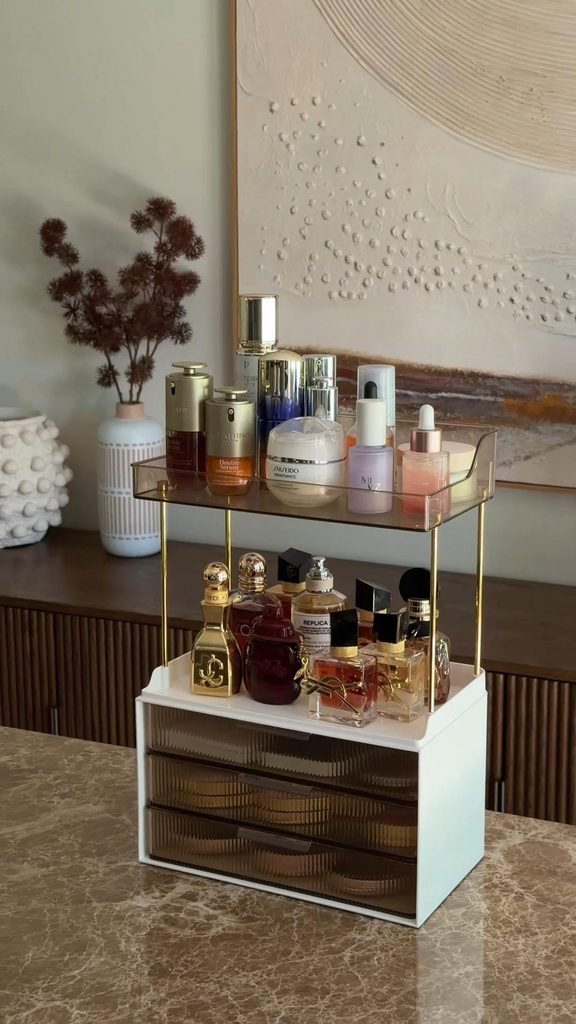
The fastest way to ruin a morning is digging through a drawer for the one lip product you need.
Acrylic or bamboo dividers split a vanity drawer into zones for makeup, skincare, hair ties, and styling tools, so everything has a home. Clear trays let you see everything at once without opening five containers.
Keep heat tools out of the same drawer as flammable products, and let hot tools cool before storing them, which sounds obvious until you’ve melted a divider.
A silicone heat-proof pouch costs about $10 and solves the problem. If your bathroom is part of a bigger refresh, the ideas in small apartment decorating ideas help you tie the storage into the look of the room.
24. Pick the Right Shower Caddy for Your Setup
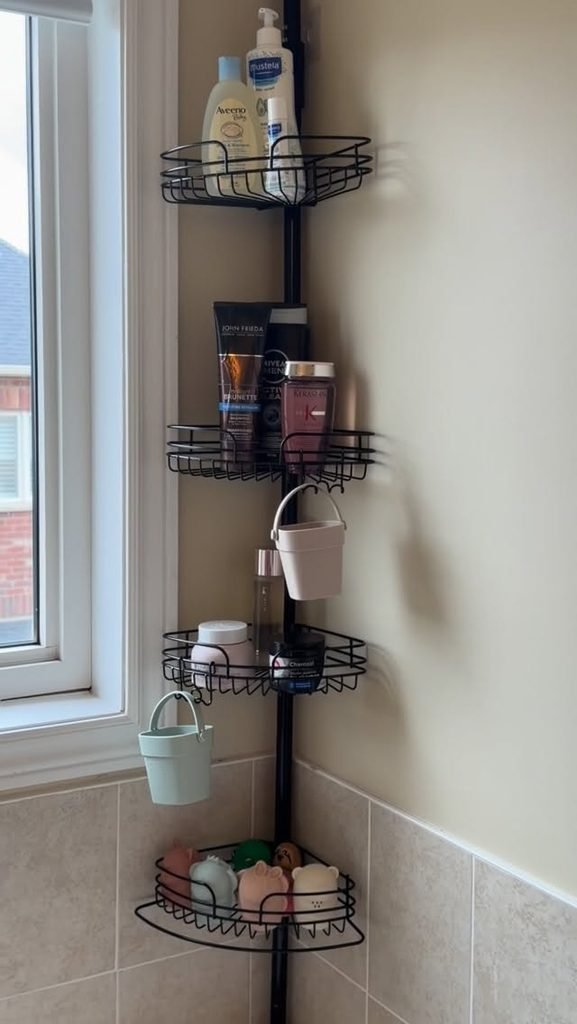
Shower caddies are the quiet source of a lot of bathroom frustration. Suction cup versions fall off the second the humidity changes, and the hanging kind swings and clangs.
A tension pole caddy, which wedges floor to ceiling in the corner, stays put and holds a surprising amount, though it only works if your ceiling height is standard.
Whichever you choose, look for rust-resistant stainless steel or coated metal, because cheap wire rusts in about a month.
If you have the room, one hook on the wall for a loofah and a razor keeps small items off the shelves. Going vertical in the shower follows the same logic as the rest of vertical storage in a small apartment, and it keeps the tub floor clear.
25. Simplify the Towel System
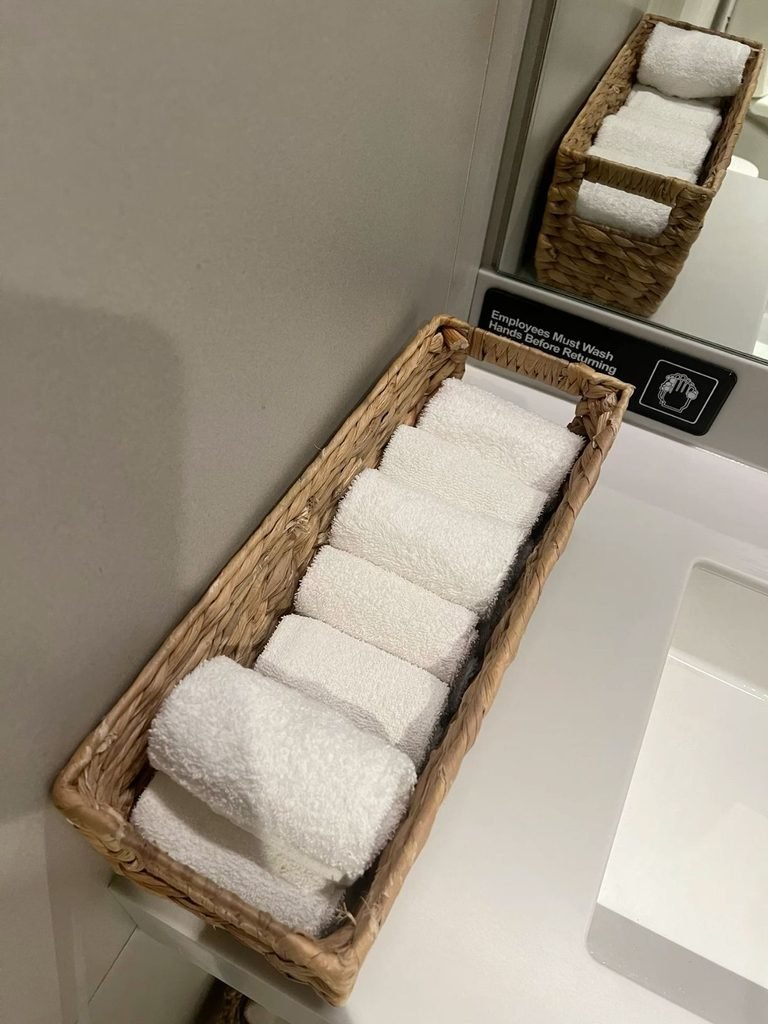
Towels take up more room than almost anything else in a small bathroom. Cut down to two bath towels per person, one in use and one in the wash, plus a couple of hand towels.
Hang the in-use ones on hooks rather than a bar, since hooks dry towels faster and take up less wall.
For the spares, rolled towels in a basket look neat and use less space than folded stacks, and they’re easy to grab. If you’re equipping your first place, the bathroom section of my first apartment checklist lists how many towels you actually need, and it’s fewer than you’d expect.
26. Set Up a Vertical Desk Organizer (Home Office Organization)
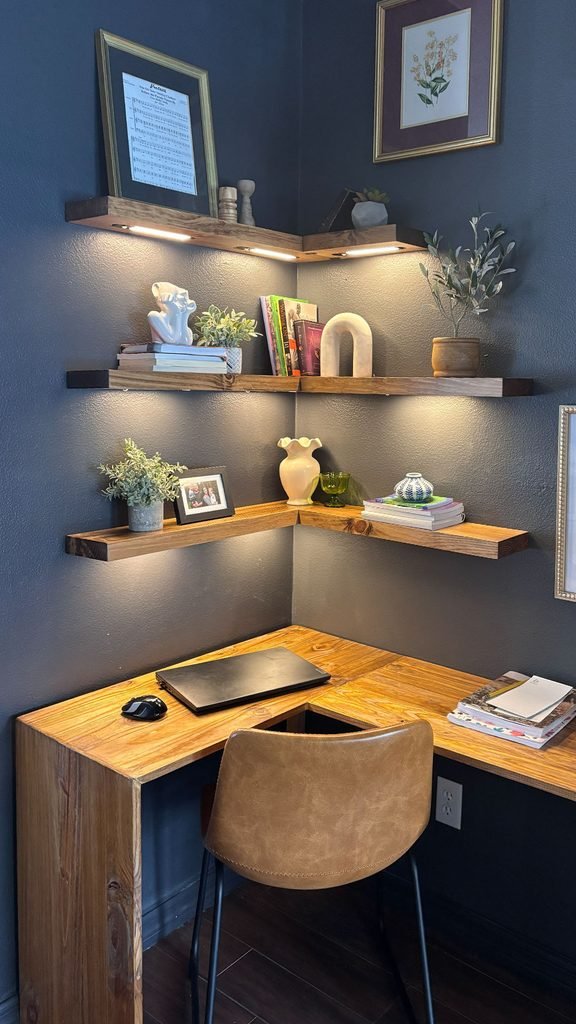
Horizontal surface is the most valuable thing in a tiny work area, so stack upward instead.
A desktop file sorter, a monitor stand with storage underneath, and a small drawer unit keep paper, chargers, and notebooks off the desk. The goal is a clear working surface at the end of every day.
If you work from a corner of your living room, a rolling cart that tucks beside the desk can hold supplies and roll away when you’re done. I go into the whole setup in my guide to a home office in a small apartment, including how to make it disappear at the end of the workday.
27. Mount a Pegboard Above the Desk
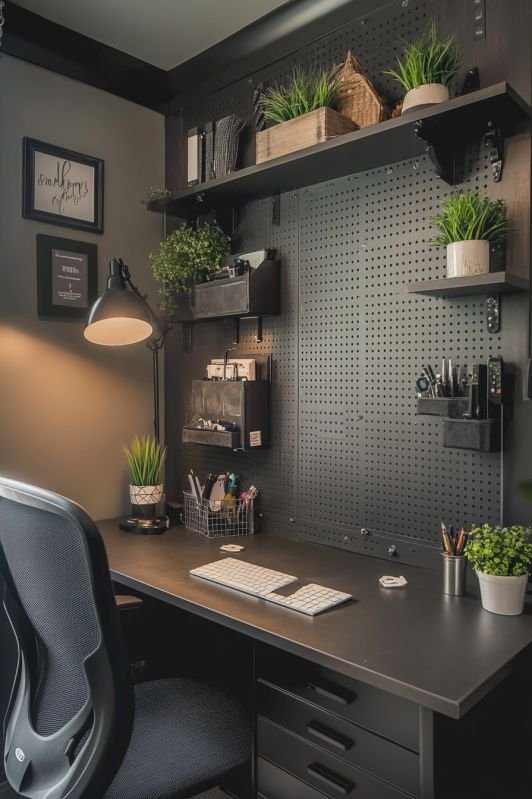
A pegboard turns a blank wall into customizable storage, and it’s fully adjustable as your needs change. Shelves, hooks, small baskets, and cups hold scissors, headphones, tape, and notebooks right where you need them. It’s the closest thing I’ve found to a “set it once and tweak it forever” system.
You can screw a board to the wall if your landlord allows it, or lean a freestanding one behind the desk if not. Keep it from becoming a visual mess by sticking to a limited color palette for the accessories.
Separating your work area from the rest of the room is part of the approach I describe in how to zone a studio apartment, and a pegboard wall helps define that zone.
28. Create a Three-Bin Paper System
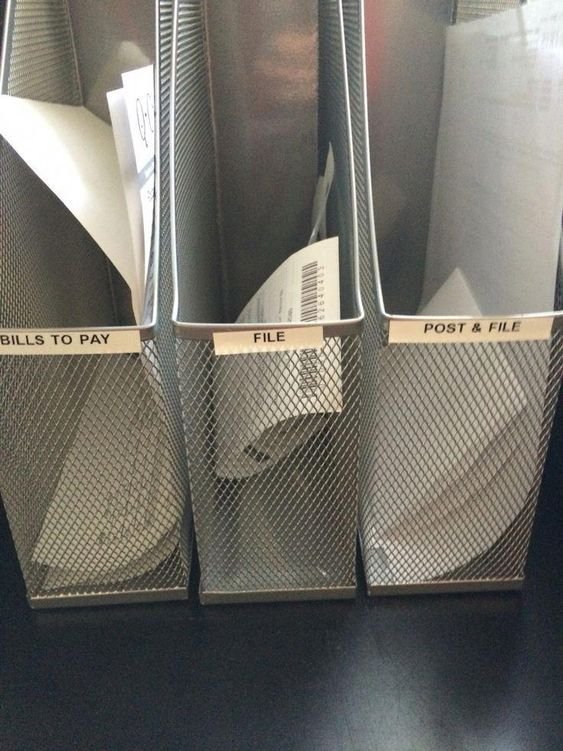
Paper is the clutter that keeps coming back no matter how digital you try to be. Here’s the system that stuck for me: one bin for “to act on,” one for “to file,” and one for “to shred or recycle.” Everything that comes through the door goes into one of the three the same day.
Once a month, I empty the file bin into a small accordion folder, labeled by category like taxes, insurance, and lease. Scan anything important and keep the digital copy backed up.
For anyone building a tiny work-from-home corner, this pairs well with the layout ideas in my small apartment home office guide, because it keeps paperwork from spreading across the desk.
29. Hang a Cleaning Caddy Behind a Door (Laundry and Utility Storage)
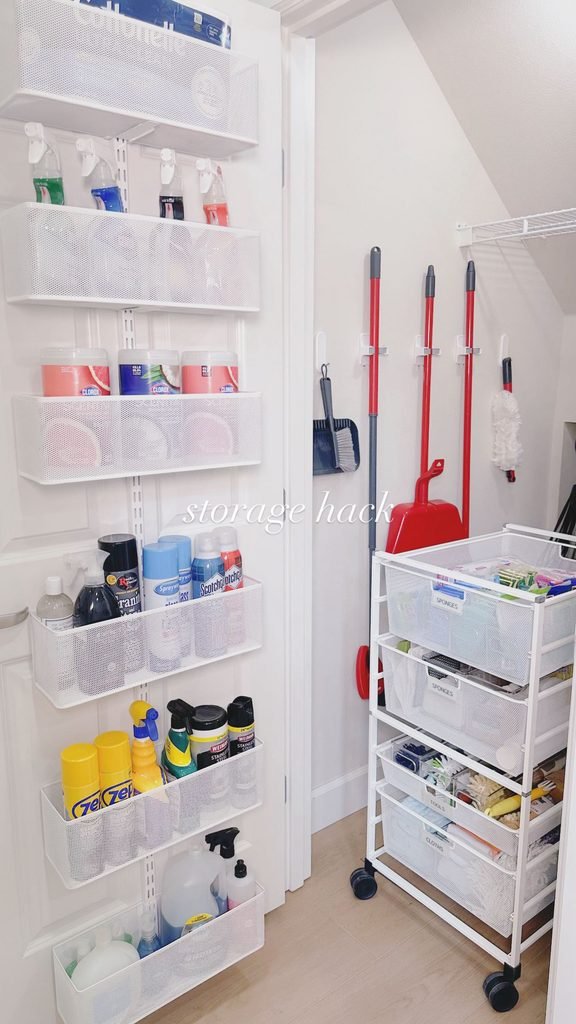
Cleaning supplies tend to scatter across the kitchen, bathroom, and any random closet. Consolidate them into one caddy that hangs on the back of a utility closet door or an over-the-door rack. Keep it stocked with the basics: an all-purpose spray, a few cloths, a scrub brush, and gloves.
For laundry, a narrow shelf above the washer holds detergent and stain remover, and a slim rolling cart between the washer and wall fits a surprising amount.
These are classic examples of using vertical space in a small apartment in a spot that usually gets ignored. Always store chemicals out of reach of kids and pets, and never mix bleach-based and ammonia-based products.
30. Start a 15-Minute Weekly Reset
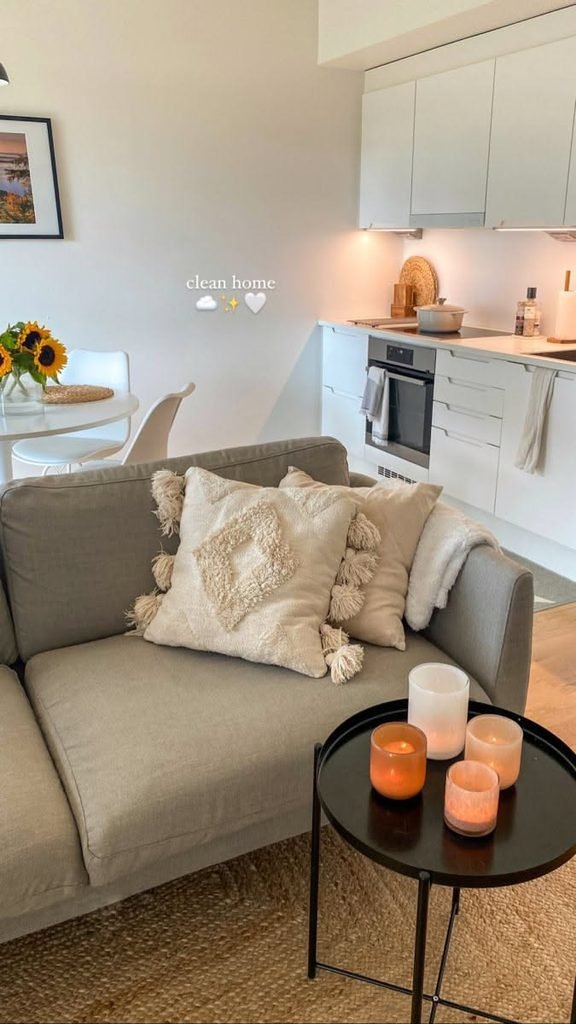
This last idea isn’t a product, and it’s the one that makes all the others last. Once a week, set a timer for 15 minutes and put everything back where it belongs. Clear the entryway basket, return the stray mugs, and wipe down one surface.
The smaller your space, the faster a mess becomes visible, which is one of the real trade-offs I cover in studio vs one bedroom apartment living.
A short, regular reset beats a marathon cleaning day, and it keeps your system from slowly drifting back to chaos. I do mine on Sunday evenings with a podcast, and it’s genuinely become the best part of my week’s routine.
What Home Organization Costs Room by Room
If you’re wondering how much to budget, here’s what I’ve seen across my own place and my friends’ homes. You do not need to buy everything at once. Start with the cheap fix in the room that bugs you most, and upgrade over time.
| Room | Budget Fix | Mid-Range | Worth the Splurge |
|---|---|---|---|
| Entryway | $25 to $40 (hook rail, basket) | $80 to $150 (shoe cabinet) | $200+ (bench with cubbies) |
| Living room | $20 to $40 (cord ties, bins) | $60 to $120 (storage ottoman) | $150+ (closed media console) |
| Kitchen | $30 to $60 (dividers, lazy Susan) | $80 to $150 (risers, containers) | $200+ (pull-out cabinet systems) |
| Bedroom and closet | $30 to $60 (hangers, doubler) | $70 to $140 (under-bed bins) | $300+ (modular closet system) |
| Bathroom | $20 to $40 (dividers, hooks) | $50 to $100 (over-toilet shelf) | $150+ (custom vanity storage) |
| Home office | $20 to $40 (organizer, file sorter) | $60 to $120 (pegboard, cart) | $200+ (desk with built-in storage) |
Prices vary a lot by retailer and by sales, so treat these as ballparks. If money is tight, my guide to furnishing a small apartment on a budget has more ways to stretch every dollar.
What I’d Do First If I Were Starting Over
If I were starting from scratch, I’d skip the matching baskets and begin with two things: a wall hook rail by the door and drawer dividers in the kitchen.
Those two changes affected my daily mood more than anything else on this list, because they’re the places I interact with every single day. Then I’d work through the rest of these home organization ideas one room at a time, rather than trying to do it all in one weekend, which burns people out.
The real secret is that none of it works if the system is harder than the mess. Pick the ideas that fit how you actually live, ignore the ones that don’t, and give yourself permission to change things when they stop working. Your home doesn’t have to look like a catalog. It just has to let you find your keys.
Frequently Asked Questions About Home Organization Ideas
Where should I start when organizing my whole home?
Start with the room that frustrates you most on a daily basis, which is usually the entryway or the kitchen. A small win there builds momentum, and you’ll learn what your household actually needs before you spend much. Doing one room at a time is far more sustainable than trying to tackle everything in a weekend.
How do I organize a small apartment with very little storage?
Go vertical and look for hidden space: wall hooks, over-the-door racks, under-bed bins, and furniture with built-in storage. Our guide to small apartment decorating ideas shows how to do this without making the space feel cluttered. Declutter first, since the best storage solution is owning less.
How much does it cost to organize an entire home?
You can make a real difference for under $200 by focusing on high-impact, low-cost fixes like hooks, dividers, and clear bins. A full setup with furniture and modular systems can run into the high hundreds or more. Spread the cost over a few months, and buy only what you’ve measured for.
Are clear containers actually worth it?
For pantry staples and fridge items, yes, because visibility helps you use things before they expire. For everything else, they’re optional, and they can become a money pit if you try to decant everything. Start with a handful for the items you open daily.
What are the best organization ideas for renters?
Tension rods, over-the-door racks, adhesive hooks rated for the load, freestanding shelves, and furniture with storage all leave no marks. Read your lease before drilling, and review common apartment renter mistakes so you don’t risk your deposit.
How do I keep my home organized once I’ve done the work?
Keep systems simple, give every item a home, and do a short reset once a week. If a system takes more effort than the mess, you’ll abandon it, so adjust it until it feels easy. And once a season, take a quick pass through each room to remove what you no longer use.








Leave a Reply