
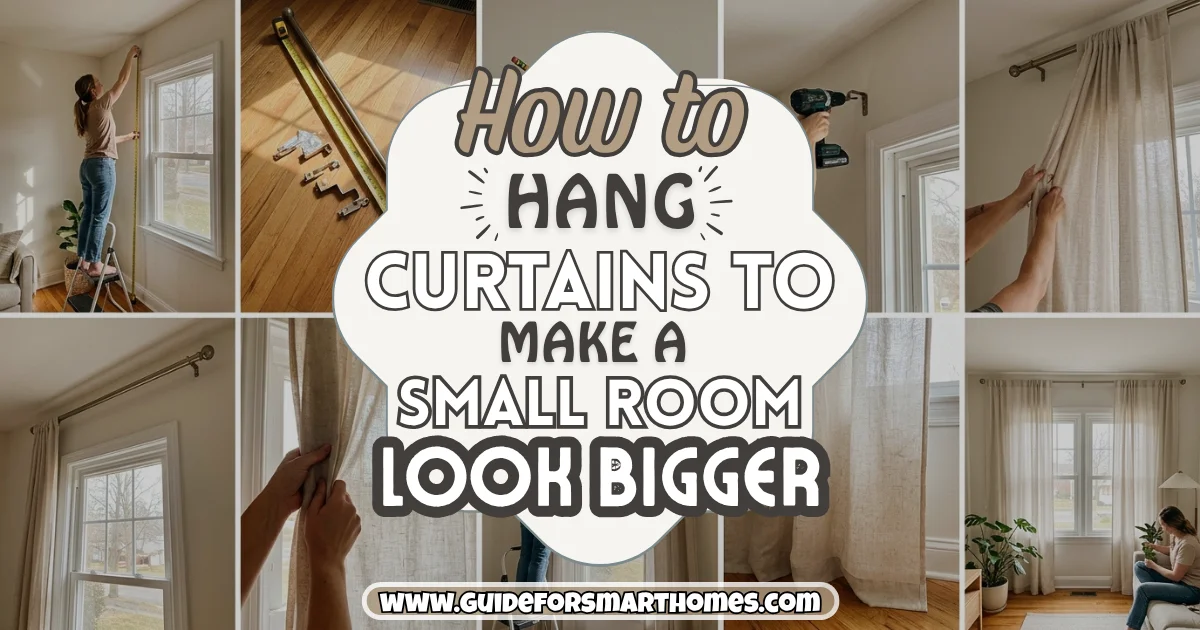
My first curtains went up exactly where every instruction sheet told me to put them: right on top of the window frame, panels the same width as the glass, hem hovering about six inches above the floor. The result was a bedroom that looked like it was wearing a jacket two sizes too small. The window looked shorter, the ceiling looked lower, and I spent an embarrassing amount of time wondering why a $40 pair of curtains made my room feel smaller.
Then I moved the rod up, extended it wider, and swapped in longer panels, and the same room looked like a different apartment. That’s the whole secret behind learning how to hang curtains to make a small room look bigger: curtains don’t just cover a window, they draw the eye up and out, and where you hang them decides which way the eye travels.
It’s one of the cheapest changes you can make, and it works in renters’ apartments, dorms, and tiny bedrooms alike. If you’re after more tricks in the same spirit, my make a small apartment feel bigger post pairs well with this one.
Below are 16 steps, from measuring to maintenance, with a sizing table, a renter-friendly mounting comparison, and FAQs. I’ve included rough costs, and I’ve kept the measurements as general guidelines, since every window and ceiling is a little different. Always measure your own space before buying anything.
1. Understand Why Curtain Placement Changes the Feel of a Room
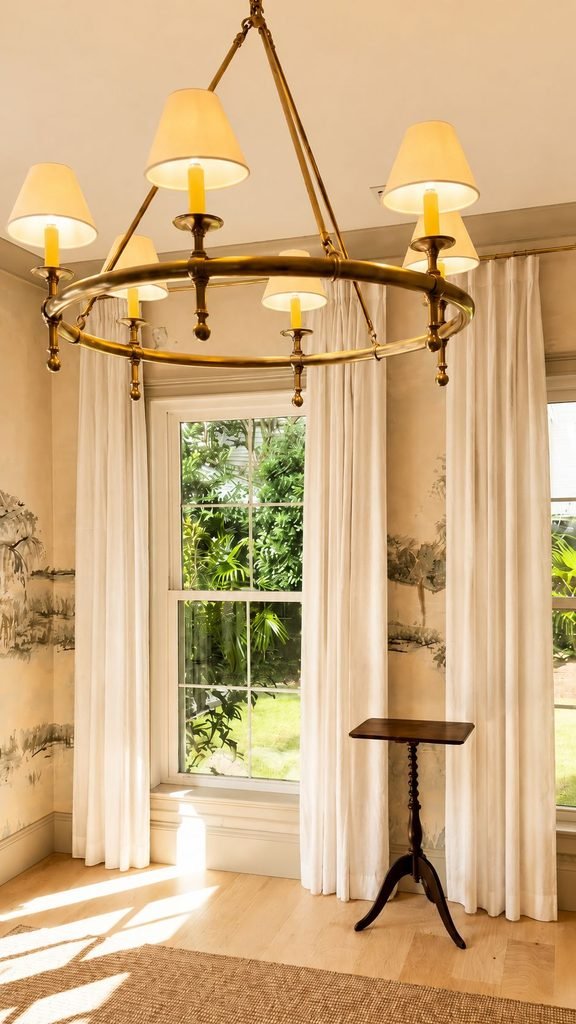
A room feels bigger when your eye moves up and across it without stopping. Curtains hung tight to the window frame create a hard stop at the edges of the glass.
Curtains hung high and wide create long vertical lines and suggest a taller, wider window than you actually have, so the whole wall appears larger.
Think of it like a visual trick: you’re borrowing height from the ceiling and width from the wall. Once you see it that way, every decision below, from rod height to panel length, comes down to making those lines longer and cleaner.
2. Gather Your Tools and Measure Before You Buy
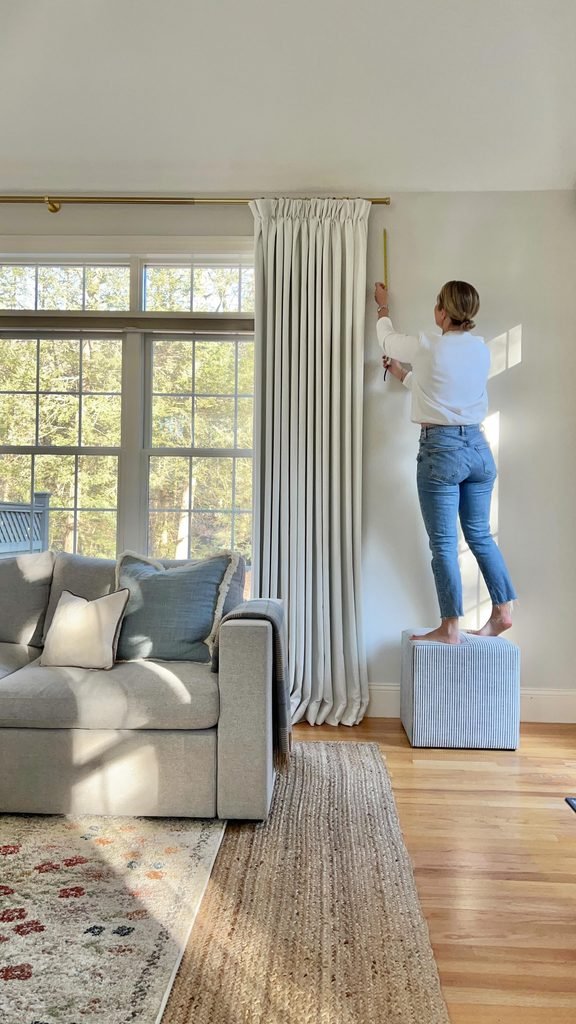
You’ll need a tape measure, a pencil, a level, a drill or screwdriver if you’re mounting into the wall, and a stud finder if you want extra support. Measure the window width and height, the distance from the top of the window frame to the ceiling, and the distance from the frame to the floor.
Write the numbers down and take a photo of the wall with the tape measure in the picture. I can’t count how many times I’ve stood in a store trying to remember whether the gap above my window was nine inches or eleven.
Pro tip: Measure at both ends of the wall. Older buildings often have ceilings or floors that aren’t perfectly level, and the difference can be an inch or more, which shows up as crooked curtains.
3. Hang the Rod High: Closer to the Ceiling Than the Window
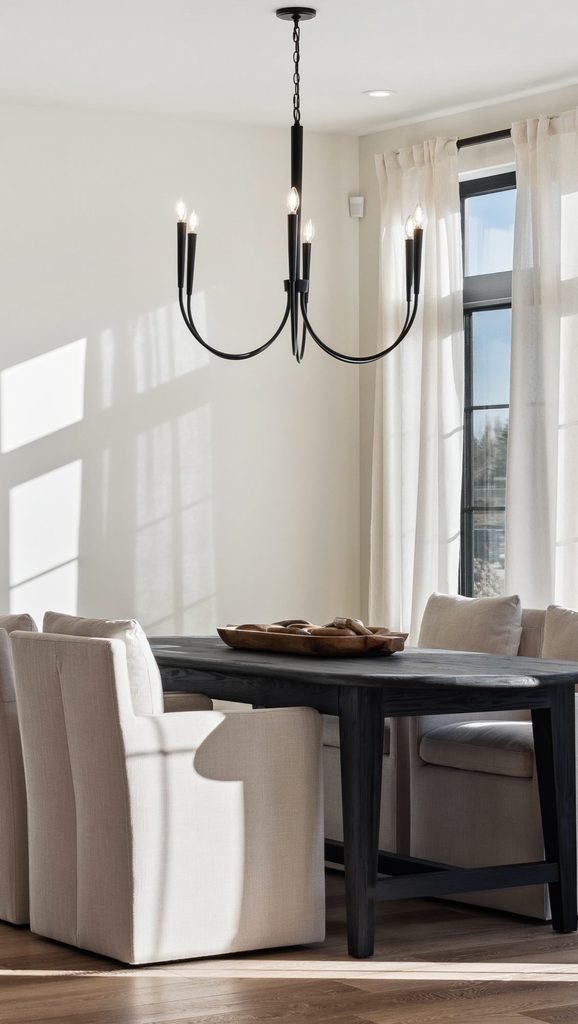
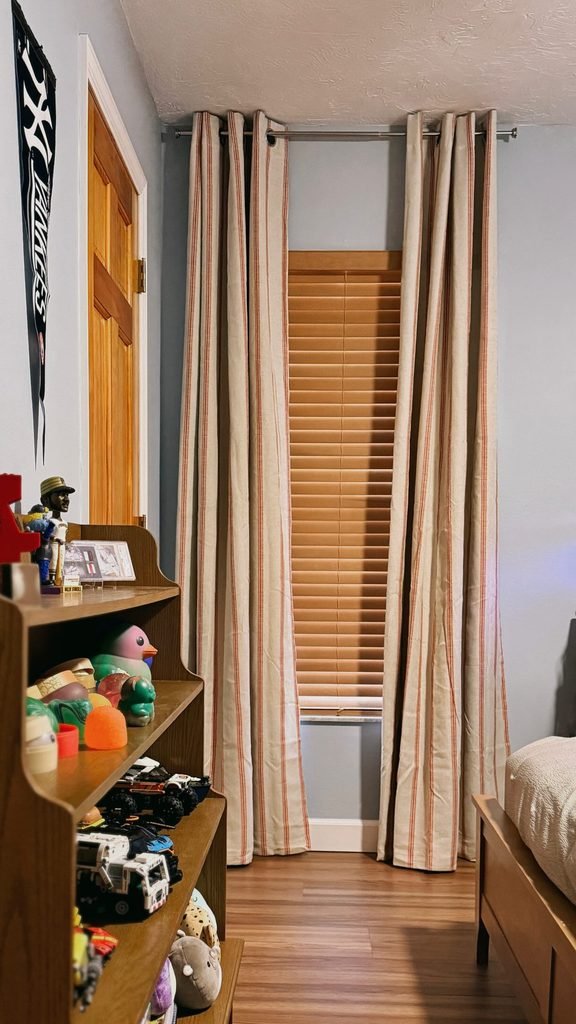
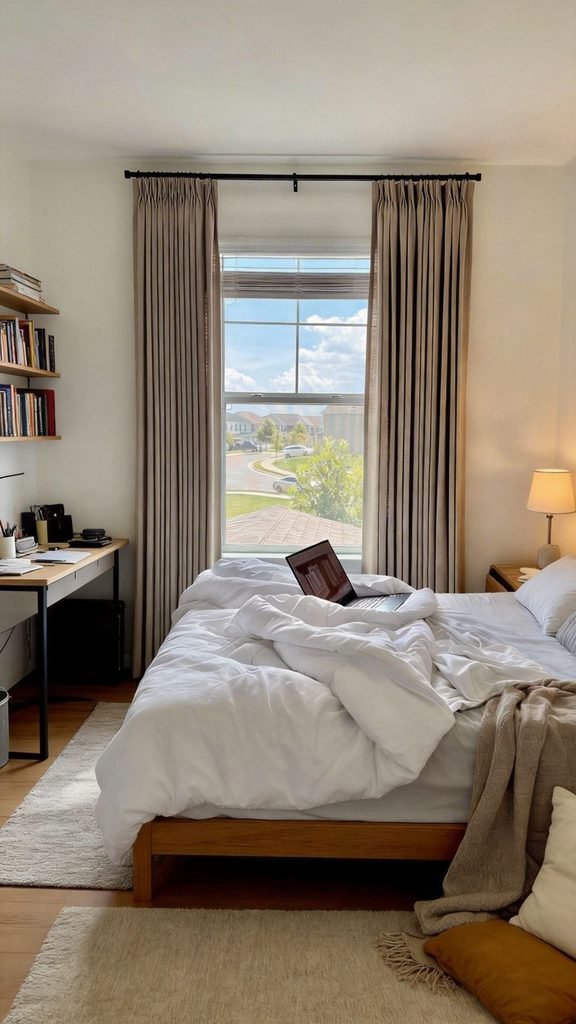
This is the single biggest change. Instead of mounting the rod just above the window frame, many designers suggest placing it several inches above the frame, or even closer to the ceiling or crown molding if the space allows. The higher the rod, the taller the window appears, and the more height the whole room seems to have. It’s the same principle I use in my guide to maximizing vertical space in a small apartment: use the height you already have before looking for more floor.
If your ceiling is low, aim for a rod just under the ceiling line, leaving only enough clearance for hardware to move freely. If you have more room, a spot roughly halfway between the top of the frame and the ceiling is a common compromise.
Whichever you choose, keep the rod level and consistent across multiple windows on the same wall.
Pro tip: Put a piece of painter’s tape on the wall where the rod will go and stand back before you drill. Seeing it in place for a minute prevents a lot of patched holes.
4. Extend the Rod Wide so the Panels Don’t Cover the Glass
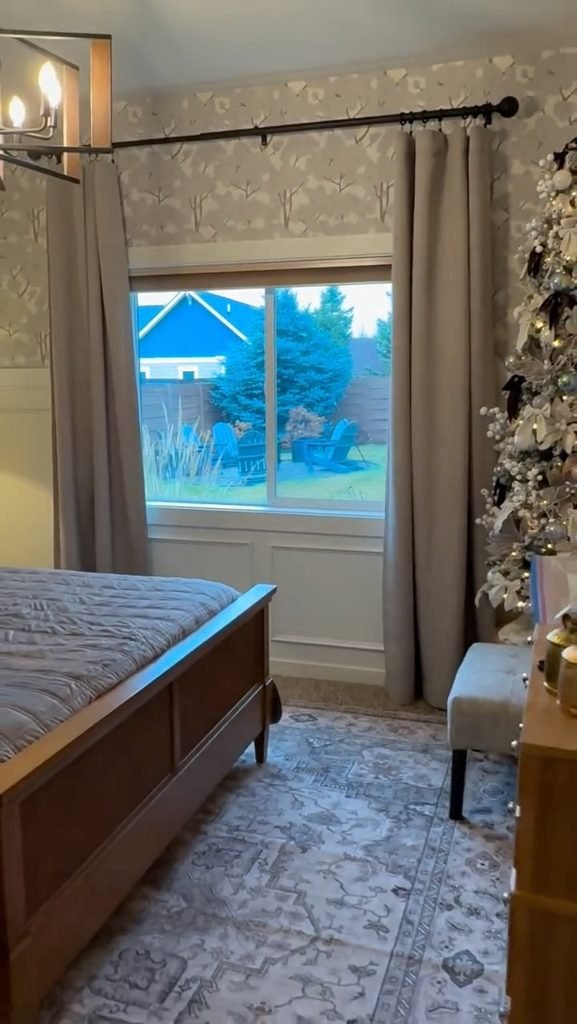
The second trick is width. Extend the rod several inches past each side of the window, commonly around 8 to 12 inches, so that when the curtains are open they stack on the wall rather than covering the glass.
This lets in more light, makes the window look bigger, and avoids the cramped look of fabric bunched in front of the window.
The wider rod also gives panels room to hang in soft folds when closed. In a small room, that extra width does a lot of the visual work, and it’s a free upgrade if you choose a longer rod.
For a bigger-picture look at arranging a tight living area around the window wall, my small living room ideas post has useful layouts.
Rough Sizing Guide for Rod and Panel Width
| Window Width | Rod Width (about 8-12 in. past each side) | Total Fabric Width (about 2x the rod) |
|---|---|---|
| 30 inches | 46-54 inches | About 92-108 inches |
| 36 inches | 52-60 inches | About 104-120 inches |
| 48 inches | 64-72 inches | About 128-144 inches |
| 60 inches | 76-84 inches | About 152-168 inches |
| 72 inches | 88-96 inches | About 176-192 inches |
These are starting points, not rules. If your window sits near a corner or another window, you may need to adjust the extension on one side.
5. Choose the Right Length: Floor-Grazing Beats Short
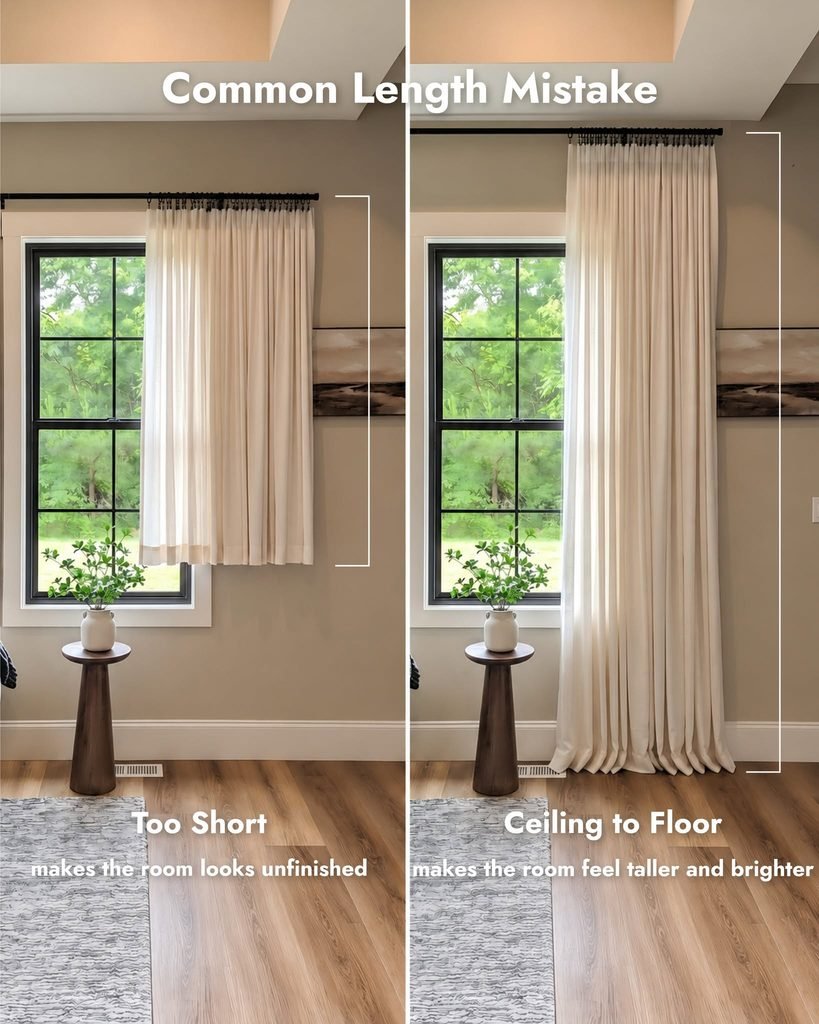
Short curtains that stop at the windowsill chop the wall in half and make the room feel smaller. Floor-length curtains create one long, uninterrupted line, which stretches the room visually.
The best length for most small rooms is panels that just skim the floor, with a gap of around half an inch, or that barely touch it.
I’d avoid “puddling,” where extra fabric pools on the floor. It looks luxurious in a big room, but in a small one it takes up space, collects dust, and gets in the way of walking.
If you can’t find the right length off the shelf, buy slightly long and hem them, or use hem tape for a no-sew fix.
Pro tip: Measure from the rod to the floor, not from the window to the floor. A rod hung higher means you need a longer panel, and many standard panels are 84 inches, which may fall short of what a high-hung rod requires.
6. Get the Fullness Right So Panels Don’t Look Skimpy
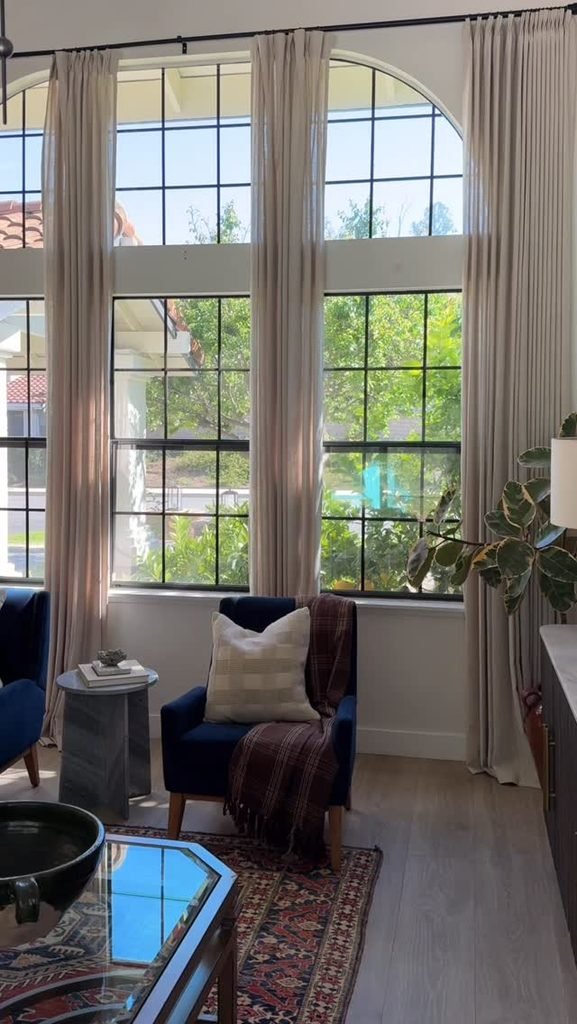
Thin, flat panels that barely cover the window look cheap and make the room feel sparse. Aim for total fabric width of roughly two times the width of the rod, which gives you gentle folds when the curtains are closed.
In practice, that usually means two panels per window, or sometimes four if your window is wide.
Fuller curtains also add softness and texture, which helps absorb sound and makes a room feel more finished. If your budget is tight, buy fewer, better panels rather than many flimsy ones.
7. Pick a Fabric Weight That Suits the Room
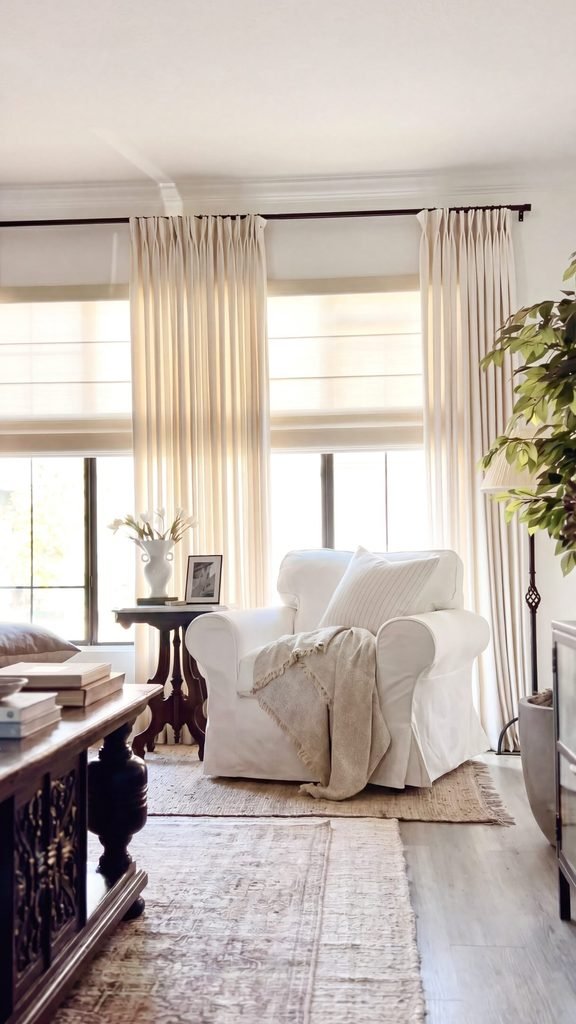
In a small room, light and airy fabrics usually work best. Linen, cotton blends, and lightweight weaves let light filter through and drape softly, while heavy velvets or thick fabrics can make a small space feel closed in.
That said, heavier fabrics have their place if you need light blocking or insulation, especially in a bedroom.
Seasonal swaps are an easy way to play with weight: lighter linen in warm months, then a slightly heavier weave once it cools down, the way I do in my fall apartment decor ideas. Consider layering: a lightweight panel in front and a blackout liner or a roller shade behind.
That way you get the airy look during the day and darkness at night without relying on a single heavy curtain. A friend of mine, Dani, did this in her small bedroom and said the room felt noticeably bigger once she swapped heavy blackout drapes for linen panels over a thin blackout shade.
8. Choose Color and Pattern to Support the Illusion
The easiest way to make curtains disappear into a small room is to match them to the wall color or choose a shade very close to it. When the curtains and wall blend, the eye sees one continuous surface, and the room looks larger.
Light, neutral colors work especially well, and cooler tones like soft gray, pale blue, or sage can add a feeling of depth.
If you want pattern, vertical stripes add height, and a subtle texture adds interest without noise. Avoid large, busy prints in a very small room, which can overwhelm the space. For a look at which colors and textures are popular right now, my roundup of small apartment decor trends has plenty of inspiration.
9. Pick a Slim, Simple Rod and Hardware
Chunky rods with oversized finials draw attention and can feel heavy in a small space. A slim rod in a finish that matches your wall or other hardware looks cleaner and keeps focus on the fabric. Matte black, brushed nickel, or a color that blends with the wall all work well.
Choose a rod with returns, which curve back toward the wall at the ends, if you want to block light gaps at the sides. For a very clean look, a ceiling-mounted track system can hold curtains right at the ceiling line and lets panels glide smoothly, though it usually requires drilling.
A ceiling track can also double as a soft room divider in an open layout, which I cover in my guide on how to zone a studio apartment.
10. Decide How You’ll Mount It, Especially if You Rent
Where and how you mount the rod depends on your lease, your wall type, and the weight of your curtains. Drilling into studs gives the strongest hold, while wall anchors work for lighter loads.
Always check weight ratings on brackets and anchors, and check your lease before drilling. If you’re not sure what’s in your wall, a stud finder is a cheap tool that saves a lot of trouble.
Mounting Options Compared for Renters
| Option | Approx. Cost | Drilling? | Best For | Watch Out For |
|---|---|---|---|---|
| Standard brackets into studs | $15-40 | Yes | Heavy curtains, permanent setups | Lease rules, patching on move-out |
| Wall anchors for brackets | $15-40 | Yes | Medium-weight curtains | Weight limits, needs correct anchor type |
| Tension rod inside the window frame | $8-25 | No | Light panels, sheers, small windows | Can slip with heavy fabric, sits inside the frame |
| Ceiling-mounted track | $30-80 | Yes | Maximum height, clean look | Needs ceiling access and permission |
| Adhesive-mounted rod brackets | $10-25 | No | Very light sheers only | Strict weight limits, can fail over time |
If you can’t drill at all, a tension rod inside the window frame is the easiest option, though it won’t give you the high, wide look.
In that case, consider mounting panels from the ceiling with removable ceiling hooks and a lightweight rod, only if the weight rating clearly allows it.
11. Install the Rod Step by Step
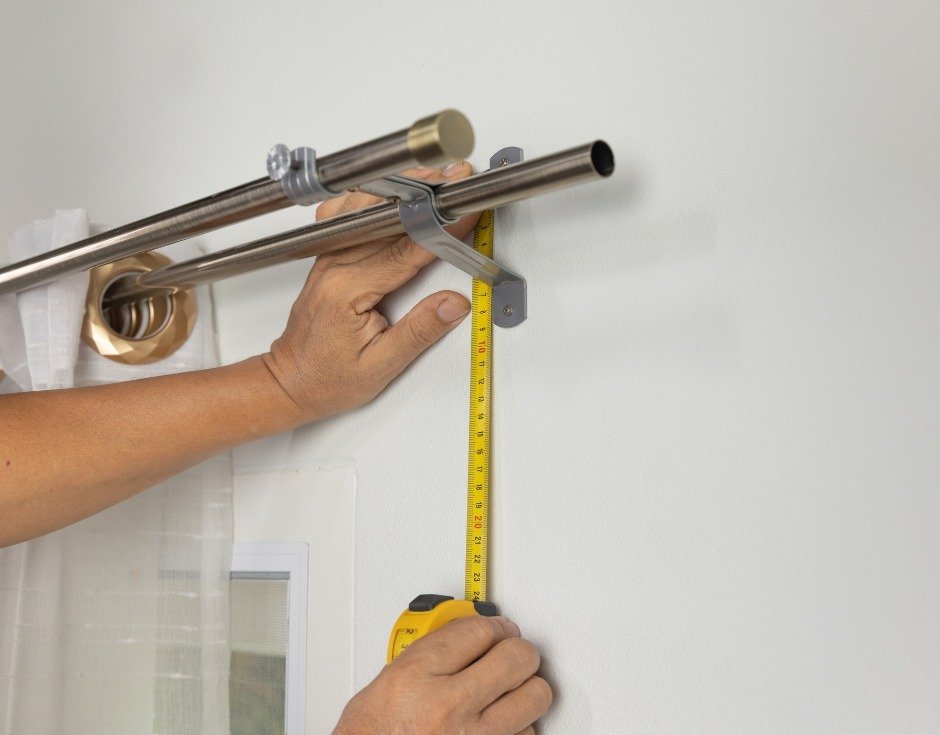
Here’s the process I follow every time. First, mark the height you chose on the wall at each end, using a level to make sure the marks match. Second, mark the bracket positions, keeping them a few inches inside the rod ends so the finials can fit.
Third, find studs where possible, or choose appropriate anchors. Fourth, drill pilot holes, insert anchors if needed, and screw the brackets in. Finally, place the rod on the brackets, check it with the level, and tighten any set screws.
For longer rods, add a center support bracket, since a sagging rod ruins the clean look. If you’re installing several windows on the same wall, mark them all at the same height before you start, and step back to check them as a group.
12. Hang the Panels and Dress Them
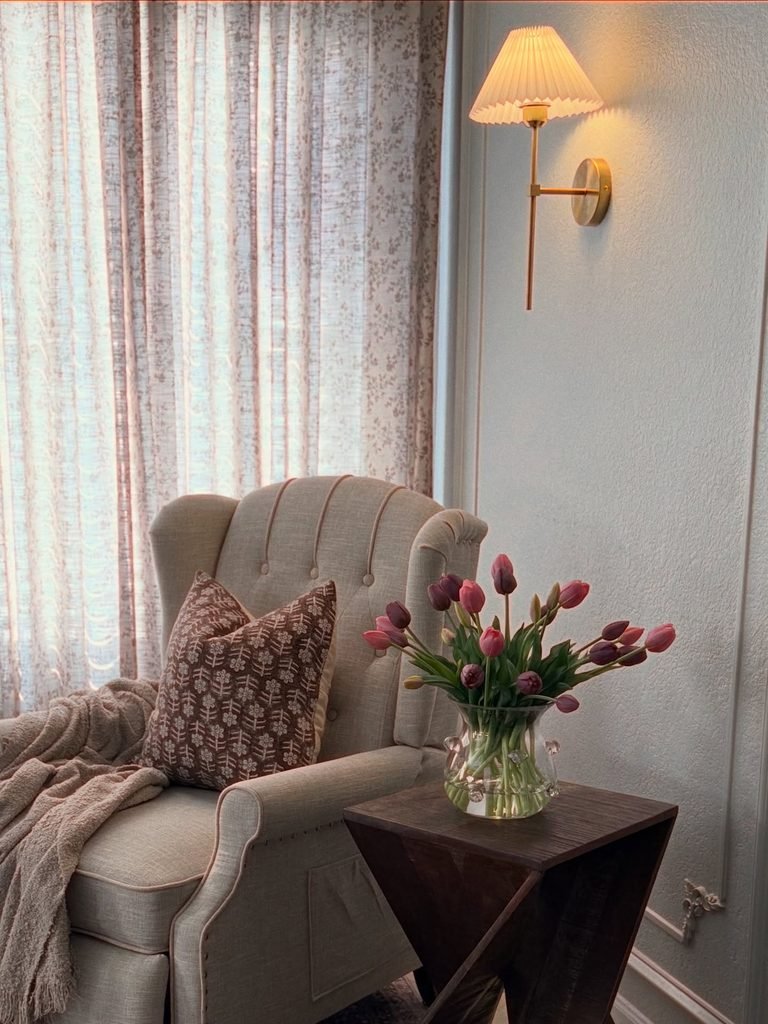
Use rings with clips, pinch pleat hooks, or a rod pocket depending on your curtains. Rings with clips are the most forgiving and make it easy to adjust height. Hang the panels so the hems just touch or hover slightly above the floor, and check each one from a few feet away.
Steam or iron the panels once they’re hung, since factory creases are the biggest giveaway of an unfinished look. Arrange the folds by hand, running your fingers down the fabric so the pleats fall evenly.
Tie them back lightly or let them stack at the sides so the glass stays visible. In December, a string of warm lights draped along the rod adds a soft glow, a trick I use in my small apartment Christmas decor guide.
13. Layer With Blinds or Sheers for Light Control
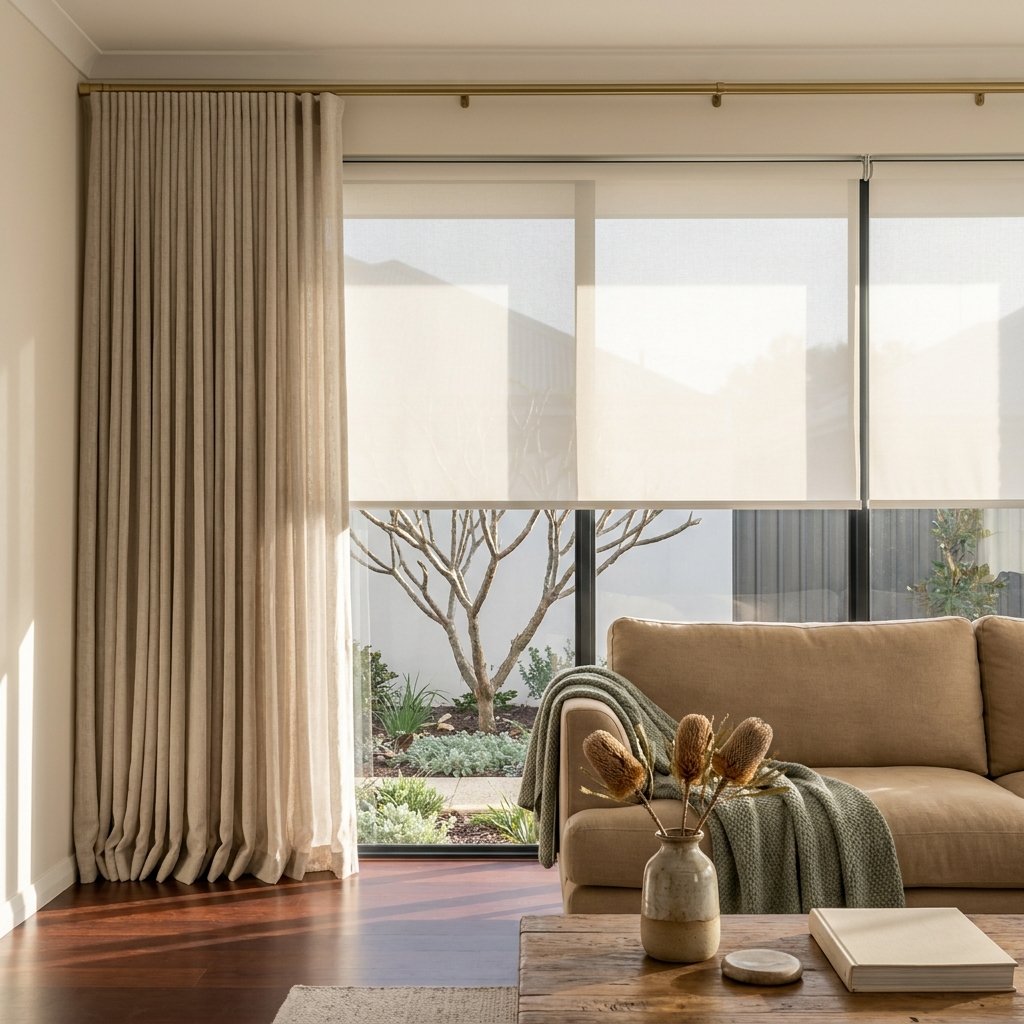
A single layer of curtain can’t always handle every situation. Layering a sheer panel under a heavier one, or adding a roller shade or blind behind the curtains, lets you adjust light and privacy throughout the day.
In a small room, the lighter layer can stay open for daylight while the heavier layer closes at night.
Keep the layering simple. Too many layers add bulk to a small window and make the room feel heavier. One thin sheer and one main panel is usually plenty.
14. Adjust for Tricky Windows and Layouts
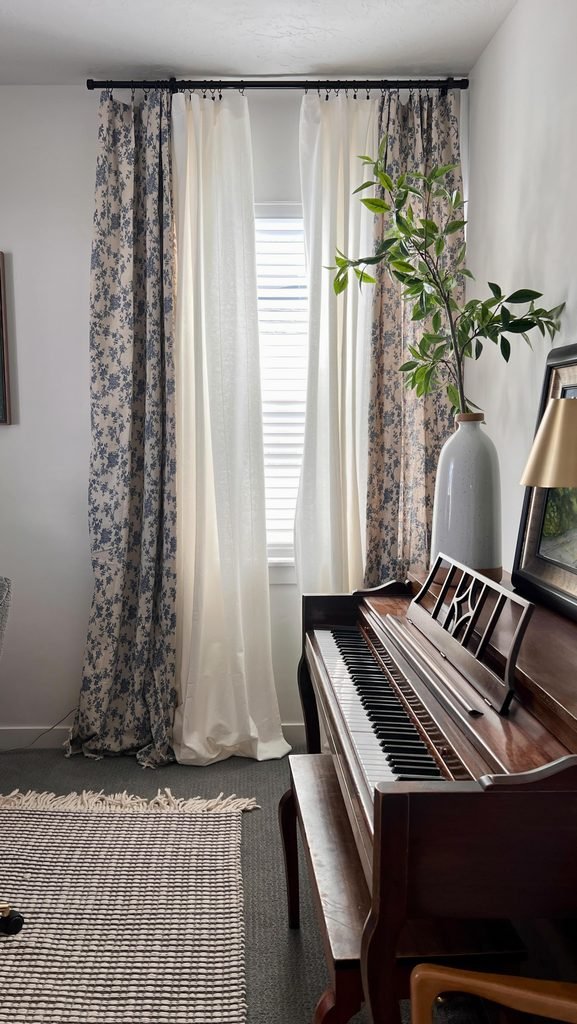
Small windows benefit most from the high-and-wide trick, since the curtains can make the window look much larger than it is. Two windows close together can share one long rod and one set of panels, which looks calmer than two separate treatments.
Sliding glass doors do well with a ceiling-mounted track and panels that stack to the side, so they don’t block access.
Windows above radiators or air conditioners need curtains that stop above the heat source or clear of it, rather than touching the floor, for safety and airflow. If you have a wall with no window at all, a wide rod with panels can create a “faux window” effect that adds softness and height. For ideas on arranging furniture around a window wall, my studio apartment layout ideas post can help, and a storage bench under the window is a smart pick if you want multi-functional furniture in the same spot. If your desk sits near the window, curtains also help control glare, which I go into in my guide to a home office in a small apartment.
15. Care for Your Curtains So They Keep Looking Right
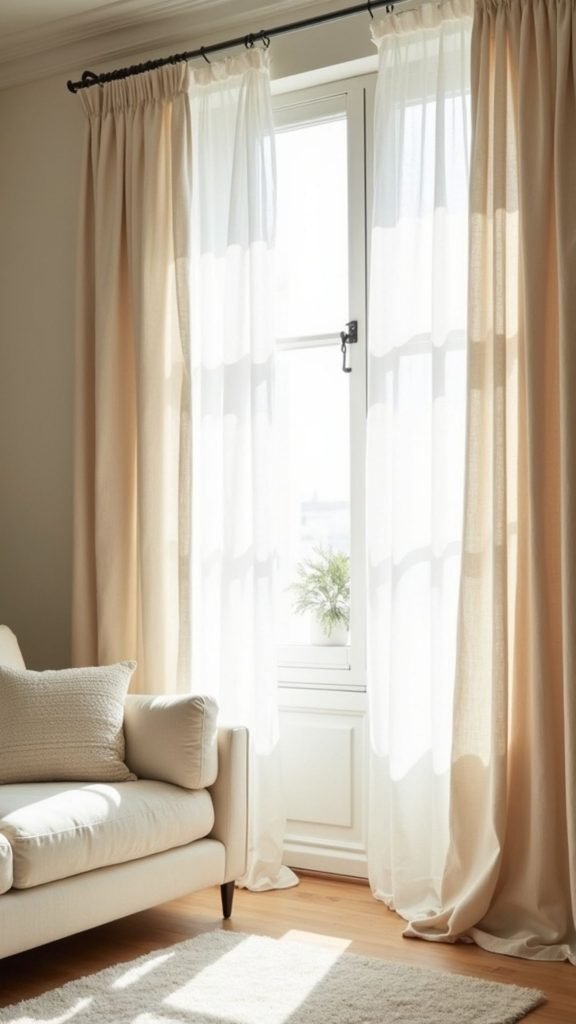
Check the care label before washing, since many linen and cotton curtains shrink. If you plan to wash them, buy a bit longer than you need, or measure after the first wash. Steam rather than iron when possible, and hang panels back up while slightly damp so the fabric relaxes.
Dust curtains occasionally with a vacuum brush attachment or toss lightweight panels in the dryer on a no-heat setting with a damp cloth. Keeping them clean also keeps light, neutral colors from looking dingy, which matters in a small room where everything is on display.
16. Avoid the Mistakes That Make a Room Feel Smaller
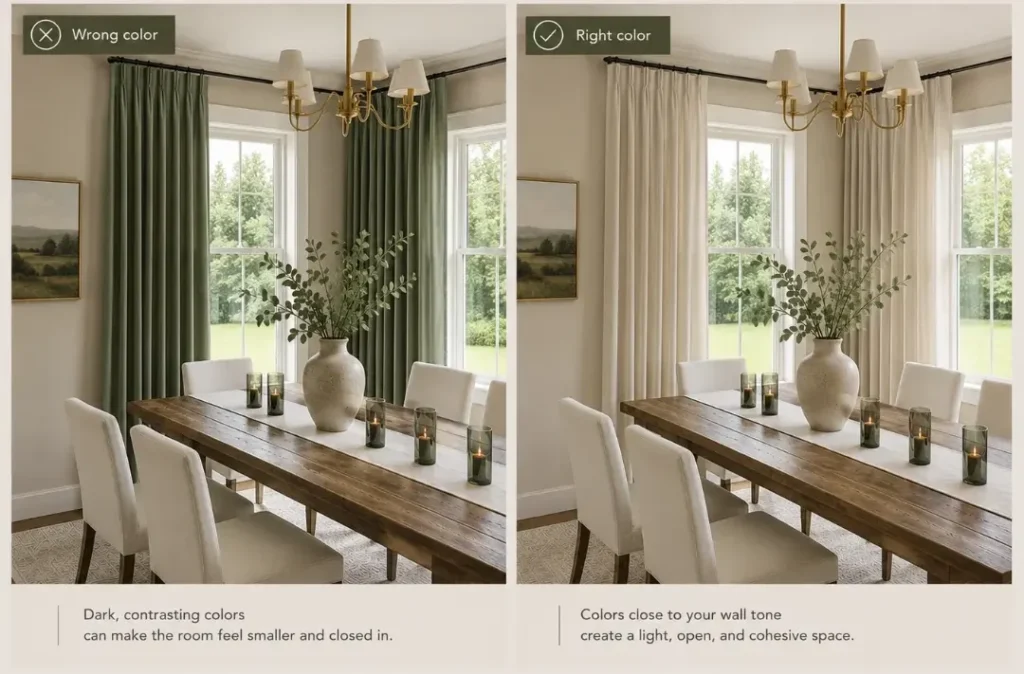
The mistakes I see most often are hanging the rod directly on the window frame, choosing panels that are too short, picking a rod that’s too narrow, buying flimsy fabric with no fullness, and letting heavy dark curtains dominate a tiny room. Another common one is forgetting to check the weight limit on brackets, which ends with a rod on the floor.
Skip the temptation to fill every wall with decor around them, too. Once your curtains are doing their job, leave some breathing room, and think about the rest of the space as a whole. If you’re furnishing the room at the same time, my guide to furnishing a small apartment on a budget covers where to save and where to spend.
What I’d Do First if I Were Starting Over
I’d buy two pairs of simple, light-colored linen-blend panels in a color close to my wall, a rod 16 to 20 inches wider than the window, and hang it a few inches above the frame, as high as the space allows. That’s roughly $60-120 total, and it would take under an hour. I’d hem the panels to just kiss the floor, steam them, and leave them open during the day.
Once you know how to hang curtains to make a small room look bigger, you’ll start noticing the rule everywhere: high rods, wide stacks, long panels, and light fabric. It’s one of those small changes that makes a room feel taller, brighter, and more finished, and you don’t need a bigger budget or a bigger place to get it.
If you’re still deciding on a layout, my studio vs one-bedroom apartment comparison walks through the trade-offs, and my small apartment decorating ideas post has more ways to style the rest of the room once the windows are sorted.
FAQs
How high should I hang curtains in a small room?
Higher than the window frame, often several inches above it or close to the ceiling. The higher rod makes the window and the ceiling look taller, as long as the rod stays level and the panels are long enough to reach the floor.
How wide should the curtain rod be?
Wider than the window, commonly around 8 to 12 inches past each side, so the panels stack on the wall and don’t cover the glass when open. A wider rod lets in more light and makes the window look larger.
What length curtains make a room look bigger?
Floor-length panels that just skim the floor, with about a half inch of clearance. Avoid short curtains that stop at the windowsill, and avoid puddling in small rooms.
Can I hang curtains in a rental without drilling?
Yes, with a tension rod inside the window frame, adhesive brackets for very light sheers, or removable ceiling hooks if the weight rating allows. These options hold less weight and may not give the highest look, so check ratings carefully.
What color curtains make a small room look bigger?
Light, neutral colors that match or sit close to your wall color usually work best, since they blend in and keep the eye moving. Vertical stripes and subtle textures can add height without making the room feel busy.
How much does it cost to hang curtains properly?
A good setup with two panels, a rod, and hardware typically runs about $60-150, depending on the fabric and mounting option. A ceiling track or custom hemming will cost more.










Leave a Reply