
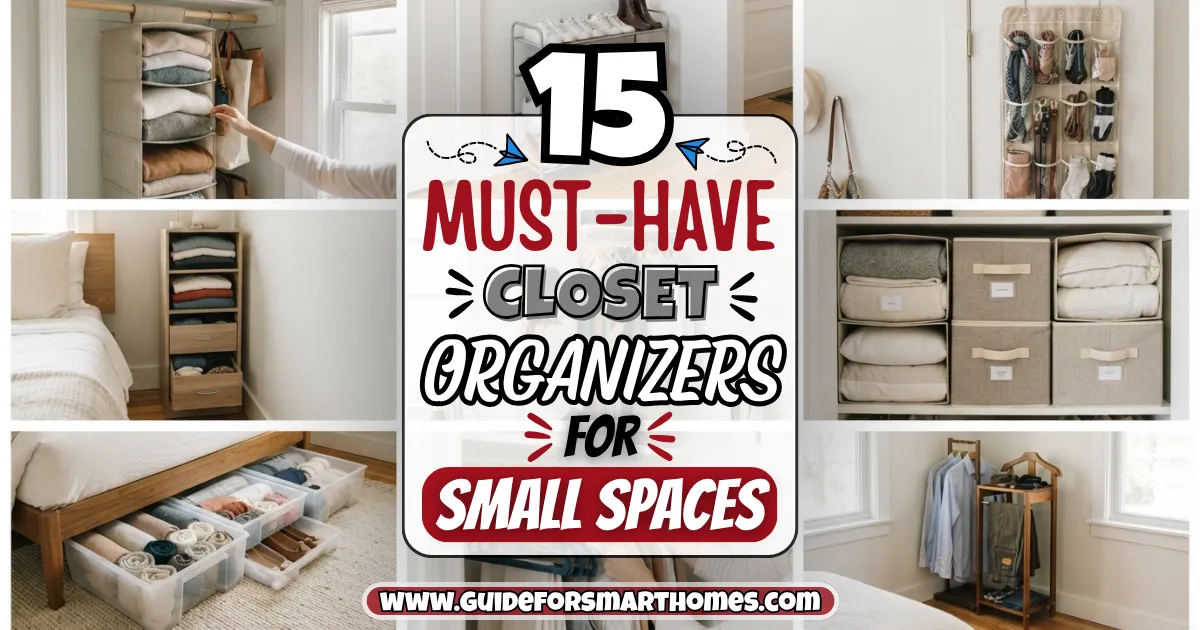
My first apartment closet was 24 inches deep and about 40 inches wide, and I shared it with a vacuum. I tried three different organizers before I realized the problem was never the amount of stuff I owned. It was that I kept buying organizers sized for closets that were nothing like mine.
If you are working with a reach-in closet, a dorm wardrobe, or a “closet” that is really a cutout in the wall, the right closet organizers for small spaces can double what you get out of it without touching a single wall. The trick is to use the empty air above, below, and behind your clothes. If you want the full budget breakdown before you buy anything, my guide on closet organization on a budget covers where to spend and where to skip.
Below are the 15 organizers I would put in a small closet again, plus the ones that earned a warning label. I have included rough prices so you can plan, and a comparison table to help you choose fast. Prices are ballpark and vary by store and size.
1. Slim Velvet Hangers
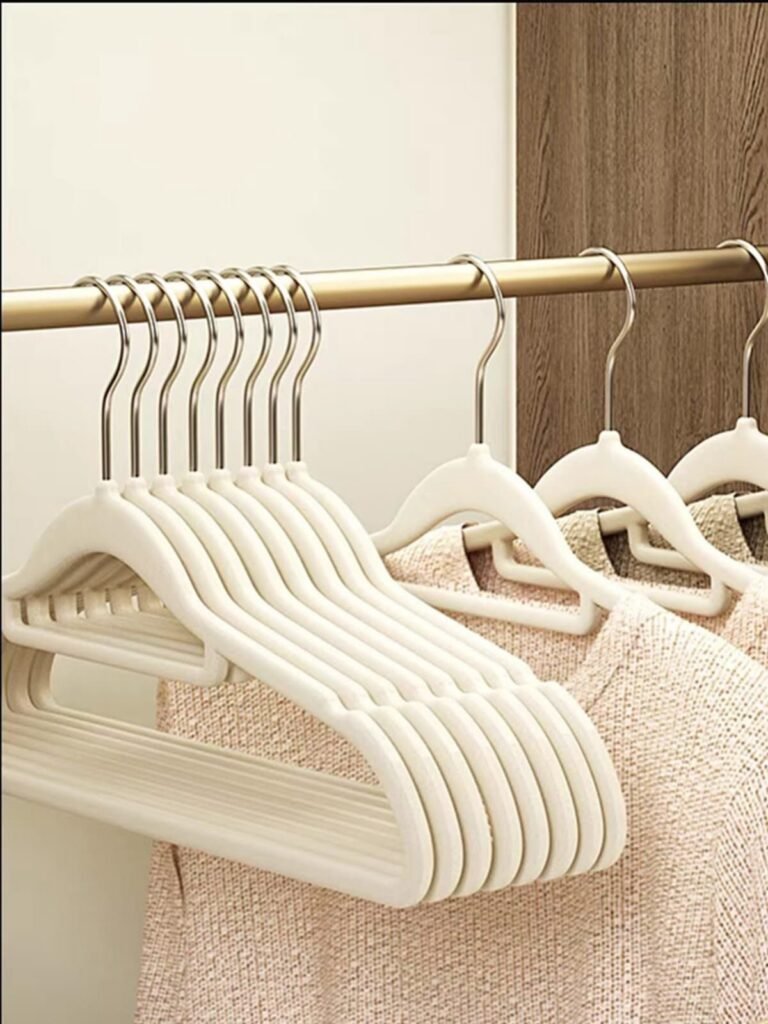
This is the cheapest upgrade in the whole post, and it matters because bulky plastic or wooden hangers quietly eat rod space. Swapping to slim velvet hangers usually frees up room for several more garments on the same rod, and the velvet keeps silky tops from sliding off.
Buy them in one color so the closet looks calmer, and replace hangers in batches rather than all at once. A pack of 50 typically runs about $20 to $30.
Pro tip: Do not use slim hangers for heavy wool coats. The shoulders will sag. Keep two or three sturdy hangers just for outerwear.
2. Adjustable Double Hanging Rod
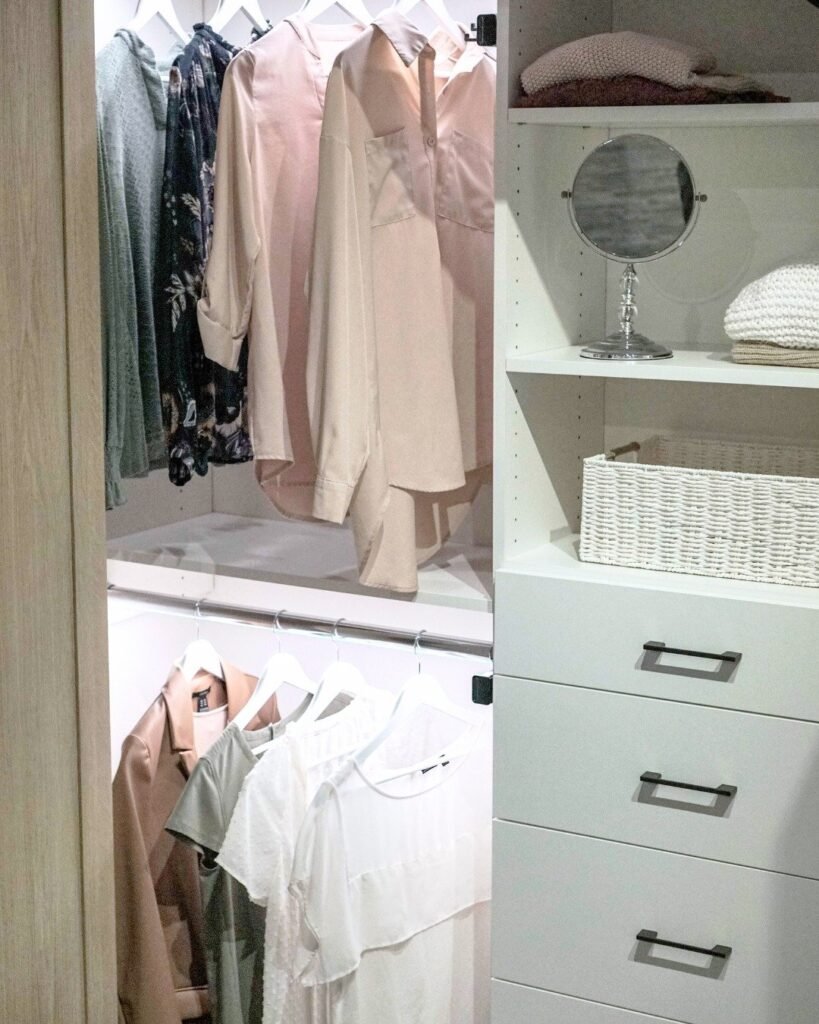
Most small closets have one rod and a big pocket of wasted height underneath short items like shirts and folded pants. A second rod hung below the first turns that dead space into a whole new row of hanging storage.
Measure your clearance first. You need roughly 36 inches between the rod and the floor for each tier to hold shirts, so this works best when most of your clothes are tops and skirts rather than long dresses. Expect to pay $15 to $35.
Look for the kind that hooks over the existing rod instead of screwing in. It is renter safe and takes about a minute to install.
3. Hanging Closet Shelves
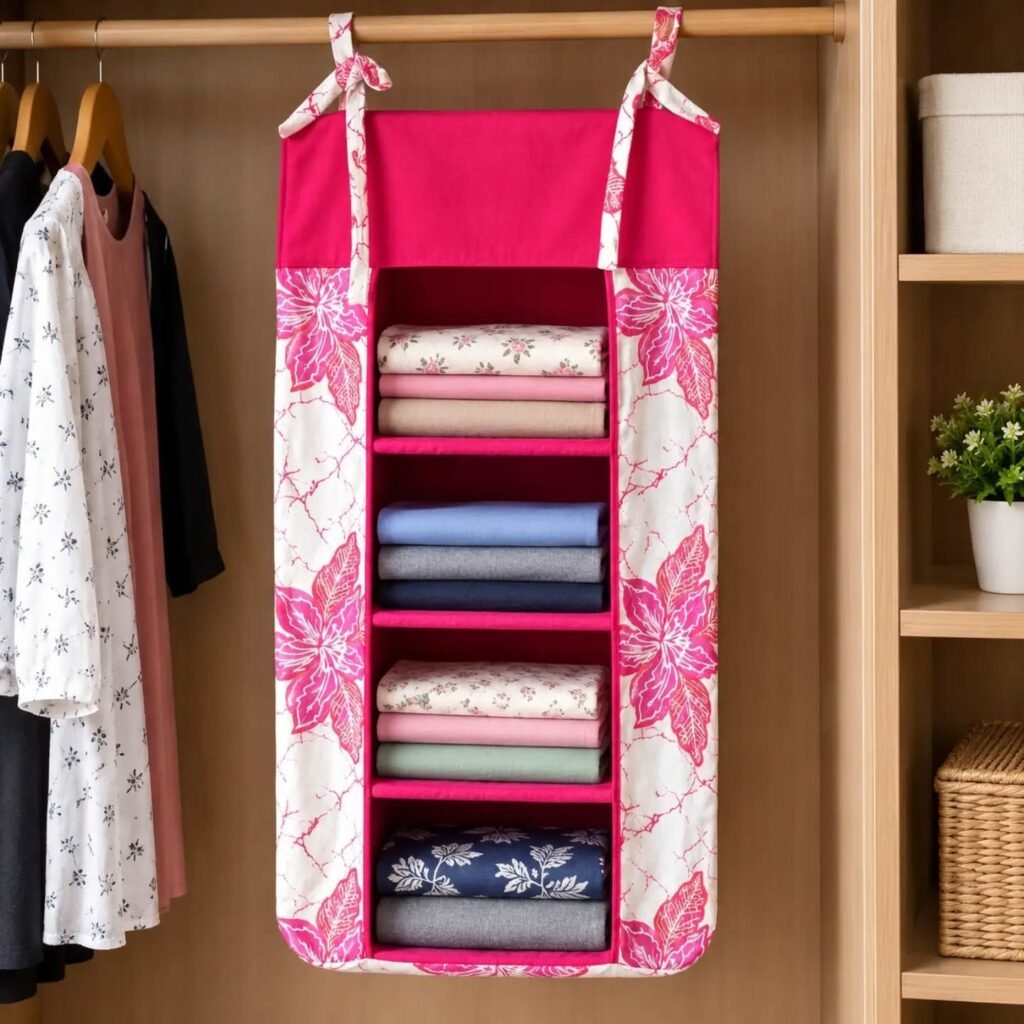
Fabric hanging shelves, the kind with three to six cubbies that dangle from the rod, are what I reach for when a closet has no built-in shelving at all. They hold sweaters, jeans, and tees, and they keep folded stacks from toppling when you pull one out.
The trade-off is that they sag if you overload them. Keep the heavy knits on the top shelves and the lighter items lower, and choose a version with stiff side supports. Most cost between $12 and $30.
4. Over-the-Door Organizer
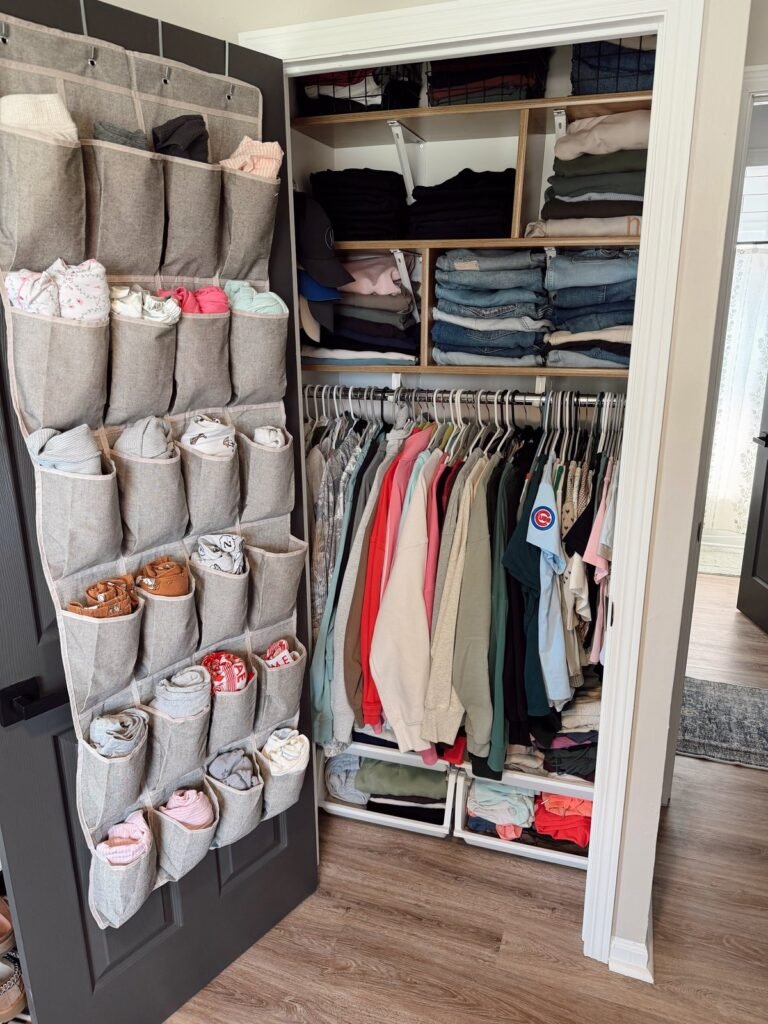
A door is free real estate, and this is the quickest way to claim it. Pocket styles are great for accessories, scarves, and flat sandals, while hook styles handle bags and robes.
One honest warning: I tried the cheap hook version for coats and it fell off within a week because the door would not close properly with the weight. Check the clearance gap at the top of your door before buying, and keep the load light.
Pro tip: If your closet door does not close fully after you add an over-the-door piece, the hook is too thick. Use an adhesive-hook alternative instead of forcing it.
5. Shelf Dividers
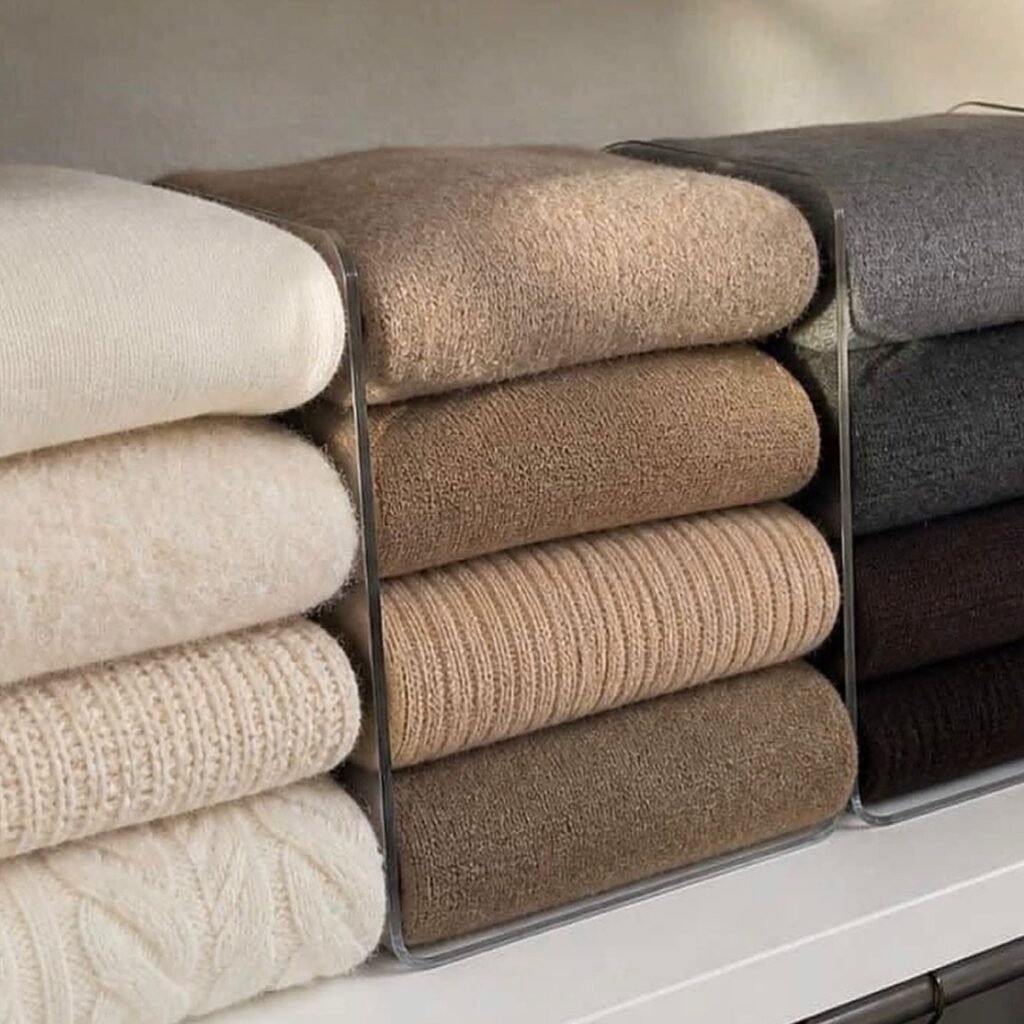
Folded stacks on a single wide shelf collapse into each other the moment you grab something from the middle. A shelf divider is a simple vertical panel that slides onto the shelf edge and keeps each stack separate.
They are especially helpful for sweaters and denim, which are heavy and slippery. A set of two or three costs roughly $15 to $25, and it can make a flimsy shelf feel like a custom unit.
6. Stackable Clear Bins
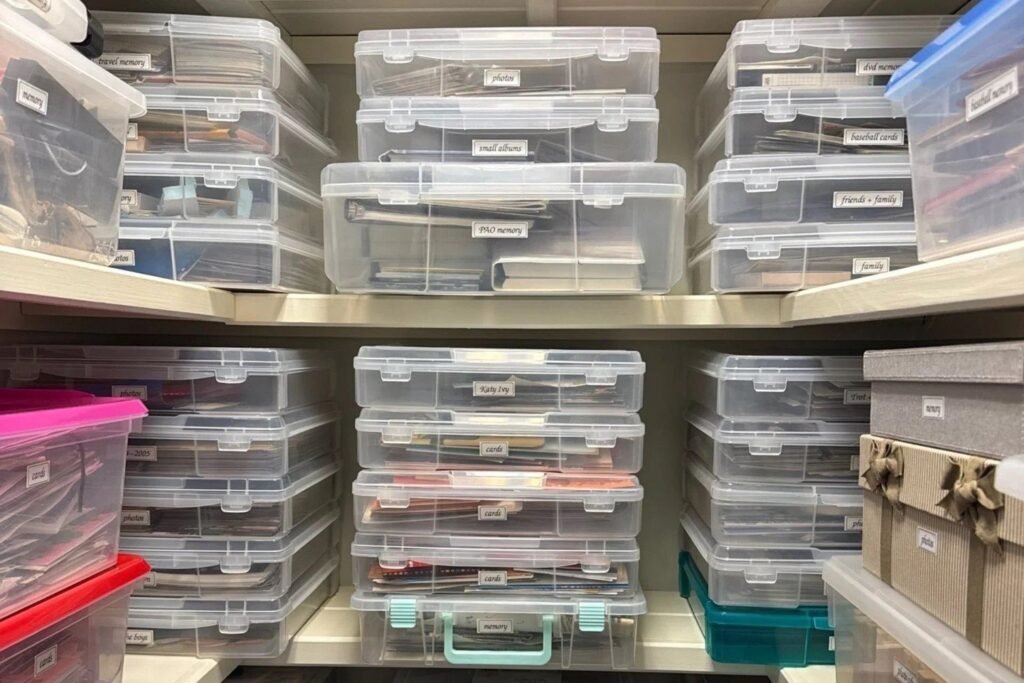
Bins let you use the full height of a closet shelf instead of just the front edge. I use clear ones for off-season scarves, gloves, and swimwear so I can see what is inside without pulling everything down.
Size matters more than style here. Measure your shelf depth, then buy bins about an inch shorter so you can slide them in and out. If you are comparing styles, my breakdown of the best storage bins shows which ones hold up and which crack.
Plan for $20 to $45 for a set of four to six.
7. Under-Shelf Wire Baskets
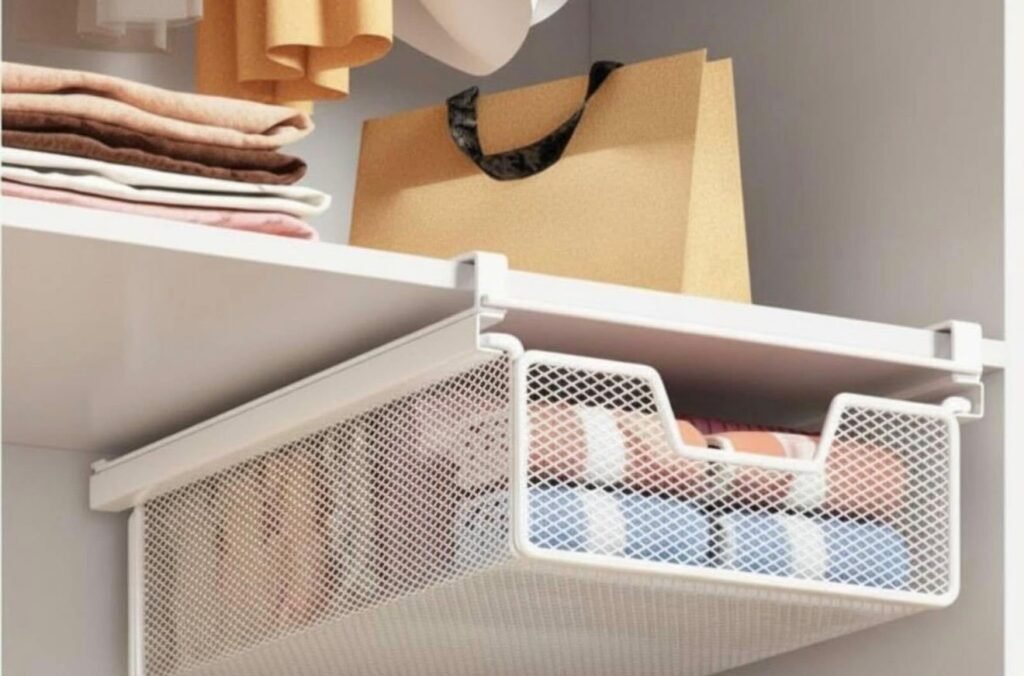
These slide onto the lip of an existing shelf and hang below it, creating a drawer-like space out of nothing. They are perfect for socks, underwear, or the small items that normally get lost in the back.
They work best on solid or thick shelving. If your closet has thin wire shelves, check the clip fit before you commit, since the wrong clip will bend the shelf. I compared both materials in my post on wire vs wood closet shelving, which is worth a read before you buy any basket. Prices run about $10 to $25 each.
8. Slim Stackable Shoe Racks
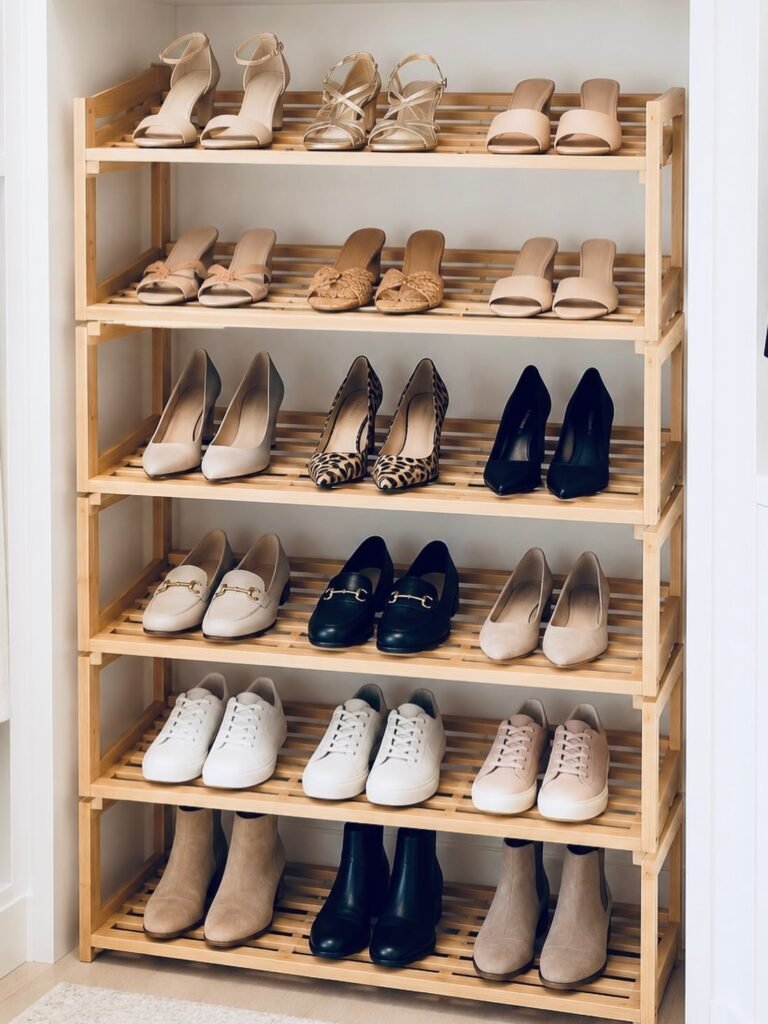
Shoes on the floor are the fastest way to make a small closet feel chaotic. A slim two-tier rack lets you stack pairs in a compact footprint, and angled versions make each shoe easier to grab.
My friend Dani, who lives in a 500 square foot one-bedroom, kept a pile of sneakers by the door for a year. She switched to a narrow rack inside the closet and gained a clear walkway back. Racks usually cost $15 to $40.
9. Cascading Hangers
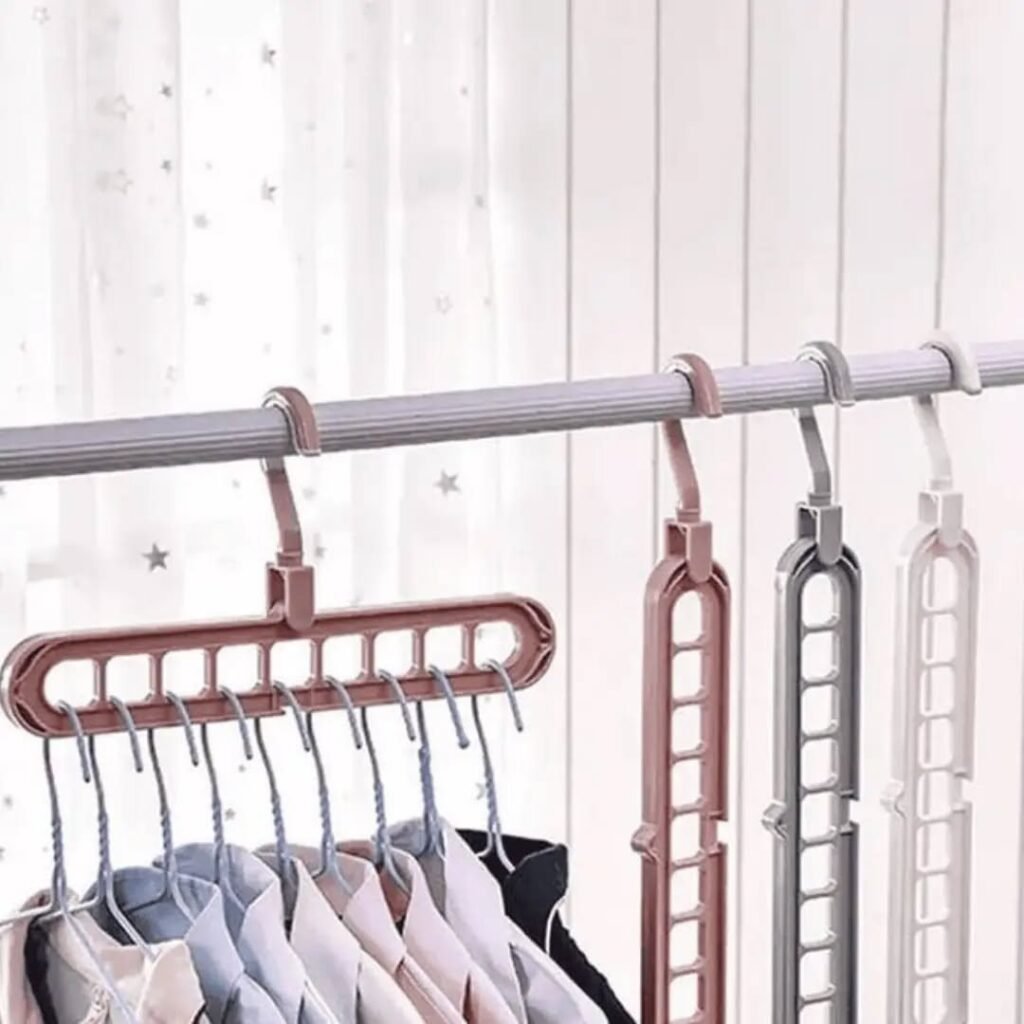
Cascading hangers are vertical hangers with several hooks stacked down one column, so a single hanger spot holds five or six items. They make the most sense for pants, skirts, and scarves.
The downside is that you have to take down the whole stack to reach the top item, so reserve them for things you wear less often. A pack of a few typically costs $10 to $20.
10. Behind-the-Door Hooks and Rails
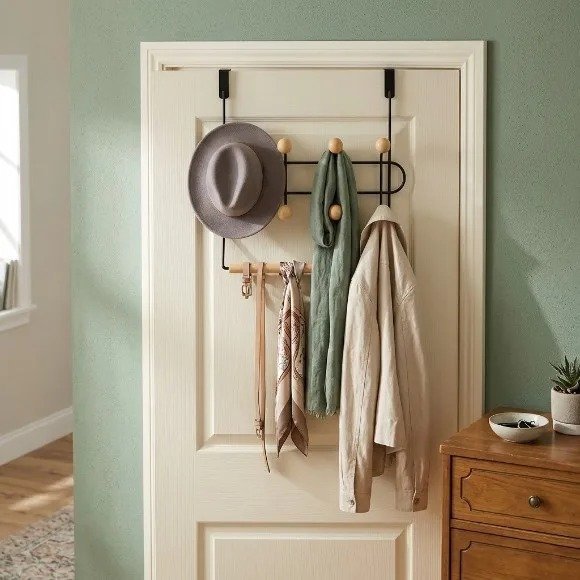
Instead of a bulky organizer, a simple row of hooks or a slim rail on the back of the door gives you a place for tomorrow’s outfit, bags, and belts. It is the closet version of a landing spot, and it keeps the chair in your room from becoming a clothing pile.
Look for adhesive-backed or over-the-door styles if you rent. Hooks usually cost $8 to $20, and they hold more than you would expect if you spread the weight out.
11. Slim Rolling Cart
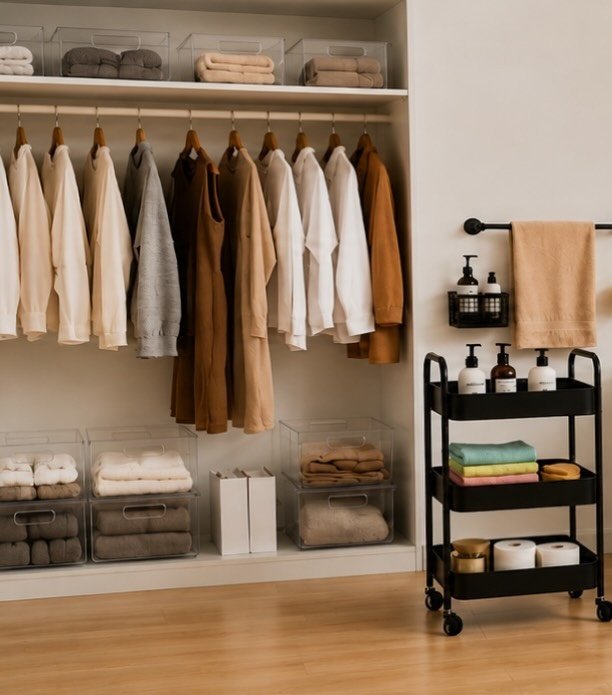
A narrow rolling cart with three tiers works as a movable dresser in a closet floor that has dead space. I keep mine for accessories and workout clothes, and I roll it out when I need to reach the back.
The reality check is that wheels need clear floor space, so skip this if your closet floor is already crowded. It is best in walk-in or wide reach-in closets. Expect $25 to $50.
12. Belt, Tie, and Scarf Hangers
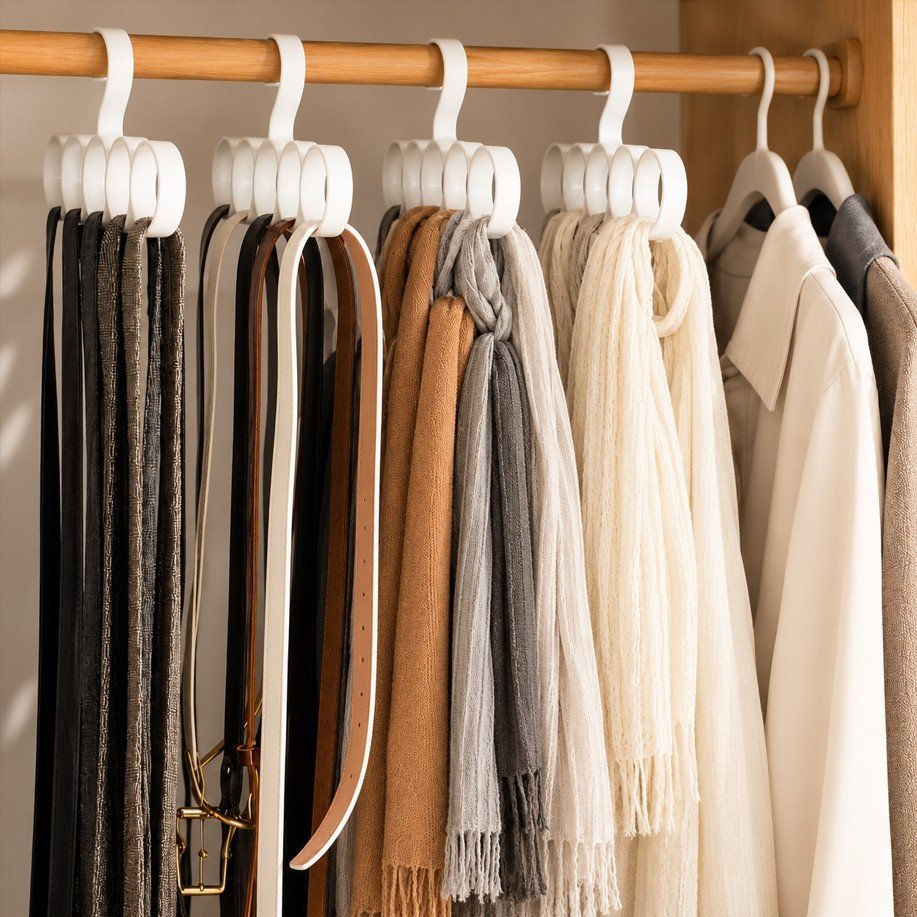
Small accessories are what make closets feel messy even when the clothes are tidy. A dedicated hanger with loops or slots keeps these items visible and wrinkle free without taking up a drawer.
One hanger can hold a surprising number of items, so you rarely need more than one or two. They cost about $6 to $15 each, which makes them an easy win.
13. Vacuum Storage Bags and Garment Bags
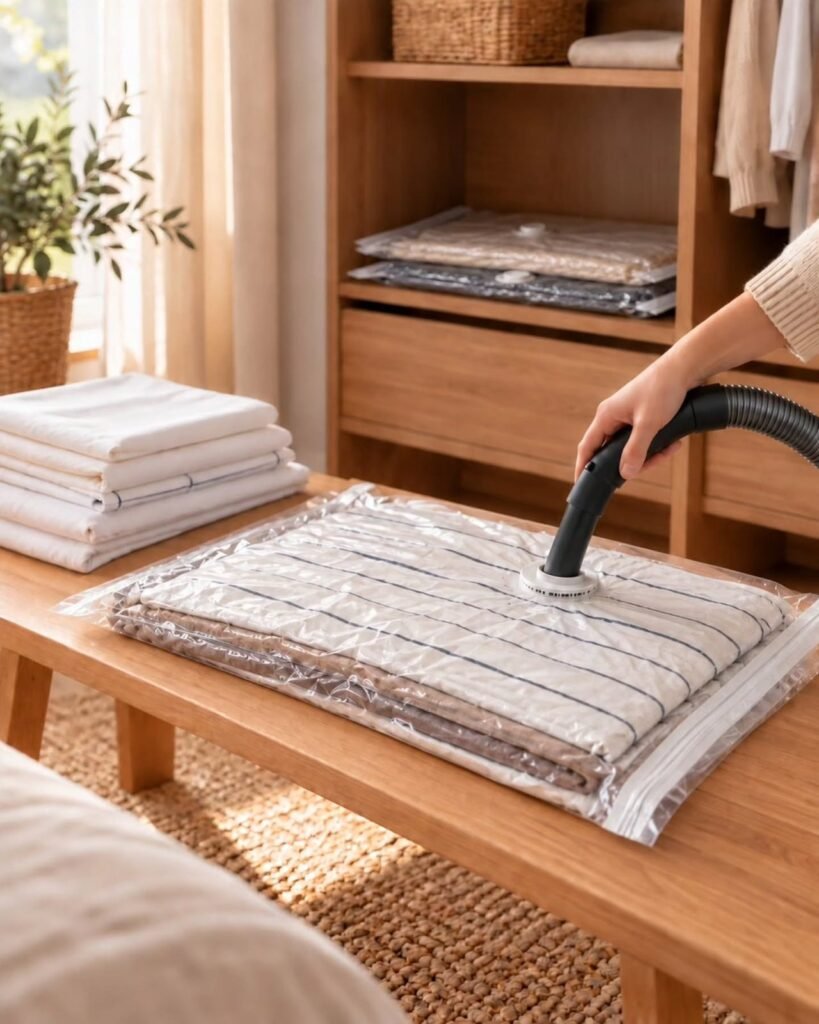
If you own bulky winter coats and comforters, vacuum bags can shrink them down to a fraction of their size so they fit on a high shelf. Garment bags protect formal pieces you only wear a few times a year.
Do not vacuum seal down jackets or wool for months at a time, since compression can damage the fibers. Use breathable garment bags for those. A pack of vacuum bags is typically $15 to $30.
Pro tip: Label every bag on the outside with a marker. Past you will not remember which flat bag is the ski jacket.
14. Drawer Dividers and Inserts
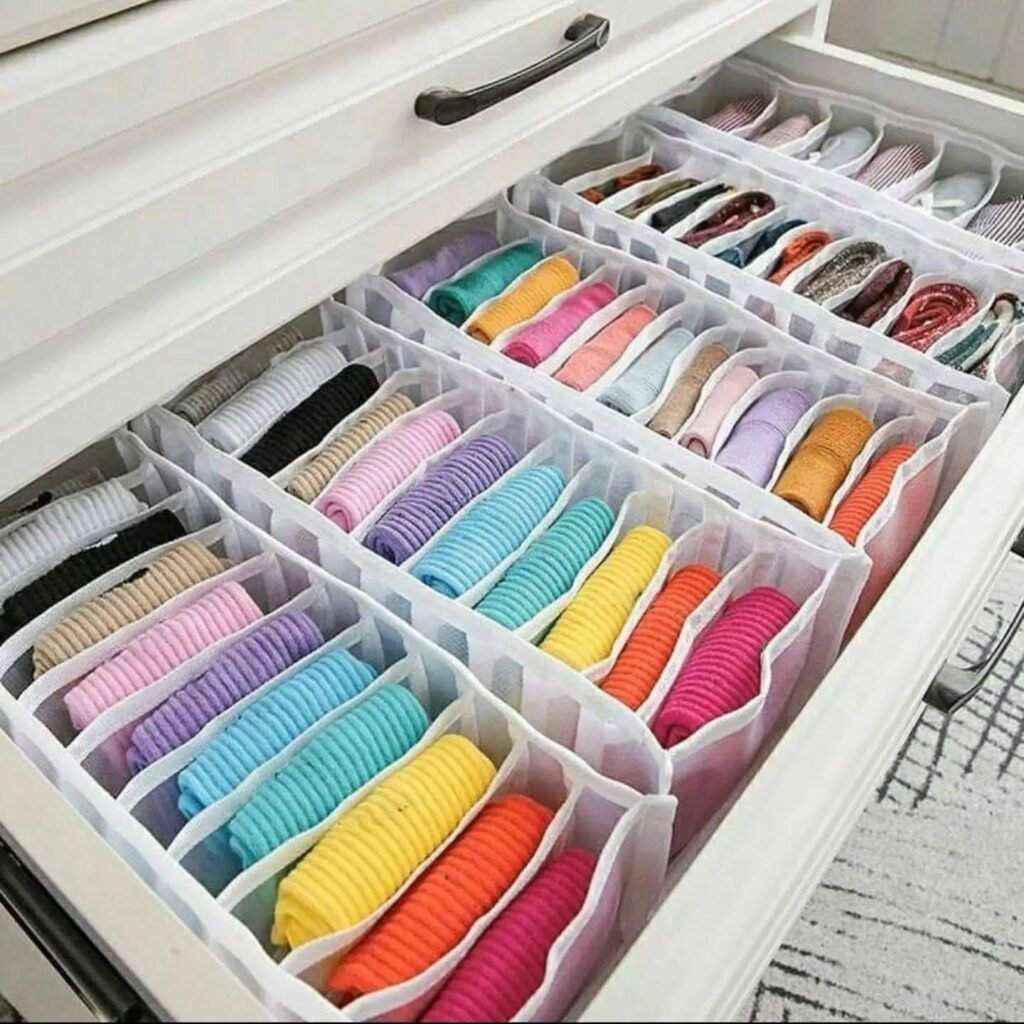
If your closet includes a dresser or built-in drawers, dividers are what keep them from turning into a tangle. Small bins or adjustable dividers sort socks, underwear, and tees so you can see everything at once.
I like the adjustable bamboo style because it adapts when your wardrobe changes. A set generally runs $15 to $35, which is far cheaper than buying a second dresser.
15. Wall-Mounted Rail and Vertical Add-Ons
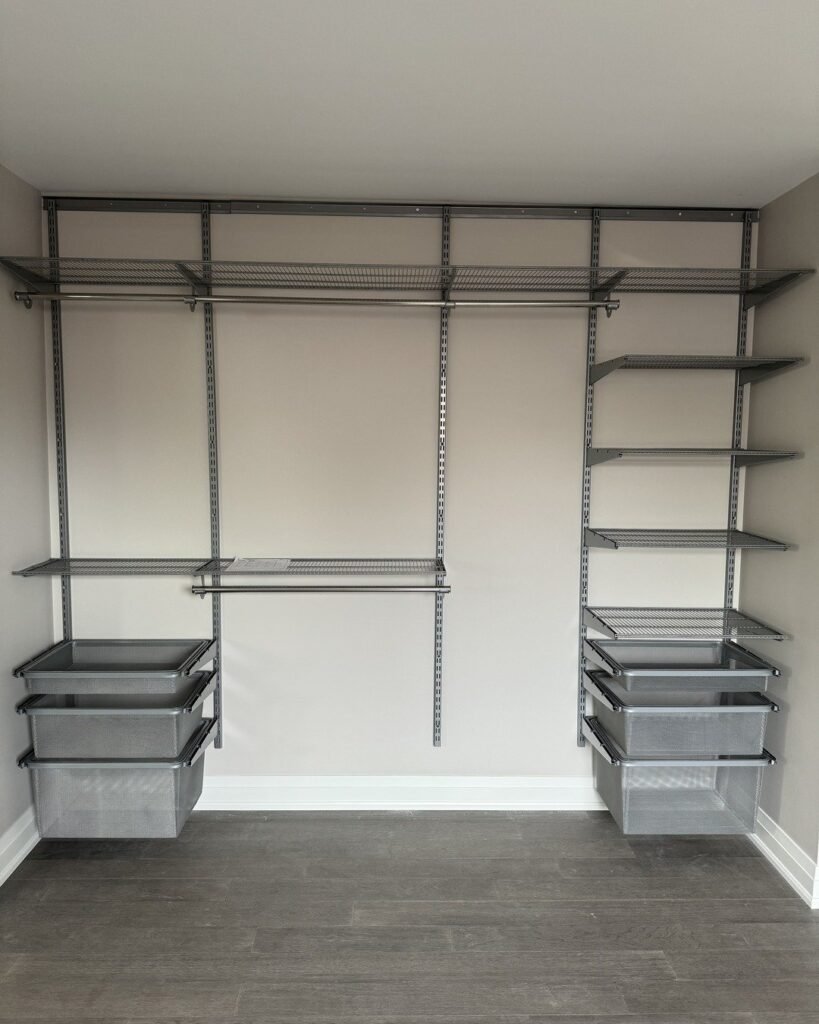
When floor and rod space run out, go up. A wall-mounted rail or a high shelf above the rod uses height you are already paying for in rent. The same logic is behind my tips in maximizing vertical space in a small apartment.
Anchor anything above head height into studs or use the right wall anchors, and keep the heaviest items low. If you rent, check your lease before drilling. Many wall-mounted options cost $20 to $60.
Closet Organizer Comparison: Which Should You Buy First?
| Organizer | Best for | Rough cost | Renter friendly |
|---|---|---|---|
| Slim velvet hangers | Gaining rod space | $20 to $30 | Yes |
| Double hanging rod | Shirts and skirts | $15 to $35 | Yes |
| Hanging shelves | Closets with no shelves | $12 to $30 | Yes |
| Stackable clear bins | Off-season items | $20 to $45 | Yes |
| Under-shelf baskets | Small items | $10 to $25 | Yes |
| Slim shoe rack | Floor clutter | $15 to $40 | Yes |
| Wall-mounted rail | Using extra height | $20 to $60 | Check your lease |
How Much Does It Cost to Organize a Small Closet?
You can make a real difference for under $50 by starting with hangers, a double rod, and a few bins. A fuller setup with shelves, a shoe rack, and vertical add-ons typically lands between $100 and $200, depending on what you already own.
My advice is to buy in stages. Live with the first changes for a week, then see what is still annoying before you spend more.
Final Thoughts: What I Would Do First
If I were starting over in that 24-inch closet, I would measure first, swap my hangers, add a second rod, and stop there for a week. Most of the pain disappears with those two steps, and everything else is just fine tuning. When you are ready to build a full system from the ground up, my walkthrough on a DIY closet organization system shows how to put the pieces together.
FAQs About Closet Organizers for Small Spaces
What is the best closet organizer for a very small closet?
Start with slim hangers and a double hanging rod. They add capacity without taking any floor or shelf space, which is exactly what a tiny closet needs.
How do I organize a small closet with no shelves?
Hanging fabric shelves and stackable bins let you build storage without installing anything. You can also add a freestanding rack or a rolling cart if the floor allows.
Are closet organizers renter friendly?
Most of the options in this post are, especially hangers, hanging shelves, bins, and over-the-rod add-ons. Anything that screws into the wall should be checked against your lease first.
How do I measure my closet before buying organizers?
Measure the width, depth, and height, plus the rod height and any shelf clearance. Write the numbers in your phone so you can check them while shopping.
How can I make my closet look bigger?
Use matching hangers, keep colors grouped, and leave a little breathing room between items. A less crowded closet reads as larger even when the dimensions are the same.








Leave a Reply