
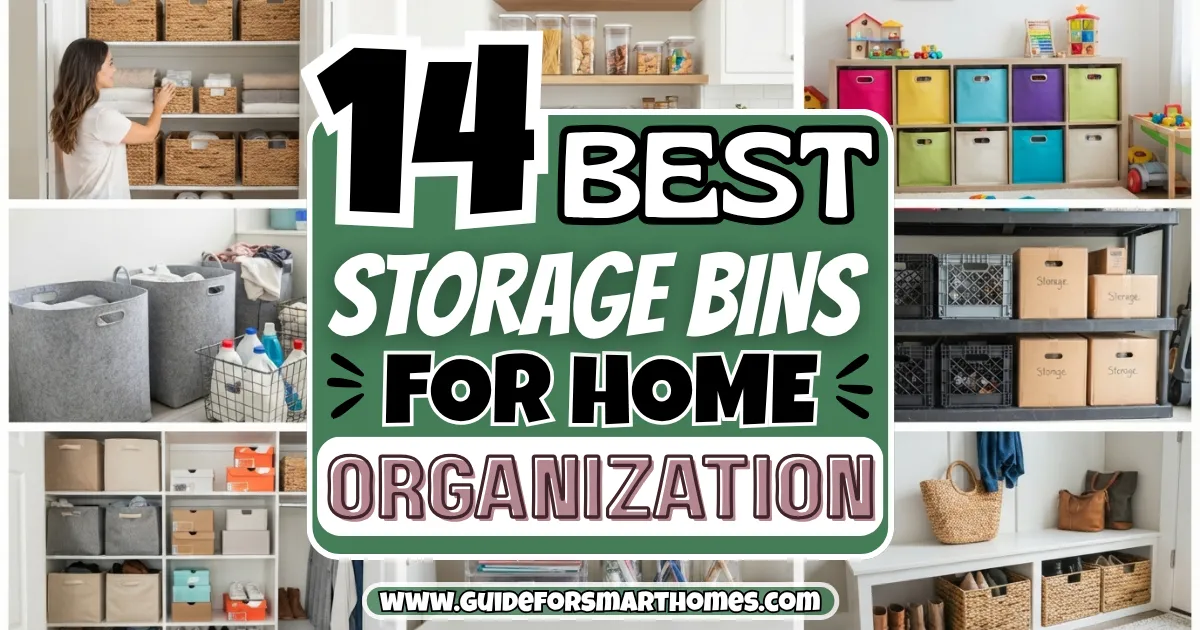
I once bought 24 storage bins in one afternoon. Different sizes, different colors, different brands, because each one was “on sale” and I was sure I’d figure out where they’d go later. Reader, I did not figure it out. They didn’t stack, they didn’t fit the shelves, two of them cracked when I put a box of books in, and I spent the next month stepping around a tower of mismatched plastic that was somehow messier than the clutter it was supposed to fix.
That’s why I’m particular about storage bins now. The right bin makes a closet, pantry, or garage easier to live with, and the wrong one just gives clutter a new container.
The best storage bins for home organization share a few traits: they fit the space you actually have, they’re sturdy enough for what you put in them, and they make it easy to see and reach what’s inside. If you want the bigger framework before you shop, my home organization ideas guide walks through the whole process, starting with decluttering.
Below are 14 types of storage bins I’d actually buy, with what each is best for, rough prices, and an honest trade-off. I’ve sorted them by type rather than by brand, since stock and prices change, and after the list you’ll find a comparison table, a room-by-room guide, a buying checklist, and FAQs. Prices are rough ranges and vary by store and size, so check current listings before you buy.
How to Choose Storage Bins That Actually Work
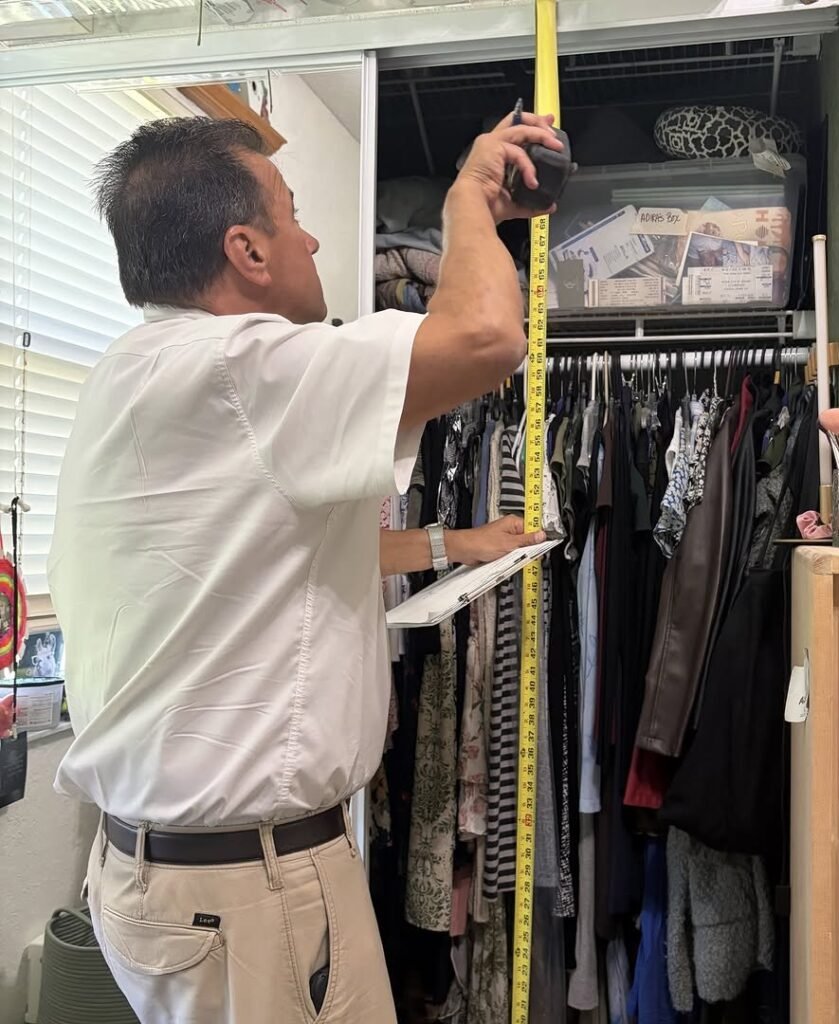
Start with measurements. Measure the shelf, drawer, or space where the bin will live, including height clearance, and write the numbers down before you shop. A bin that’s half an inch too wide is a wasted purchase.
Then think about what you’re storing and how often you’ll reach for it. Everyday items need open, easy-access bins.
Rarely used items can go in lidded bins up high. Heavy things need sturdy bins with strong handles or sides, and anything stored where moisture is a risk, like a basement or garage, needs a bin that seals.
Pro tip: Buy one bin first, take it home, and test it in the space. Then buy the rest in the same style and size, because matching bins stack, fit, and look tidy in a way that a mismatched set never will.
1. Clear Stackable Lidded Plastic Bins
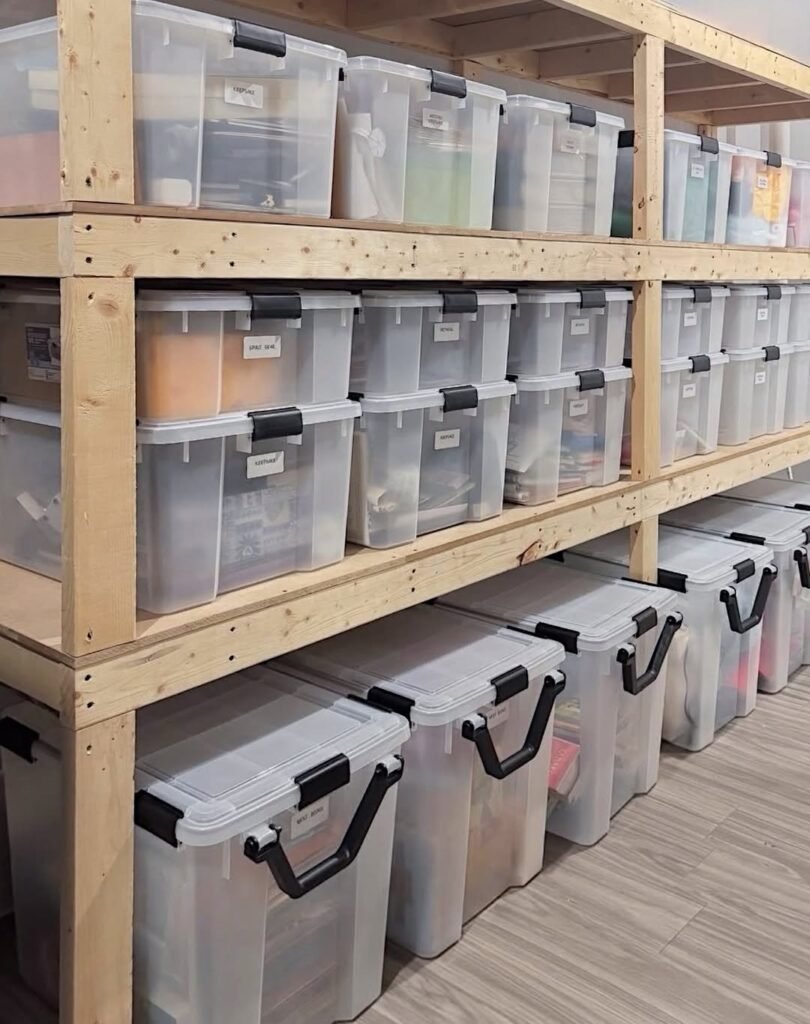
These are the workhorse of home organization. Clear sides let you see what’s inside without opening them, lids keep out dust, and the stackable shape saves floor space. They work in closets, under beds, in the garage, and on pantry shelves.
Prices run about $5-25 each depending on size. Look for sturdy walls and lids that snap on securely. The trade-off is that cheap plastic can crack when overloaded, and clear bins show clutter, so they look best when what’s inside is neat or the bins are in a closed space.
2. Clear Open-Front or Pull-Out Pantry and Fridge Bins
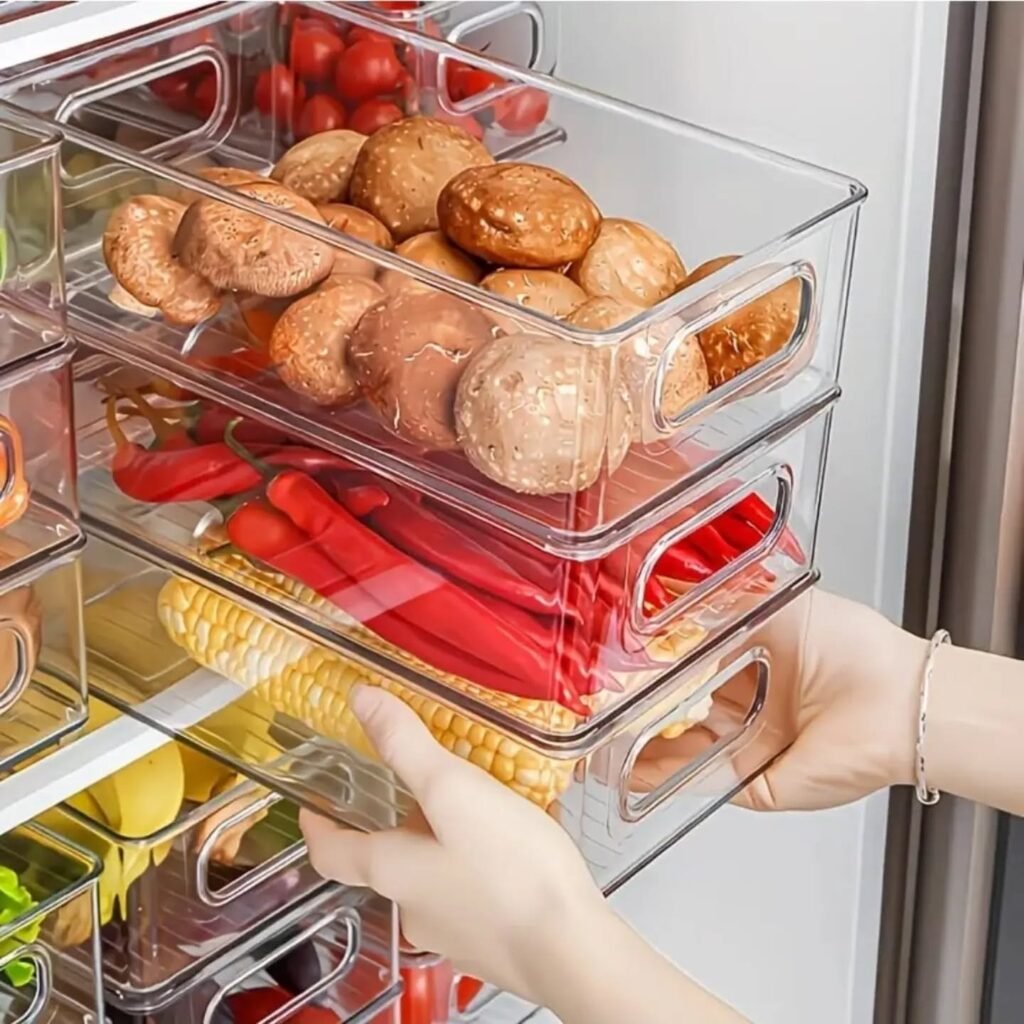
For the kitchen, open-front bins group snacks, packets, and produce so you can see everything at a glance. Some have a pull-out handle or a lazy Susan base, which is great for deep shelves where things get lost at the back.
Expect about $8-30 each. They’re easy to wipe clean and keep food visible, which cuts down on duplicates and waste. The downside is that sizes vary, so measure your shelf depth first.
3. Collapsible Fabric Cube Bins
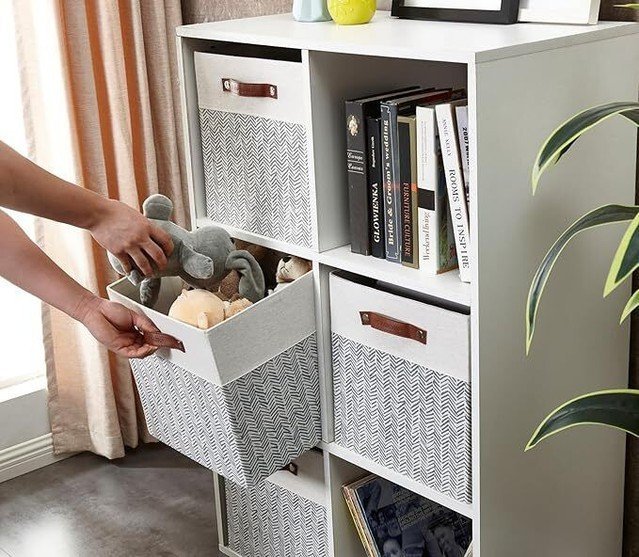
Fabric cubes are soft, light, and friendly for cube shelves. Many fold flat when not in use, which makes them easy to store, and they come in plenty of colors and patterns. They’re a favorite for kids’ toys, clothes, and living room clutter.
Prices run about $8-30 for a set. Choose bins with a reinforced base and sturdy sides so they don’t slump when half empty. The trade-off is that fabric is harder to wipe clean, so they’re better for dry items than anything that can spill.
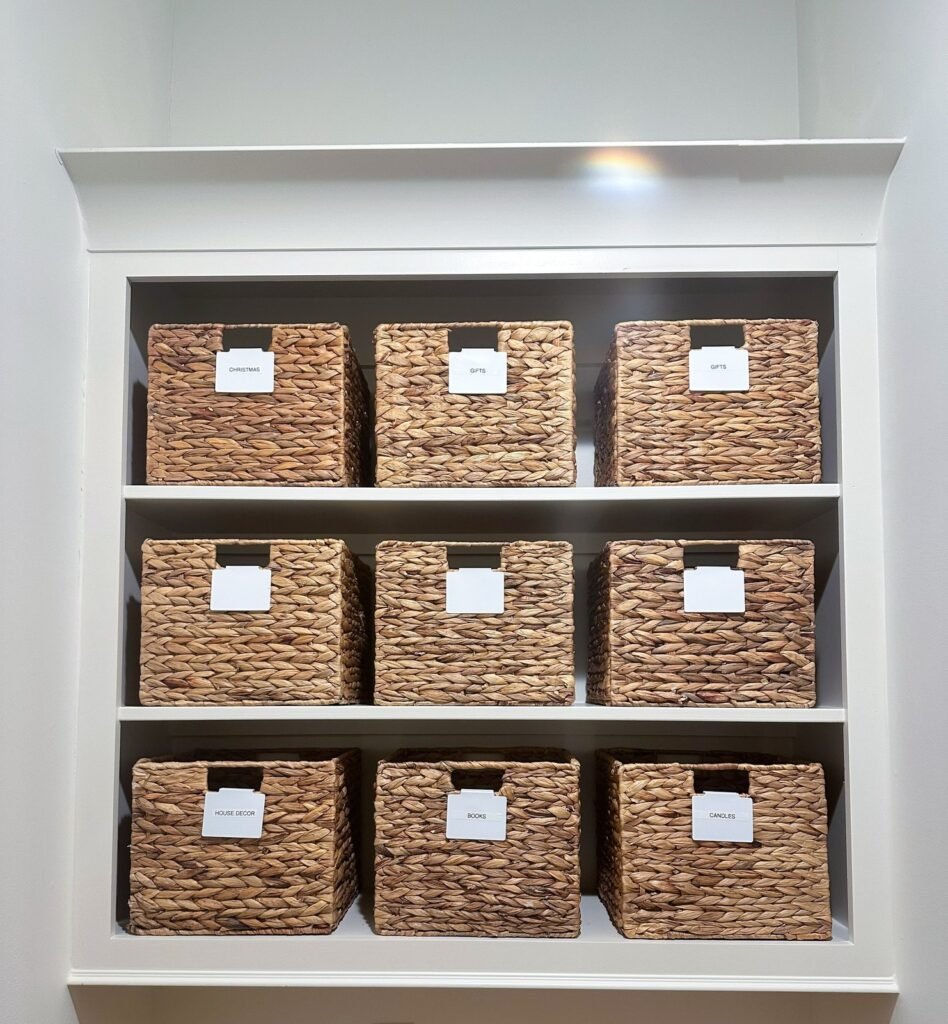
4. Woven Baskets (Wicker, Seagrass, Rattan, or Paper Rope)
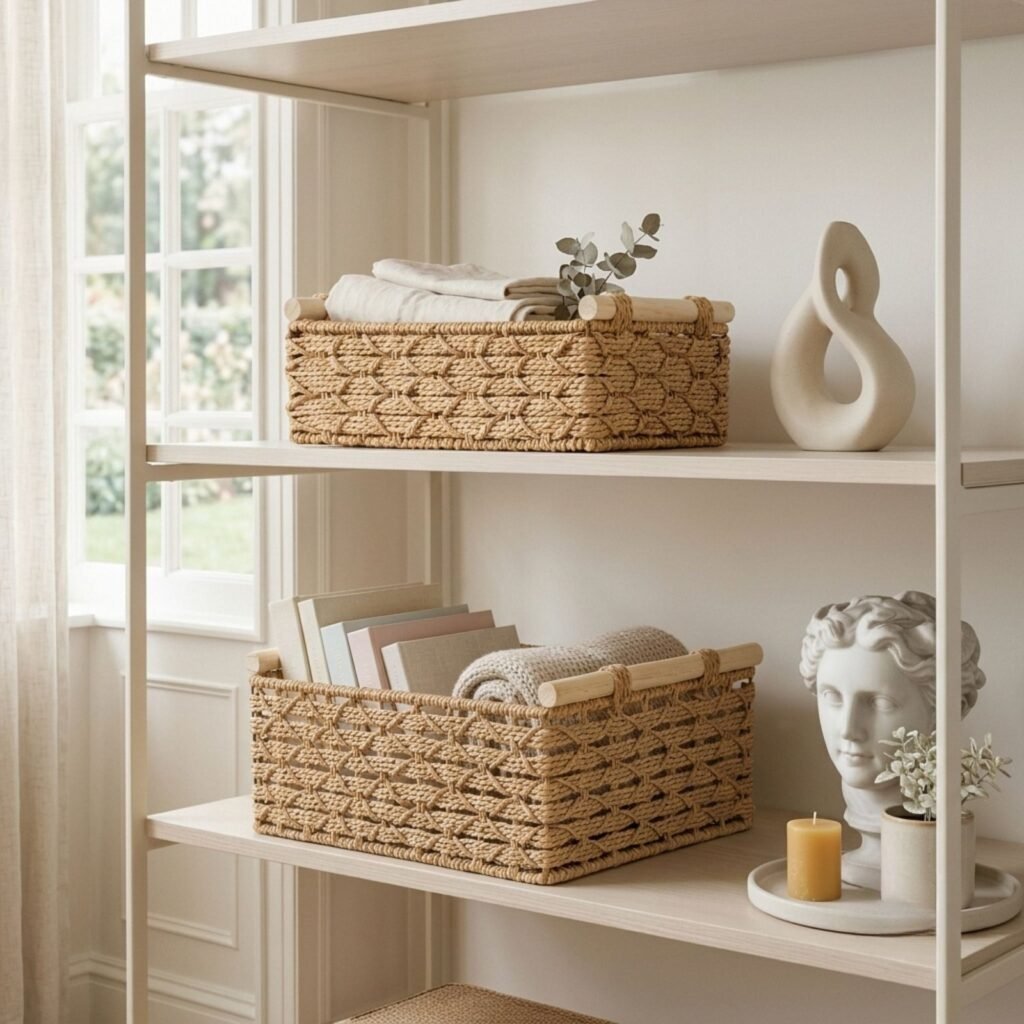
Baskets add warmth and texture, and they hide clutter in plain sight. They work well for blankets, magazines, toys, towels, and anything you want to keep accessible but pretty. They look natural on open shelves and in living spaces where a plastic bin would stand out.
Expect about $10-50 each. Look for ones with smooth interiors, since rough weaves can snag clothes and fabrics, or use a liner. The trade-off is that they don’t stack well and they can be harder to clean. A friend of mine, Naomi, lined hers with scrap fabric and said it fixed the snagging problem for about $4.
5. Canvas or Linen Bins With Handles
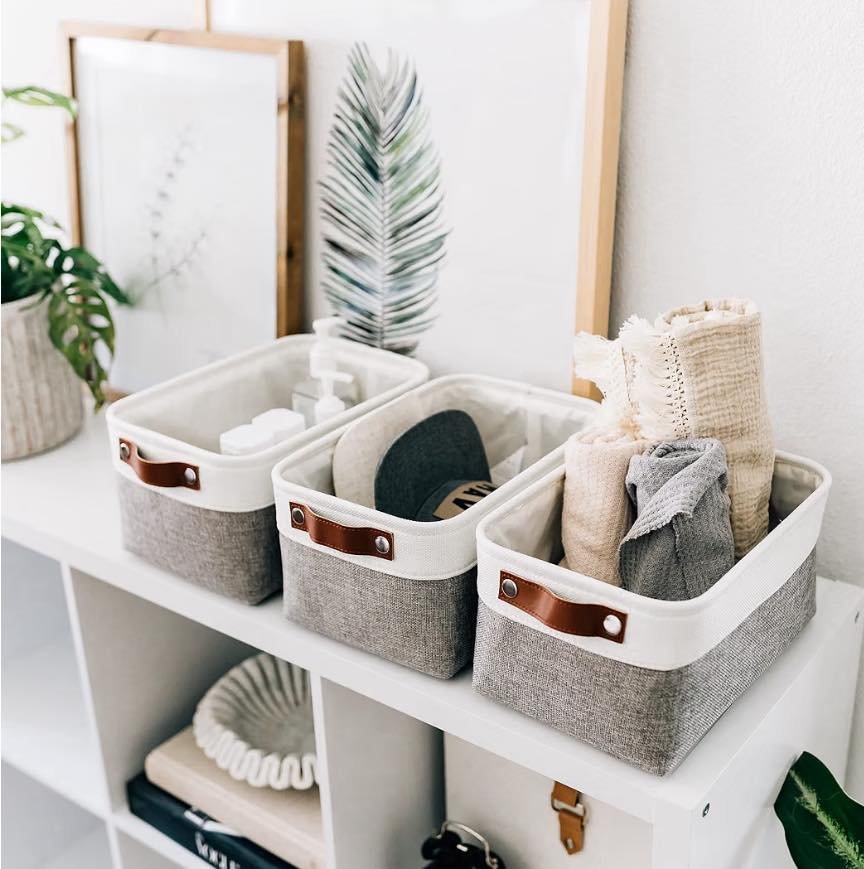
Sturdy fabric bins with rope or leather handles are great for shelves and closets. They’re softer and quieter than plastic, they look more finished, and the handles make it easy to pull a bin out without taking everything with it.
Prices run about $12-40 each. Look for a firm lining or insert so they hold their shape. They’re not great for damp spaces, and they can stain, so choose a darker color or a washable fabric for anything that might spill.
6. Rolling Under-Bed Bins
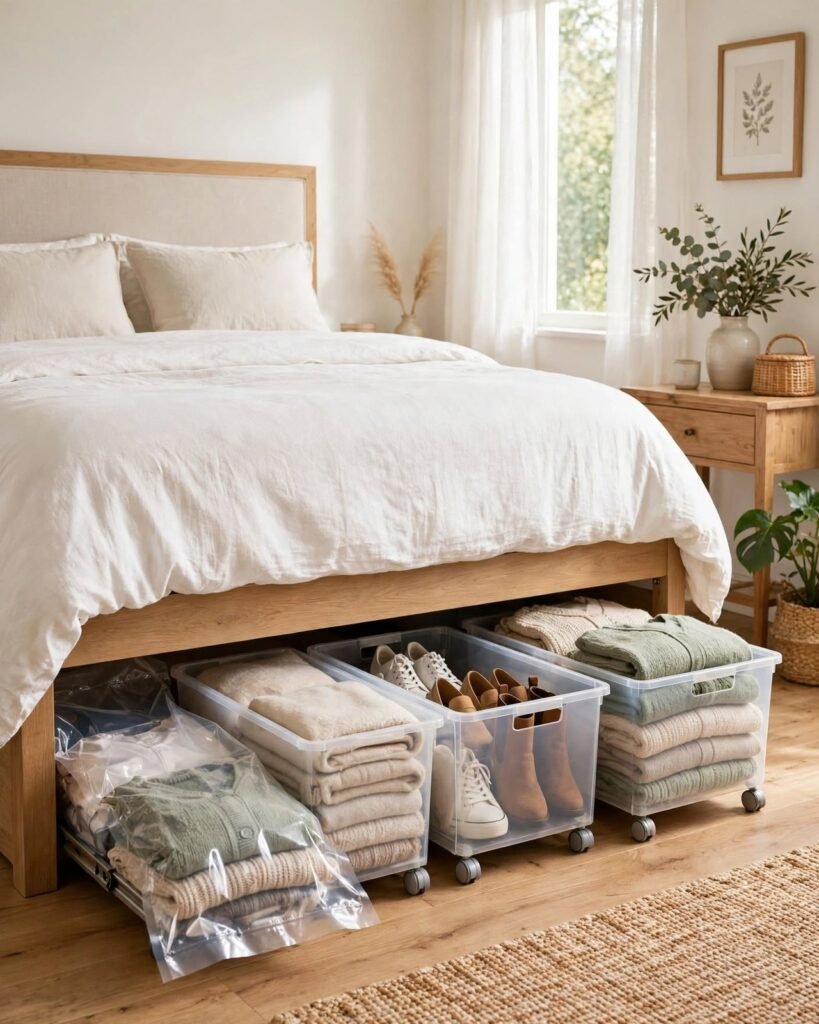
The space under a bed is one of the biggest wasted storage spots in any home. Shallow bins on wheels slide in and out easily, which makes them ideal for off-season clothes, shoes, and extra bedding. Look for ones with a lid to keep out dust.
Expect about $15-40 each. Measure your bed’s clearance before buying, since many beds sit lower than people expect. The trade-off is that wheels can scuff hardwood, so check the material, or add felt pads under any bins that sit directly on the floor.
7. Wire or Metal Baskets
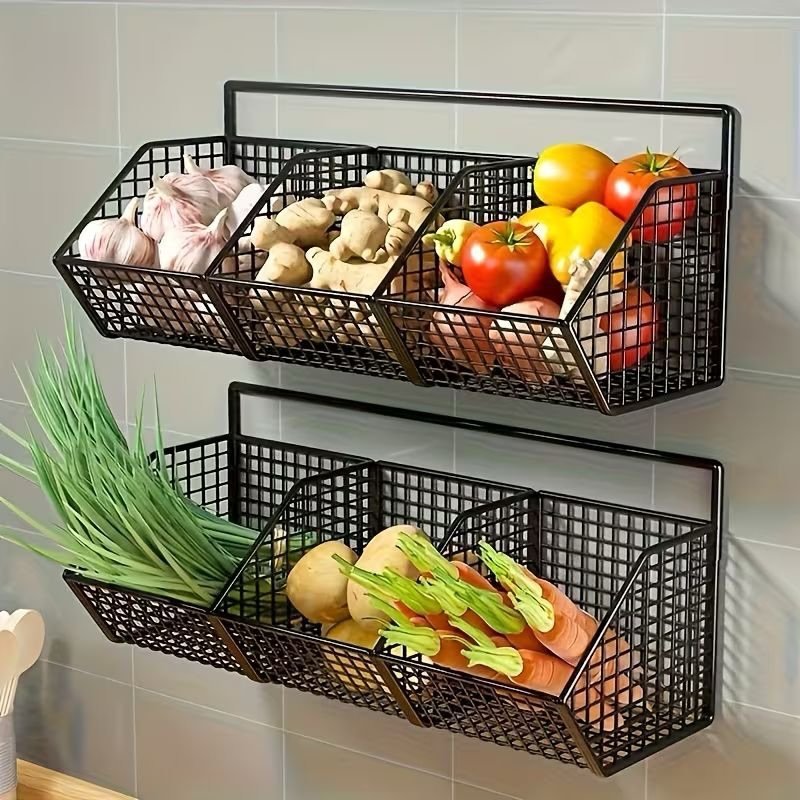
Metal baskets are durable, airy, and easy to clean. They work well in kitchens, pantries, bathrooms, and laundry rooms, especially for produce, cleaning supplies, and bulky items. The open design lets air circulate, which helps with items like onions and potatoes.
Prices run about $10-35 each. Smaller items can fall through the gaps, so use a liner or choose a tight mesh for small things. The trade-off is that metal baskets can scratch surfaces, so add a felt pad or a liner underneath.
8. Heavy-Duty Latching Tubs for Garage and Seasonal Storage
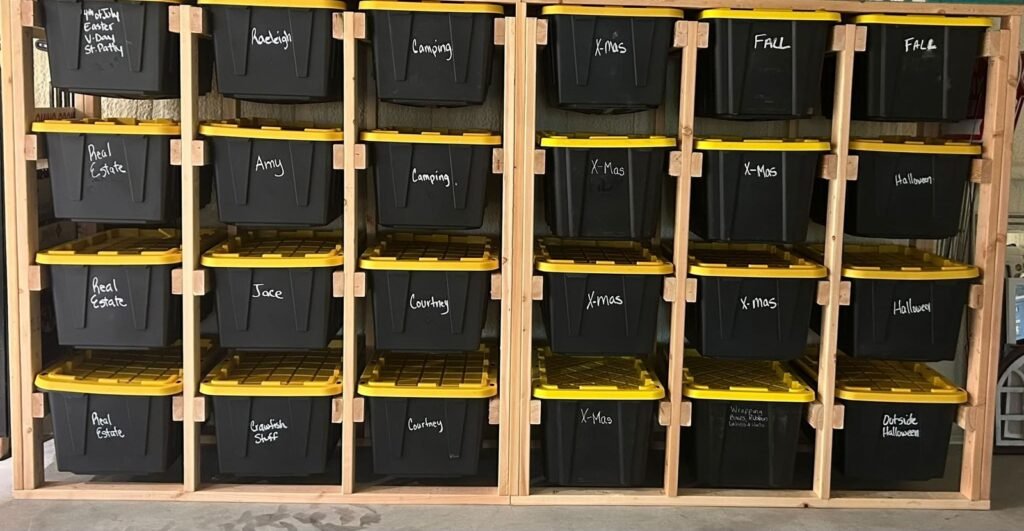
For anything stored in a garage, basement, or attic, you want a rugged tub with a tight latching lid. These resist moisture, pests, and the occasional bump, and they stack securely. They’re ideal for holiday decor, camping gear, tools, and seasonal clothing.
Expect about $12-40 each depending on size. Look for sturdy latches and handles that can carry the weight. If you’re organizing the whole garage, my guide to garage storage ideas shows how to combine tubs with shelving and overhead racks. The trade-off is that they’re bulky and not very pretty, so keep them out of sight.
9. Wooden Crates and Bamboo Bins
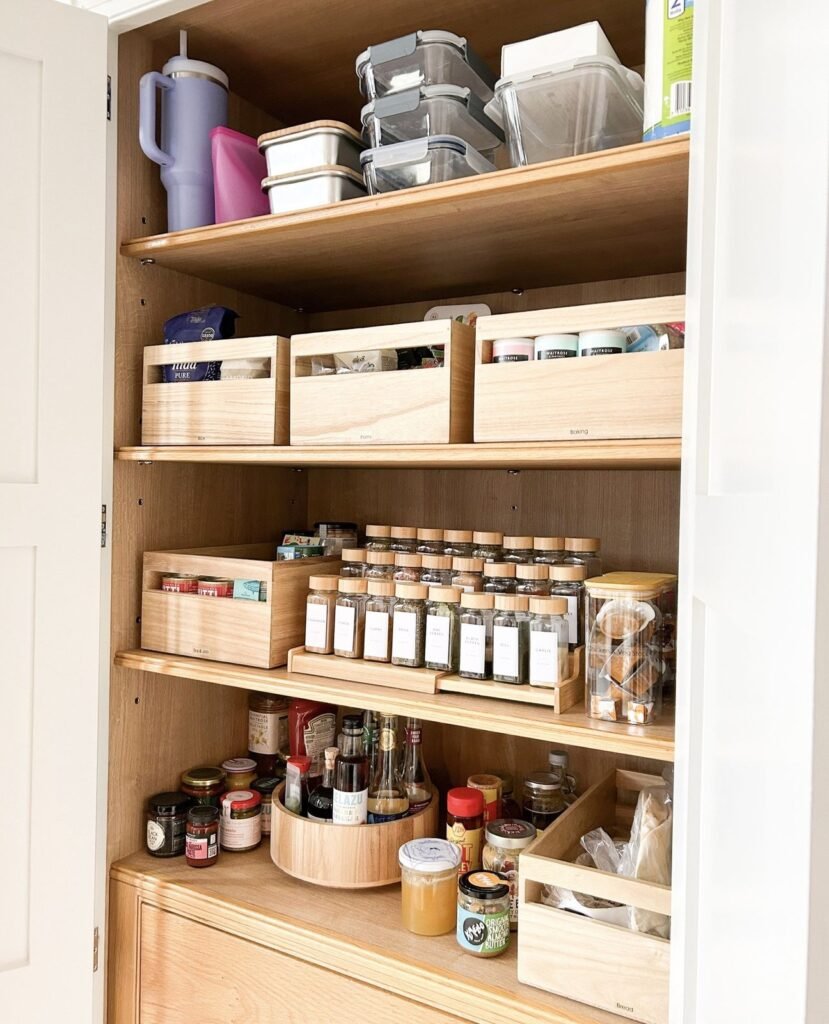
Wood and bamboo bins add a natural, finished look and work well as open storage on shelves, in the pantry, or as a stackable display. They’re sturdy, they look good in a living space, and they age nicely. Many people use them for books, kitchen items, or decor.
Prices run about $15-60 each. They’re heavier than plastic, and raw wood can splinter, so check for smooth edges or sand and seal them. They’re also less suitable for damp areas.
10. Modular Stackable Drawer Bins
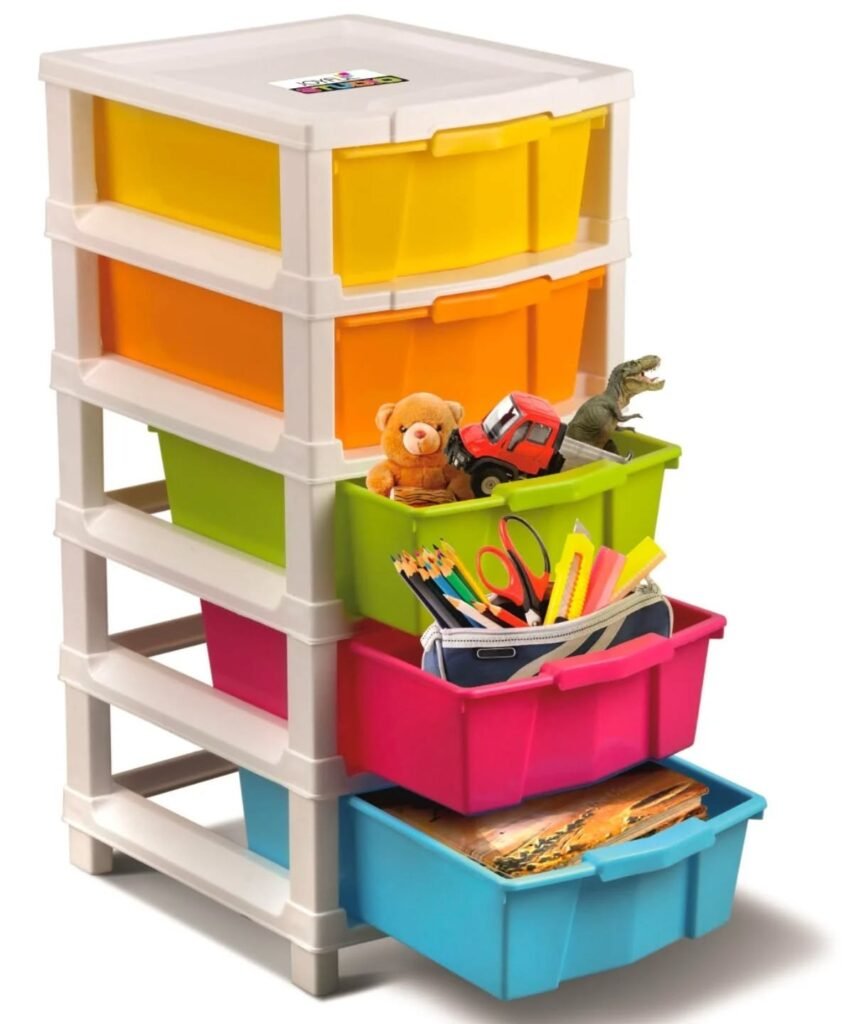
These are small, plastic drawer units that stack into a tower, giving you instant drawers without buying a dresser. They work for craft supplies, toys, hair accessories, toiletries, and office items, and you can rearrange them as your needs change.
Expect about $15-50 per unit. Check that the drawers slide smoothly and that the stack is stable, and avoid stacking them too high. In a home with children, anchor tall stacks to the wall to prevent tipping.
11. Small Drawer Organizer Trays and Bins
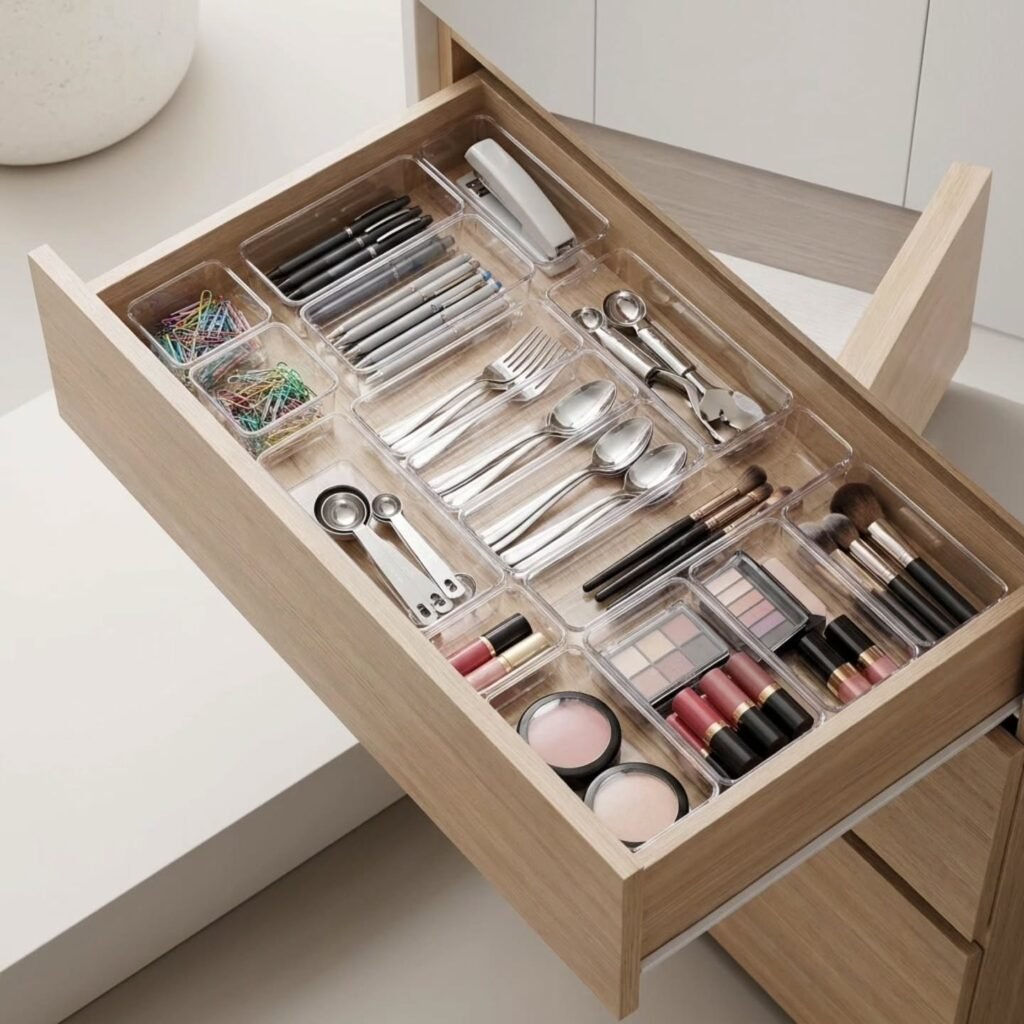
Not every bin is big. Small trays and bins inside drawers keep utensils, makeup, office supplies, and small tools sorted. They’re one of the cheapest, fastest organization wins you can make, and they make a drawer feel brand new.
Prices run about $8-25 for a set. Measure the drawer carefully so the trays fit with minimal gaps, and avoid buying a set before you’ve decluttered. If you’re tackling the most chaotic drawer in the house, my guide on how to organize a junk drawer shows how to choose the right sizes.
12. Hanging Fabric Bins and Closet Organizers
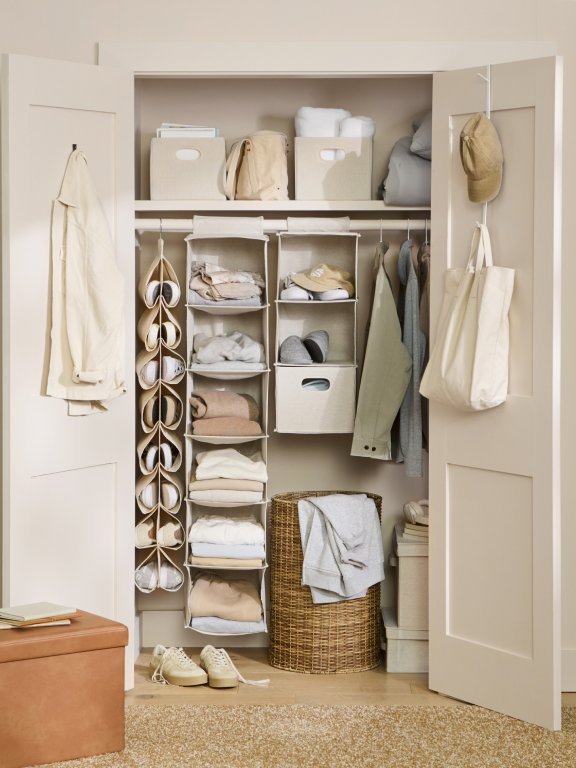
Hanging bins use the vertical space on a closet rod or shelf, and they’re great for sweaters, accessories, and shoes. They keep things visible and off the floor, and many fold flat when empty.
Expect about $12-40 each. Check the weight limit before loading them, and choose sturdy hooks or straps. For more budget-friendly ways to make a closet work harder, my guide to closet organization on a budget covers bins, dividers, and hanging organizers that pair well. The trade-off is that hanging organizers can sag if overfilled.
13. Rolling Carts With Bins
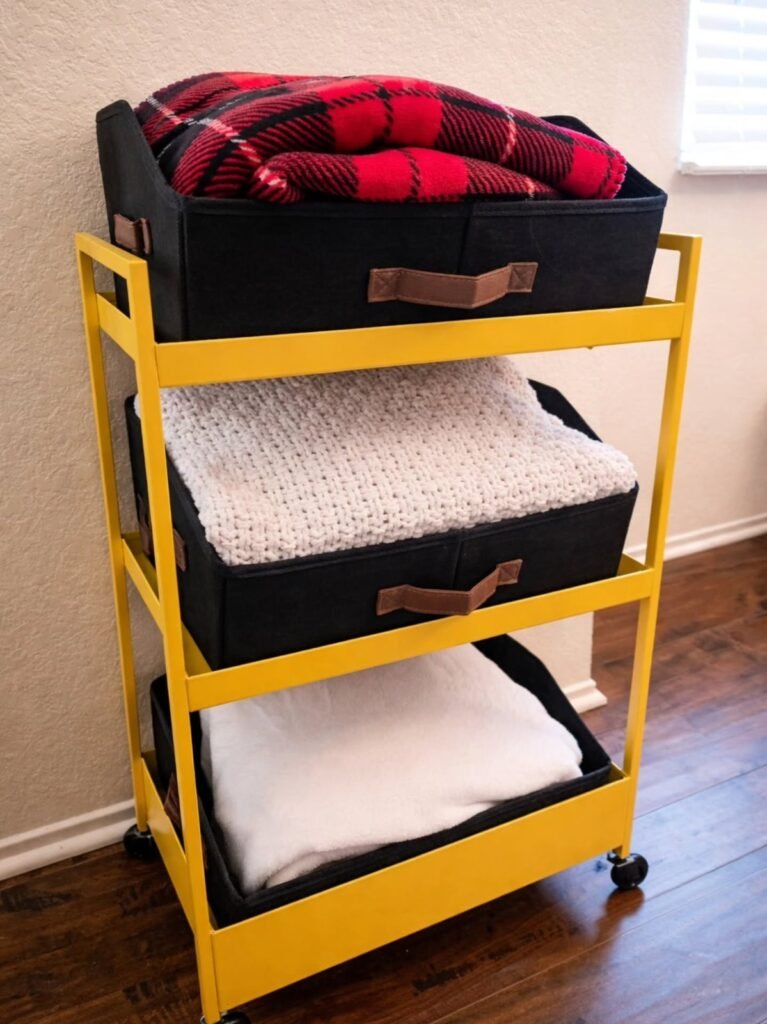
A cart with several bins gives you mobile storage that can move where you need it: the laundry room, a craft area, a bathroom, or a kitchen. It’s especially useful in small spaces, since you can tuck it into a corner or between appliances.
Prices run about $25-90. Look for locking wheels and sturdy baskets, and check the weight rating, since a loaded cart can tip if it’s top-heavy. Put heavy items on the bottom.
14. Storage Ottomans and Benches With Lids
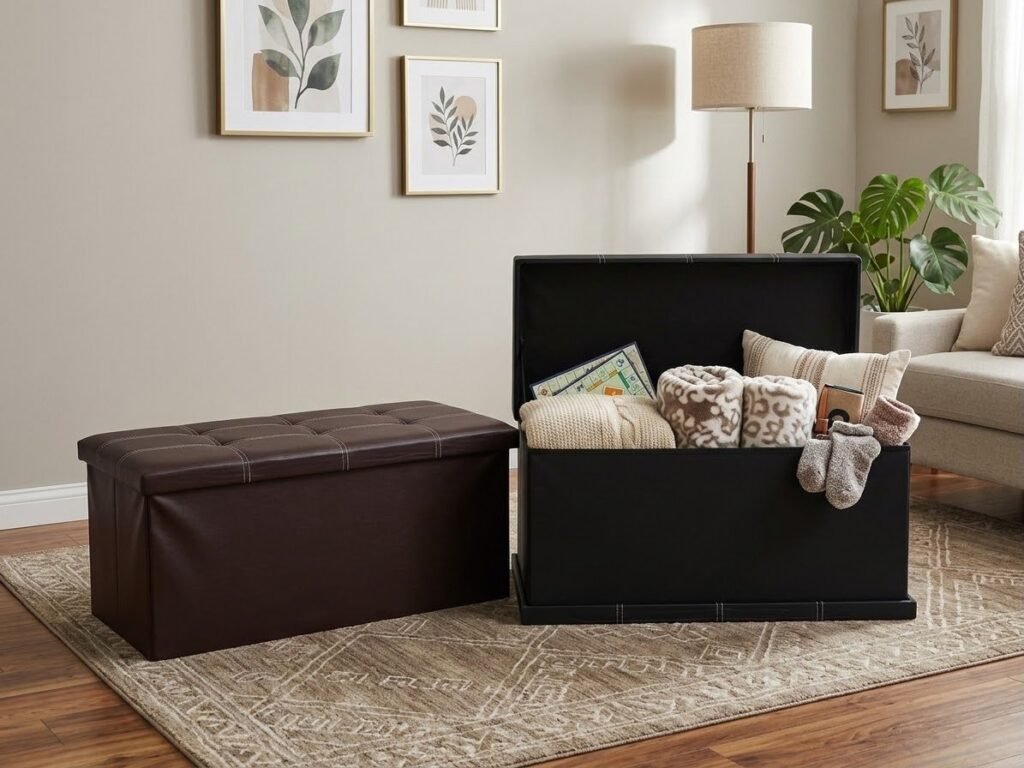
A lidded ottoman or bench is storage disguised as furniture. It holds blankets, toys, shoes, or books, and it doubles as seating or a footrest, which makes it a great fit for living rooms, entryways, and bedrooms. If you’re comparing pieces that earn their footprint, my guide to storage furniture for apartments goes deeper on which ones hold the most.
Expect about $40-200. In homes with young children, choose a model with a lid that stays open on its own or lifts out, since a lid that slams shut can be a hazard. The trade-off is weight, since a full ottoman is heavy to move.
The 14 Bin Types Compared
| Bin Type | Approx. Price | Best For | Good In Damp Areas? | Main Trade-Off |
|---|---|---|---|---|
| Clear stackable lidded | $5-25 | Closets, under beds, general | Mostly, if the lid seals | Cheap ones crack |
| Open-front pantry and fridge bins | $8-30 | Kitchen shelves | Yes | Sizes vary |
| Collapsible fabric cubes | $8-30 | Cube shelves, toys | No | Hard to wipe clean |
| Woven baskets | $10-50 | Open shelves, living spaces | No | Don’t stack, can snag |
| Canvas or linen with handles | $12-40 | Shelves, closets | No | Can stain |
| Rolling under-bed | $15-40 | Off-season clothes, shoes | Depends on the lid | Check bed clearance |
| Wire or metal baskets | $10-35 | Kitchen, bath, laundry | Yes, if rust-resistant | Small items fall through |
| Heavy-duty latching tubs | $12-40 | Garage, attic, seasonal | Yes | Bulky and plain |
| Wood and bamboo crates | $15-60 | Open shelves, pantry | No | Heavy, can splinter |
| Modular drawer bins | $15-50 | Crafts, toys, office | Mostly | Tipping if stacked high |
| Drawer organizer trays | $8-25 | Inside drawers | Yes | Measure carefully |
| Hanging fabric bins | $12-40 | Closets | No | Can sag if overfilled |
| Rolling carts with bins | $25-90 | Laundry, craft, small rooms | Depends on the material | Tipping if top-heavy |
| Storage ottoman or bench | $40-200 | Living room, entry, bedroom | No | Heavy when full |
Which Bins to Use Room by Room
| Room | Best Bin Types | Why |
|---|---|---|
| Kitchen and pantry | Open-front clear bins, wire baskets, wood crates | Visibility and easy cleaning |
| Bedroom and closet | Under-bed bins, hanging bins, canvas bins | Uses hidden space and looks neat |
| Living room | Woven baskets, fabric cubes, ottoman | Hides clutter and looks finished |
| Bathroom | Wire baskets, small trays, clear bins | Handles damp and small items |
| Kids’ room | Fabric cubes, open bins, modular drawers | Easy for children to use |
| Garage and attic | Latching tubs, shelving bins | Resists moisture and pests |
A Simple Buying Checklist Before You Spend Anything
Before you click buy, run through this list. Have I decluttered first? Have I measured the space? Do I know what I’m storing and how often I use it? Is the bin sturdy enough for the weight? Will matching bins stack or fit together? Do I have somewhere to store empty bins I’m not using?
It also helps to buy in stages. Start with one shelf or one closet, see how the bins work, and then expand. A smaller, well-chosen set beats a big mismatched haul every time.
Mistakes That Waste Money on Bins
The biggest mistake is buying bins before decluttering, which means you’re just organizing things you don’t need. The second is mixing sizes and styles, so nothing stacks or lines up. The third is skipping measurements, and the fourth is buying cheap bins for heavy loads, since they crack and fail.
Another trap is ignoring labels. A bin that holds “miscellaneous” becomes a mini junk drawer. Label each one with what’s inside, even if it’s just a strip of masking tape, so everyone knows where things belong.
If I Were Buying Bins From Scratch Tomorrow
I’d declutter first, then buy one style of clear lidded bin for closets and under the bed, a few open-front bins for the pantry, and a couple of woven baskets for the living room. That would be roughly $60-150 and would cover most of the house without a mismatched pile. I’d leave the garage tubs and fancier pieces for later, once I knew what I truly needed.
The best storage bins for home organization aren’t the most expensive or the prettiest, they’re the ones that fit your space, hold up to real use, and make it easy to put things away. Measure, buy a few matching pieces, and add more only when a real need appears, and your home will feel calmer without the tower of mismatched plastic I once built.
FAQs
What are the best storage bins for home organization?
Clear stackable lidded bins are the most versatile, while woven baskets and fabric cubes are great for living spaces and shelves. The best choice depends on the room, what you’re storing, and how often you use it.
Are clear or opaque storage bins better?
Clear bins make it easy to see what’s inside, which helps with everyday items and pantries. Opaque or woven bins hide clutter, which is better for living areas and anything that looks messy.
How many storage bins should I buy?
Fewer than you think. Declutter first, measure your space, and buy only enough for what you’re keeping. Start with a small set and add more if you truly need them.
What are the best bins for a garage or basement?
Heavy-duty latching tubs that resist moisture and pests. Stack them on shelves rather than directly on the floor, and label each one.
How do I choose the right size bin?
Measure the shelf or space, including height, and choose a size that fits with a little room to spare. Buy one first to test it, then buy the rest in the same style so they stack and match.
Are storage ottomans safe for kids?
Choose a model with a lid that stays open on its own or lifts off, so it can’t slam shut. Check the manufacturer’s guidance, and keep heavy lids and small spaces away from young children.






Leave a Reply