
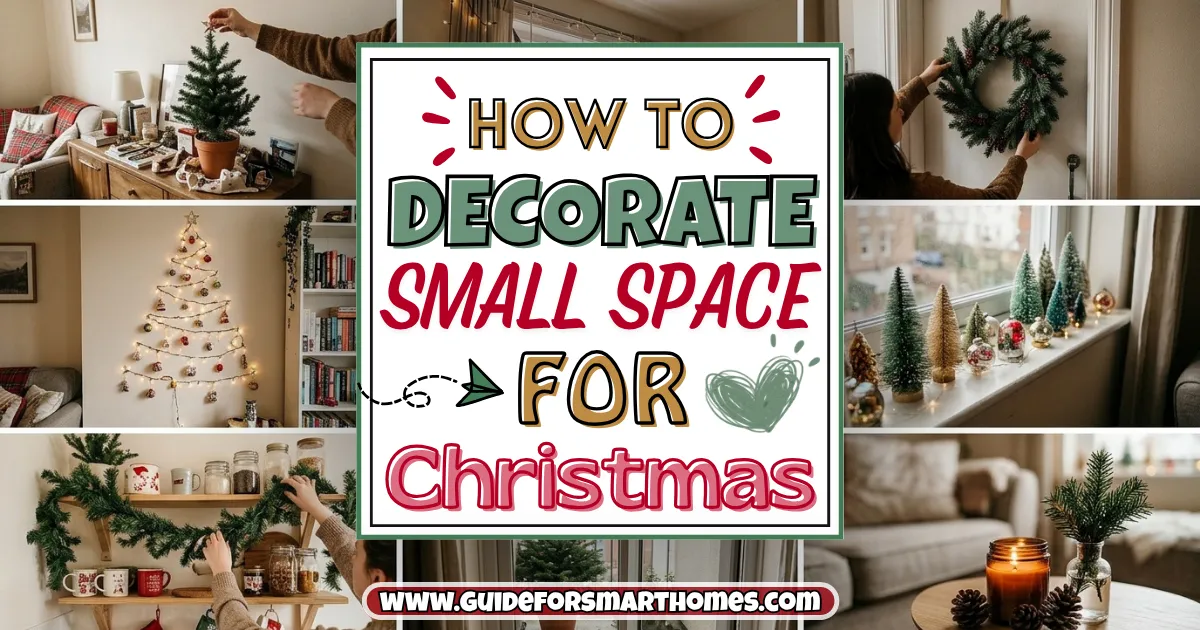
The December I lived in my 410-square-foot studio, I decided I could have it all: a full tree, a garland on every surface, a village on the bookshelf, and a wreath on the door. By the second weekend of December, I had to turn sideways to get from the bed to the bathroom, the tree was blocking the only outlet near the sofa, and a stray strand of tinsel was somehow in my coffee. It looked festive in a photo and felt chaotic in real life.
If you’re figuring out how to decorate a small space for Christmas, that’s the lesson I wish someone had handed me: in a small home, the goal isn’t to decorate everything, it’s to decorate smartly. That means choosing a few strong focal points, using walls and ceilings instead of floors, and keeping the paths you actually walk clear. Done well, a small space can feel more magical than a big one, because the glow of lights and greenery fills the whole room at once. If you want a bigger set of project ideas to pair with this guide, my post on small apartment Christmas decor goes into specific pieces and styles.
Below is the step-by-step process I’d follow, from planning and measuring to lighting, the tree, and taking everything down again. There are four tables, one comparing tree options, one for lighting layers, one for budget tiers, and one for a simple week-by-week schedule, plus a safety section and FAQs. Prices are rough and vary by store, and the safety notes are general, so always follow the instructions that come with your lights and decorations.
Step 1: Walk Your Space and Decide What You Actually Need
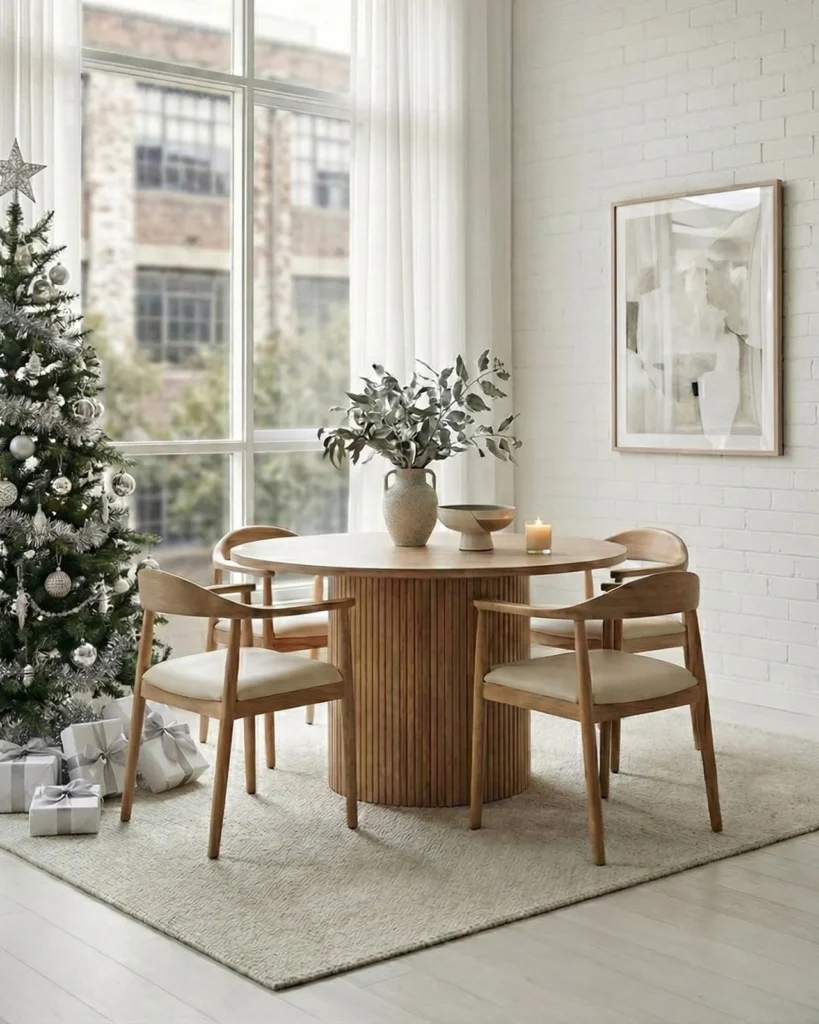
Before you buy a single ornament, walk through your home and look at it with fresh eyes. Where do you spend the most time? Where will guests gather? Which spots always feel empty or neglected? These are your natural focal points, and they’re where decorations will have the most impact.
Write down three to five places you want to decorate, and ignore the rest. A small space looks best with a few well-chosen moments, not decoration in every corner. A tree or tree alternative, a window, an entry, and one surface like a shelf or table are usually plenty.
Pro tip: Take a photo of each room before you start. Looking at a photo makes it much easier to see what’s cluttered and what would benefit from a little sparkle.
Step 2: Measure, and Mark Out Your Walkways

Measure the spot where a tree would go, and the width of the walkways around it. A good rule is to leave about 30 inches clear for the main paths you use every day, and not to block windows, outlets, vents, or doors. Use painter’s tape on the floor to outline a tree’s footprint and live with it for a day.
If it makes you turn sideways or bump into things, it’s too big. Better to find that out now than after the tree is standing and full of ornaments. My small living room ideas post covers how to arrange furniture so there’s still space for a tree, guests, and an actual path to the couch.
Step 3: Pick a Simple Color Palette and a Mood
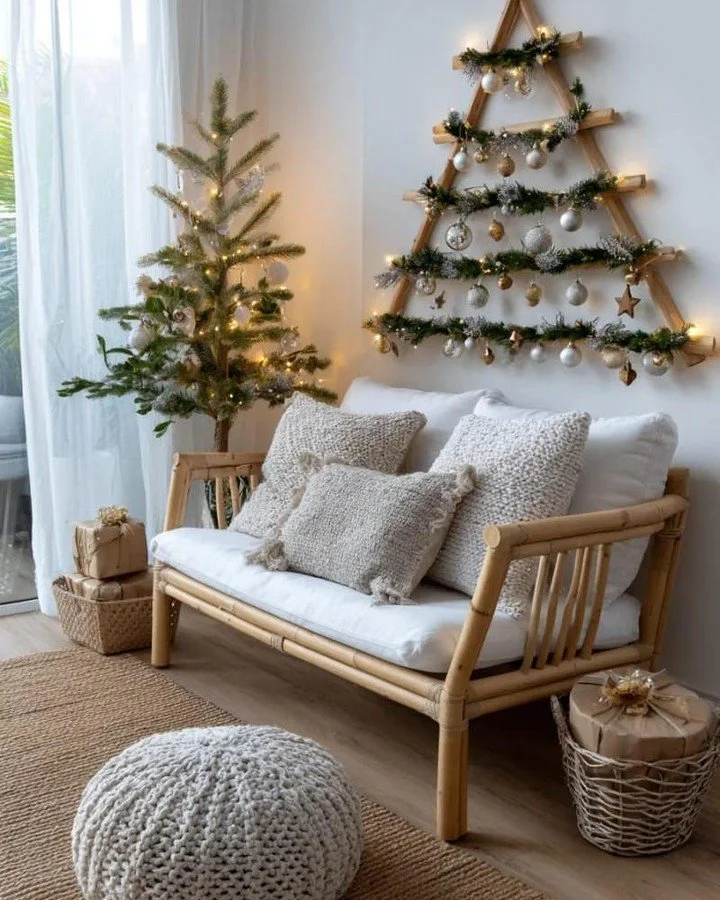
A small room looks calmer with a limited palette. Choose two or three colors, like red, green, and gold, or soft white, silver, and pine, or natural wood, cream, and deep green. Stick with them for the tree, the garland, and the small accents, and the whole space will feel cohesive.
It also helps to pick a mood: cozy and warm, crisp and modern, or woodsy and rustic. Having a mood in mind stops you from buying every cute thing you see, and it makes decisions faster.
Step 4: Choose the Right Tree (or Tree Alternative)
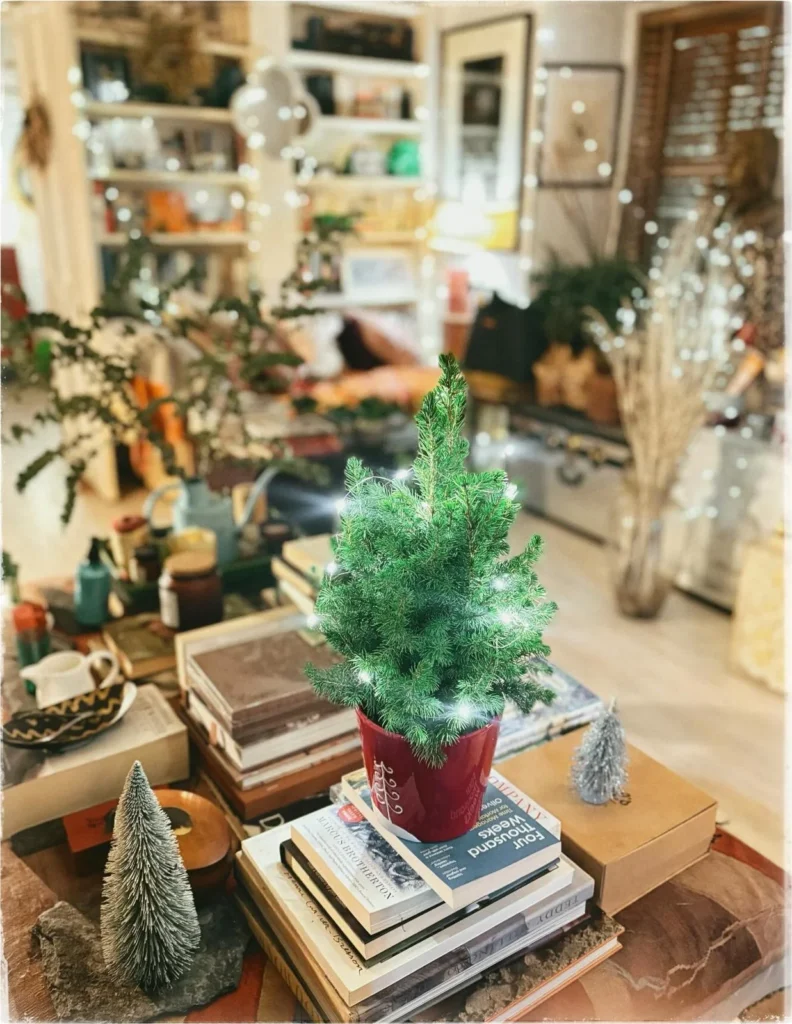
The tree is usually the biggest decision. In a small space, the right choice depends on your floor space, your budget, and how you use the room. A full-size tree might not be realistic, but you have plenty of other options that are just as festive.
Tree Options for Small Spaces Compared
| Option | Footprint | Approx. Cost | Best For | Trade-Off |
|---|---|---|---|---|
| Slim pencil tree (about 6 ft) | 18-24 inches wide | $40-100 | Corners, narrow living rooms | Fewer branches for ornaments |
| Tabletop tree (2-3 ft) | None on the floor | $20-50 | Studios, homes with pets or toddlers | Needs a sturdy surface |
| Wall tree (lights or garland) | None | $8-30 | Very tight layouts | No place for gifts underneath |
| Branch or twig tree in a vase or stand | Small | $10-40 | Modern, minimalist rooms | Fewer ornaments fit |
| Small real tree | 24-30 inches wide | $35-80 | Anyone who wants the scent | Needles, watering, disposal |
My honest pick for most small spaces is a slim tree or a tabletop version, because they give you the classic look with far less hassle. If you have no floor space at all, a wall tree made from lights or garland is surprisingly charming.
Step 5: Use Walls and Vertical Space Before the Floor
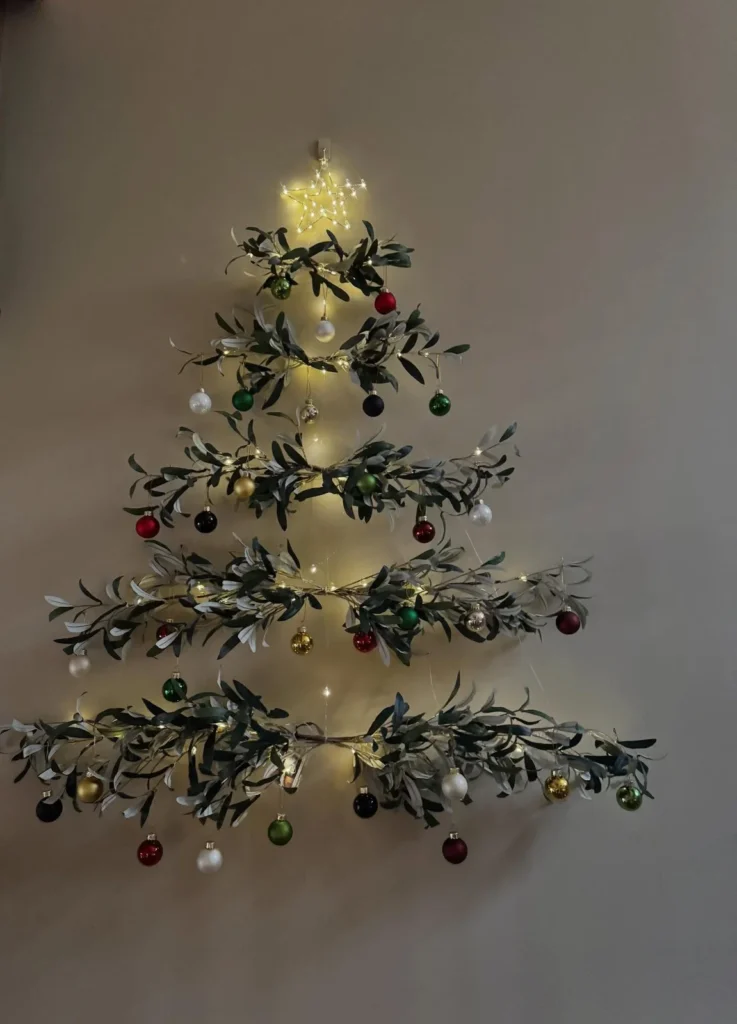
When floor space is limited, the walls, ceiling, and doors are your best friends. Hang garlands above windows and doorways, stockings from a shelf edge or a ladder, wreaths on the inside of cabinet doors, and ornaments from a curtain rod or the ceiling with clear thread. This keeps the floor clear while adding plenty of festive layers.
This is the same principle I use year-round, and my guide to maximizing vertical space in a small apartment covers safe ways to use height without overloading hooks or shelves.
Step 6: Hang Things Without Damaging Your Walls

If you rent, check how you can hang things before you start. Removable hooks, clear mounting tape, over-the-door hooks, tension rods, and window clings can all hold decorations without damage, as long as you stay within the weight ratings. Test adhesives on a hidden spot first, especially on painted or textured walls.
Take decorations down within a few weeks, since adhesives can bond more strongly over time. If you want to avoid costly mistakes with your deposit, my guide on apartment renter mistakes explains which products and methods cause problems and which are safest.
Step 7: Layer the Lighting (This Is the Real Magic)
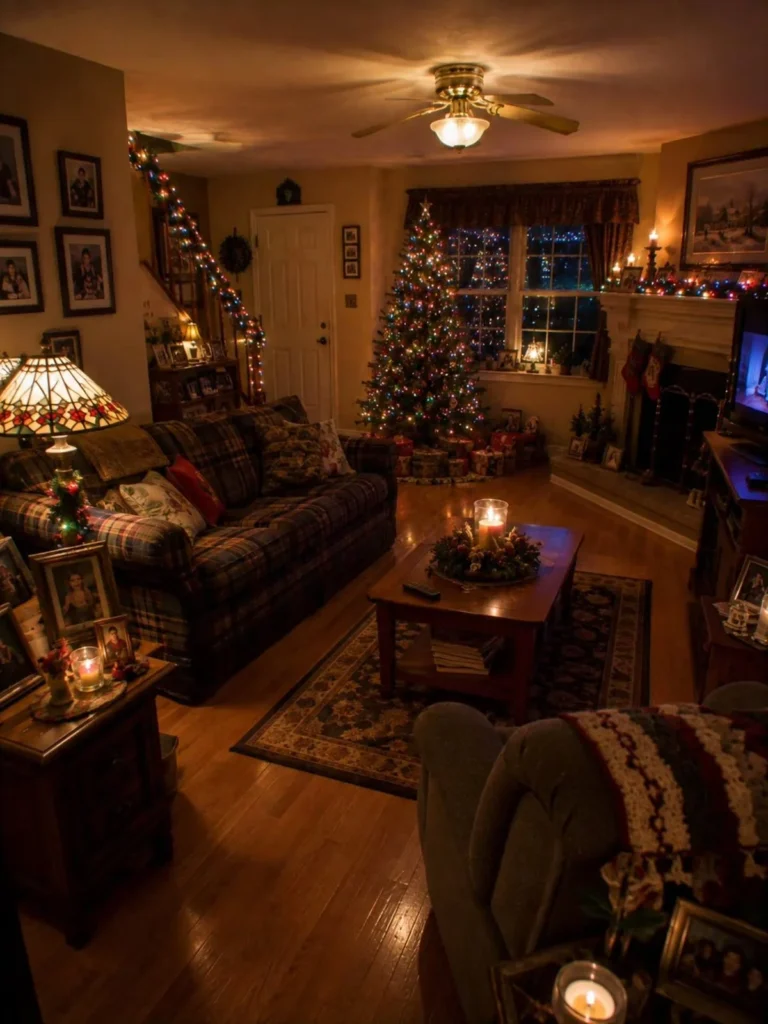
Lighting does more to create a cozy Christmas feeling than any ornament. In a small space, a few layers of warm light make everything glow. Combine string lights on the tree or wall, a lamp or two with warm bulbs, and candles, preferably flameless, in lanterns or on a tray.
Lighting Layers for a Small Space
| Layer | Examples | Approx. Cost | Effect |
|---|---|---|---|
| Tree and garland lights | Warm white string lights | $8-25 per strand | Main sparkle and focal point |
| Window lights | Curtain lights or strands along the frame | $10-25 | Glow seen from inside and out |
| Lamp lighting | Warm bulbs, dimmers, smart plugs | $5-30 | Soft ambient light |
| Flameless candles | Lanterns, trays, mantel | $10-30 | Flickering warmth without risk |
| Accent lights | Battery micro-lights in jars or vases | $8-20 | Small pockets of sparkle |
Choose warm white lights for a classic, cozy look, since multicolor strands can make a small room feel busy. Put everything on one or two timers or smart plugs so your lights turn on and off automatically, which is both convenient and safer.
Step 8: Dress the Tree in a Way That Suits the Space
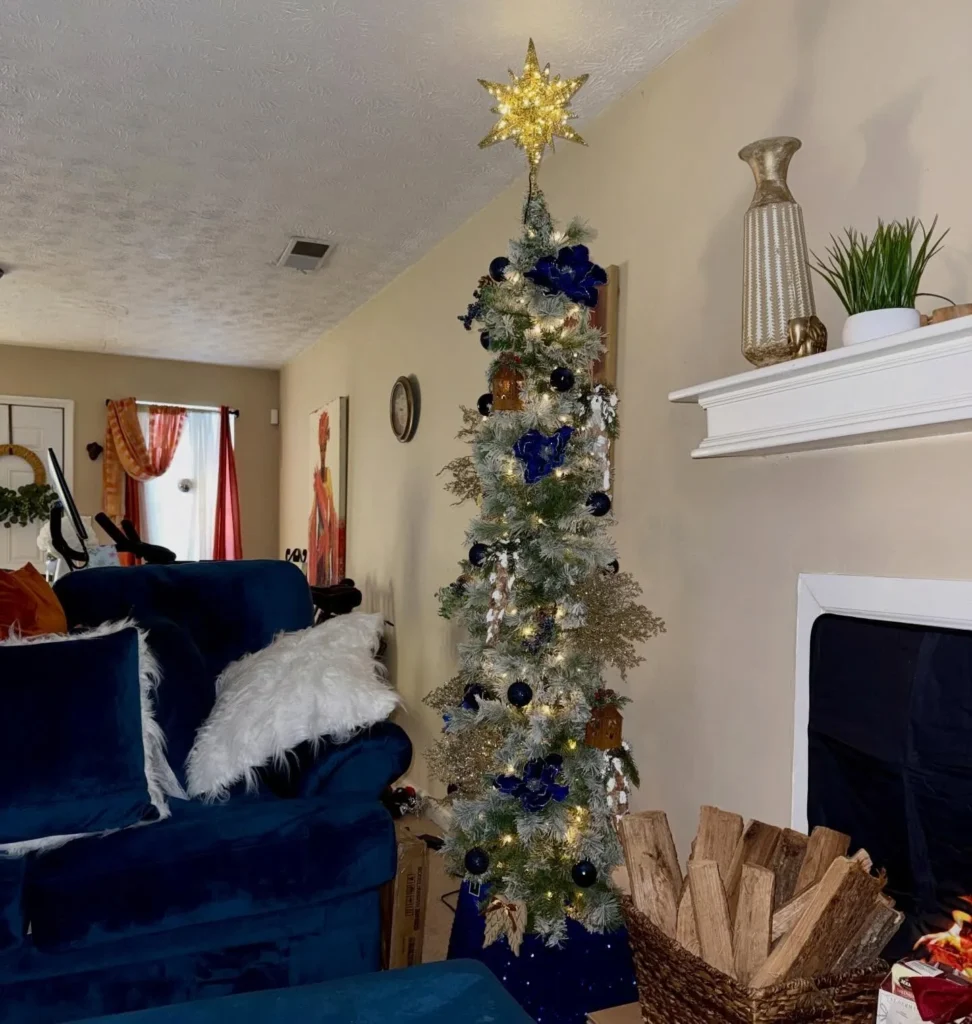
Start with lights, wrapping each branch rather than just the outside, so the glow comes from within. Add large ornaments first, then medium, then small, and finish with a topper and a ribbon or garland. Use a limited palette so even a small tree looks designed.
If your tree is a tabletop or slim version, use fewer, larger ornaments rather than lots of tiny ones, and keep the base tidy with a basket, a tray, or a tree skirt. If you have pets or small children, keep fragile ornaments on higher branches and avoid tinsel and small objects within reach.
Step 9: Decorate Surfaces With a Tray, Not a Spread
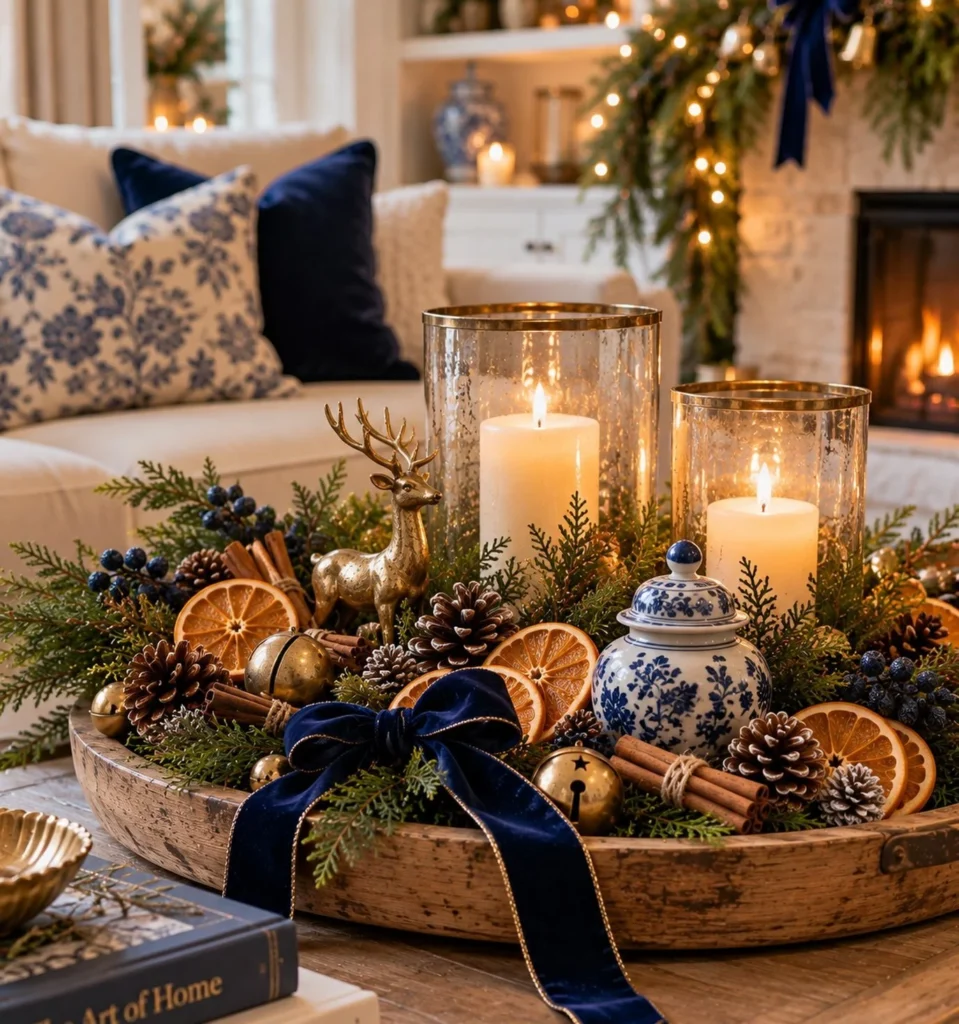
Instead of scattering small items everywhere, group them on one tray or board for each surface. A coffee table tray might hold a few candles, a small bowl of ornaments, and a sprig of greenery. A shelf might hold three or five items at different heights. Grouping makes small decor feel intentional and keeps cleanup simple.
Odd numbers look best, and varying height adds interest. If you have no space for a mantel, a floating shelf or a ladder can serve as one.
Step 10: Make the Most of Windows

Windows are free decor space, and what you put there is seen from both inside and outside. Hang a wreath in the glass with a ribbon, add warm lights along the frame, or put window clings on the glass. Paper snowflakes or simple cutouts cost almost nothing and leave no residue.
Use clear mounting tape or removable hooks on the frame, not directly on the glass, if you’re worried about marks in cold weather.
Step 11: Welcome Guests at the Entry
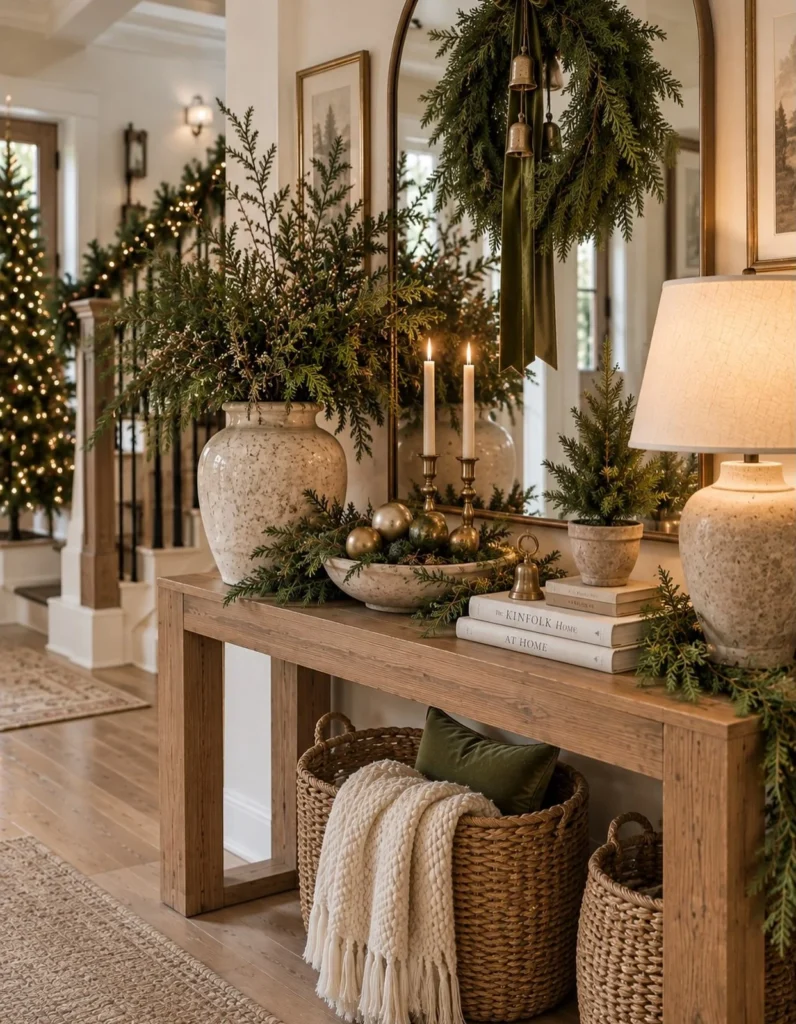
A small wreath on the inside or outside of the door, a festive doormat, and a small bowl or tray with greenery set the tone from the first moment. In a tight entry, wall hooks, a tiny shelf, or a mini garland over the door are enough, and they take no floor space.
It’s one of the highest-impact, lowest-effort spots, and it works even if the rest of your decorating is minimal.
Step 12: Add Scent and Texture for a Cozy Feel
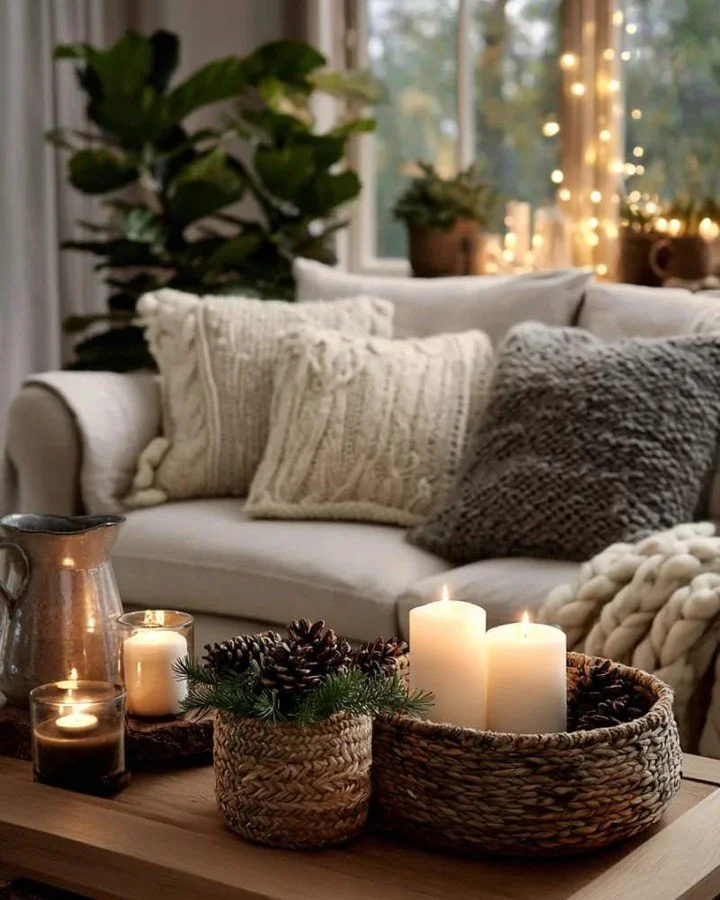
Scent and soft textures are what make a room feel cozy, not just decorated. Simmer a pot of water on the stove with cinnamon sticks, orange peel, and cloves, and keep an eye on the water level. Add a chunky knit throw, a few plaid pillow covers, or a faux fur blanket to the sofa and bed.
Swapping pillow covers costs a few dollars and takes minutes, and it changes the whole feeling of a room. Keep the textiles within your palette, and store them flat afterward.
Step 13: Use Gifts and Wrapping as Decor

Beautifully wrapped presents are decoration in themselves. Use matching paper, ribbon, and simple tags, then stack them in a basket or on a bench instead of leaving them on the floor. In a small space, this keeps gifts accessible and tidy while adding a festive touch.
Wrap early in the month so they can be part of the display, and keep the stack neat. If you don’t have a tree skirt, a basket or a round tray makes a stylish base.
Rough Budget Tiers for Decorating a Small Space
| Tier | Rough Total | What You Get |
|---|---|---|
| Minimal | $30-70 | Tabletop tree or wall tree, a few strands of lights, one wreath, a few ornaments |
| Comfortable | $100-200 | Slim tree, lights, garland, pillow covers, a throw, flameless candles, gift wrap |
| Full | $250-450 | Quality slim tree, layered lighting, garland for several spots, textiles, ornaments, window decor |
These are rough numbers, and you can spend much less by reusing decorations, shopping after-season sales, and making your own ornaments or garlands. Whatever your budget, pick a few good pieces rather than a lot of cheap ones.
Step 14: Keep Safety in Mind With Lights, Trees, and Candles
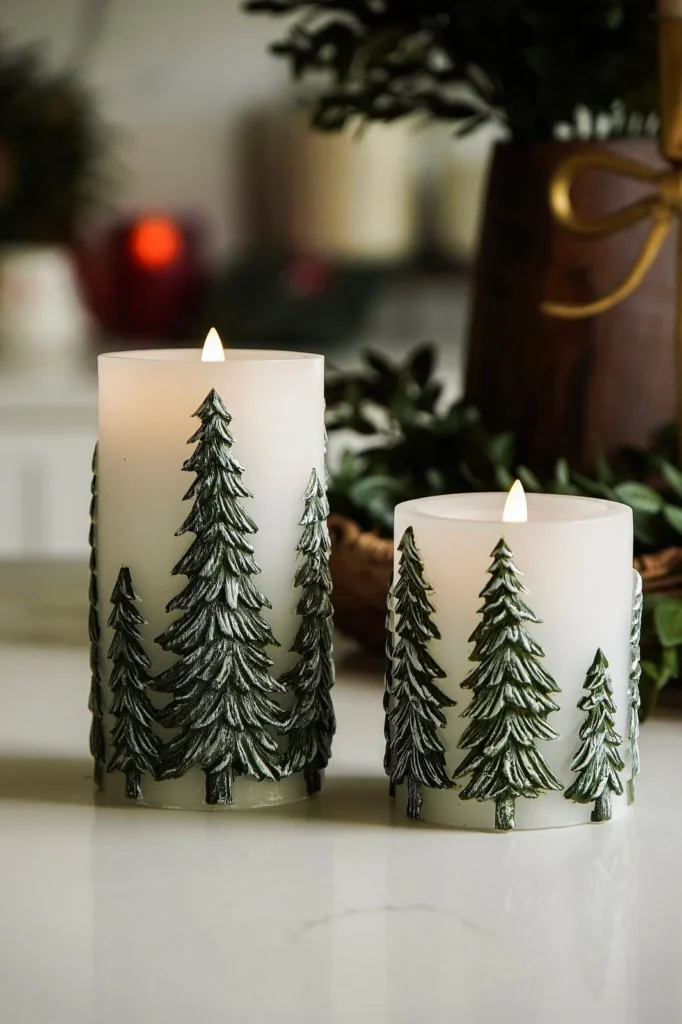
Use lights that are rated for indoor use and in good condition, and replace any with frayed wires or broken sockets. Don’t overload outlets or power strips, and turn lights off when you leave or go to bed. Keep real trees watered and away from heat sources and vents, and consider a stable stand or an anchor so the tree can’t tip.
Use flameless candles whenever you can, and never leave real candles unattended. If you have pets or small children, keep ornaments, tinsel, small batteries, and cords out of reach, since these can be hazardous if swallowed or chewed. Follow the manufacturer’s instructions on every product.
Step 15: Plan the Takedown and Storage Before You Start
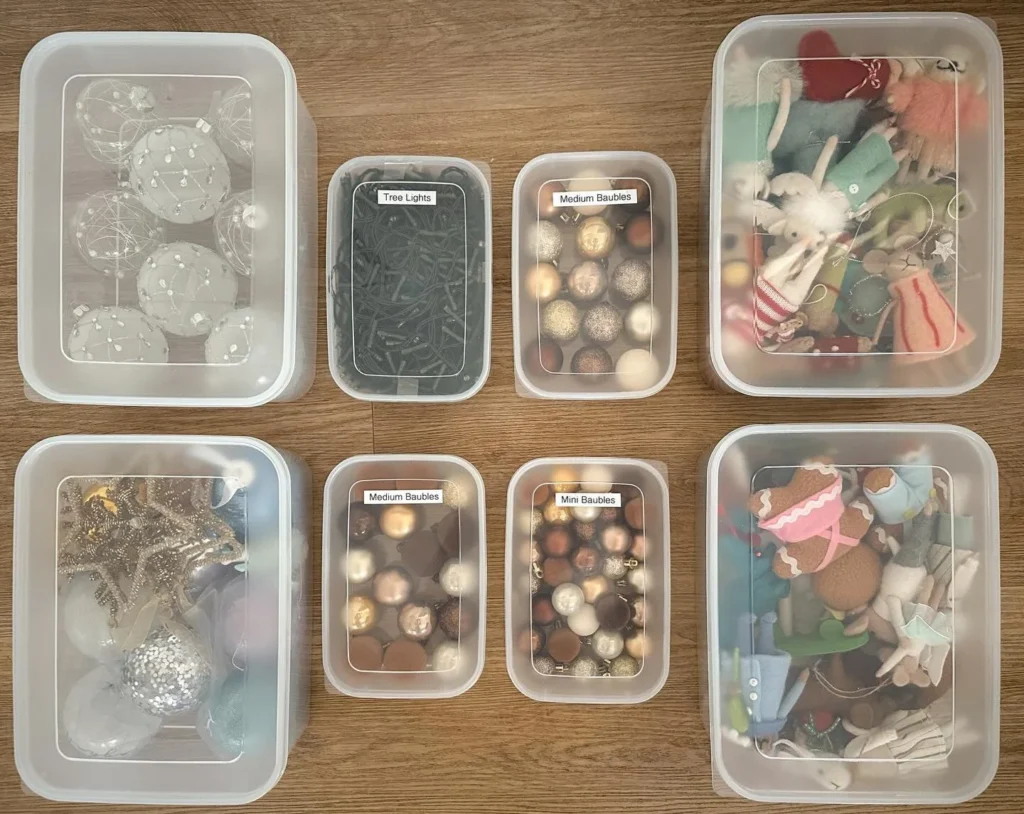
The best time to think about storage is before you decorate. Decide where each box will go afterward, and choose decorations that fit in the space you have. Label boxes by category, wrap fragile ornaments in tissue, and keep the lights wrapped around a piece of cardboard so they don’t tangle.
It’s also the moment to decide what you actually enjoyed, and donate what you didn’t. For ideas on packing and storing everything so it comes out in good shape next year, my guide to holiday decor storage ideas shows how to store decorations in small spaces.
A Simple Week-by-Week Decorating Schedule
| When | What to Do | Time |
|---|---|---|
| A week or two before | Plan, measure, buy only what you need, test lights | 1-2 hours |
| Decorating weekend | Set up the tree, lights, and main focal points | 2-4 hours |
| The following few days | Add garland, textiles, window decor, and surface trays | 1-2 hours |
| Throughout the season | Check lights, water a real tree, keep walkways clear | 5 minutes a day |
| Takedown | Pack, label, and store, and note what to buy or skip next year | 2-3 hours |
Mistakes That Make Small Spaces Feel Crowded at Christmas
The biggest mistake is buying a tree that’s too big, which blocks paths and makes the whole room feel cramped. The second is decorating every surface, which turns a cozy space into clutter. The third is ignoring outlets and cords, and the fourth is skipping a storage plan, so the decorations become a problem in January.
Another trap is mixing too many styles, so nothing looks cohesive. Pick a palette, choose your focal points, and edit as you go. If you’re not sure, remove one item from each surface.
If I Were Decorating My Tiny Studio Today
I’d buy a slim prelit tree, hang warm string lights along the window, and put a wreath on the door. I’d add a throw, two plaid pillow covers, and a tray with flameless candles on the coffee table, and call it done. That’s maybe $120, and it would take an afternoon. I’d skip the village, the tinsel, and the twelve boxes of ornaments I never used, and I’d actually be able to walk to the bathroom.
Knowing how to decorate a small space for Christmas really comes down to restraint and good lighting. Choose a few focal points, use the walls, keep your paths clear, and let warm light do the heavy lifting. A small, thoughtful display almost always feels cozier than a crowded one, and it’s far easier to take down when the season ends.
FAQs
How do I decorate a very small space for Christmas?
Choose a few focal points, such as a slim or tabletop tree, a window, and an entry. Use walls and ceilings for garlands and ornaments, layer warm lighting, and keep walkways clear.
What is the best Christmas tree for a small apartment?
A slim pencil tree or a tabletop tree usually works best because of the small footprint. If you have no floor space, a wall tree made from lights or garland is a good alternative.
How can I decorate for Christmas in a rental without damaging walls?
Use removable hooks, clear mounting tape, tension rods, over-the-door hooks, and window clings. Check weight ratings, test adhesives in a hidden spot, and take everything down within a few weeks.
How much does it cost to decorate a small space for Christmas?
A minimal setup can cost $30-70, while a more complete one with a slim tree, lights, garland, and textiles often costs $100-200. Reusing decorations and shopping after-season sales lowers the cost.
How do I keep Christmas decorations safe around pets and kids?
Keep fragile ornaments high, avoid tinsel and small objects within reach, secure the tree, hide cords, and use flameless candles. Always follow product instructions.
How do I store Christmas decorations in a small home?
Plan storage before you decorate, label boxes by category, wrap fragile items, and use flat bins under a bed or on a closet shelf. Keep lights wrapped around cardboard to prevent tangles.









Leave a Reply