
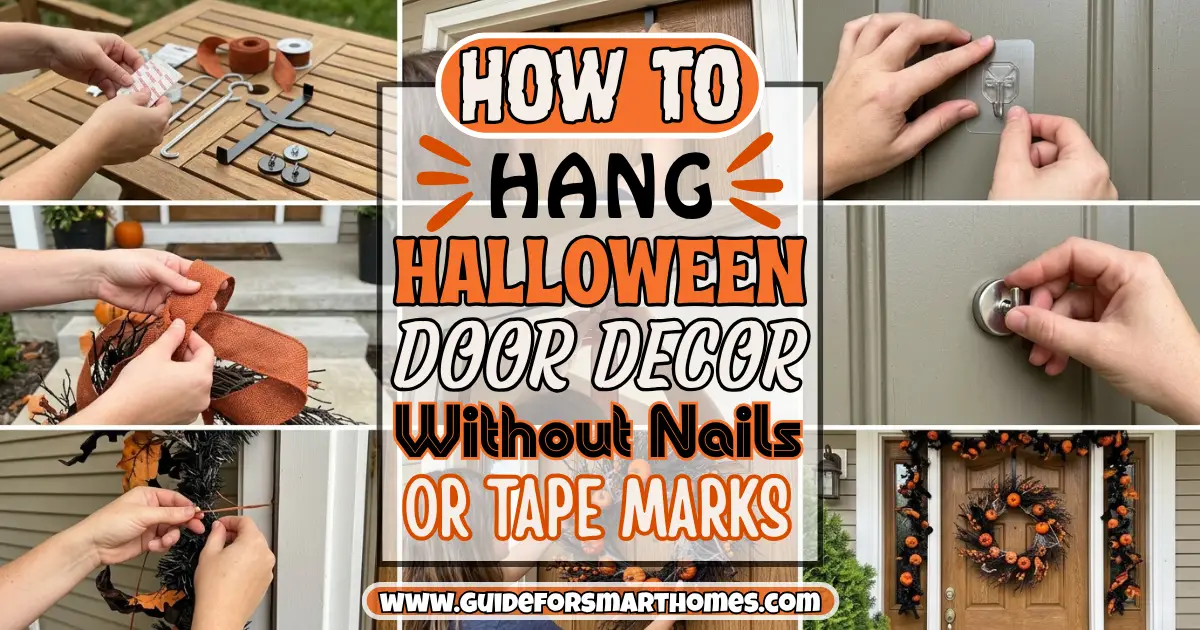
My landlord does a walkthrough every single fall before winter maintenance starts, and the first year I lived here I had exactly one nail hole above the door from a wreath hanger I bought without reading the box. It was a tiny hole. It still got flagged. That’s the year I started actually researching how to hang Halloween door decor without nails or tape marks instead of grabbing whatever hook looked sturdy at the store.
Since then I’ve tested basically every no-damage hanging method that exists, on a hollow-core apartment door, a glossy painted house door, and a glass storm door, and they don’t all work the same way.
What holds a lightweight paper bat will absolutely not hold a wreath with a wood base, and what’s safe on a flat painted door can still leave a mark on a glossy finish if you use it wrong. If you haven’t settled on your actual Halloween door decorations yet, it’s worth picking those first, since the decor’s weight decides which hanging method you need.
I’ll go through nine methods below, roughly in order of how much weight they can hold, with real failure stories from testing them so you don’t have to find out the hard way. There’s a comparison table in the middle for matching method to decor type, and FAQs at the end for the questions I get asked most.
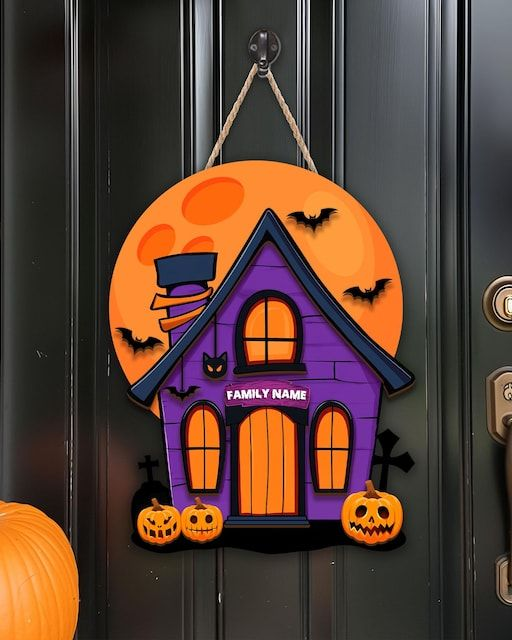
Why Regular Nails, Screws, and Standard Tape Are Off the Table
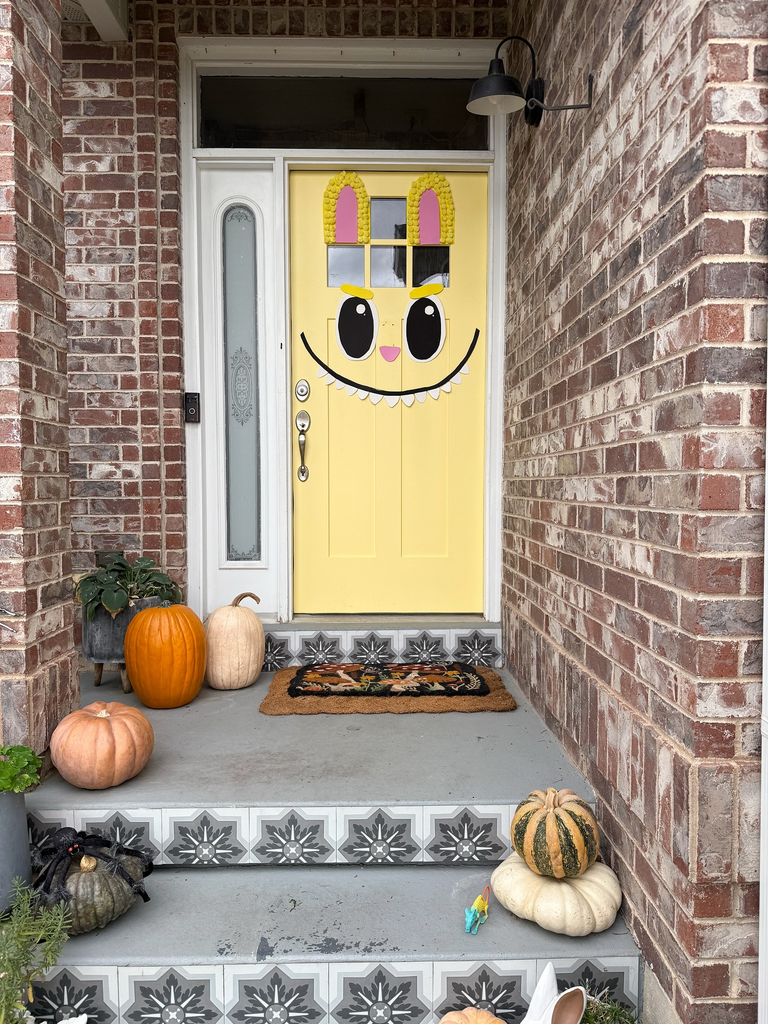
Nails and screws leave permanent holes, obviously, but the tape part trips people up more. Regular packing tape, duct tape, and even some “gentle” washi tapes bond harder the longer they sit and the warmer the surface gets, which matters a lot for a decoration that’s up for three or four weeks in whatever October weather you get.
I pulled a strip of washi tape off a sunny south-facing door last year after about ten days and it took a thin layer of paint with it.
Pro tip: If you’re ever unsure whether a surface is painted, stained, or has a factory finish, treat it like paint. All three can lift under enough adhesive and heat.
Over-the-Door Hooks (The First Thing I’d Reach For)
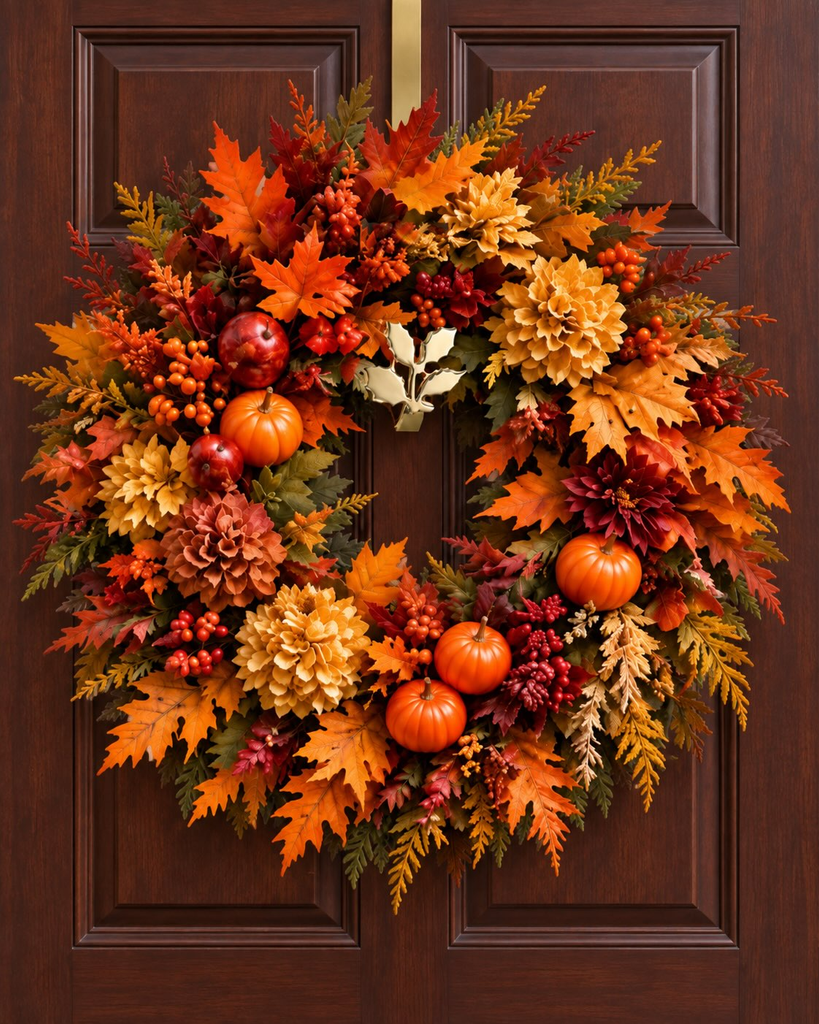
Over-the-door hooks are metal or plastic hooks shaped to hang over the top edge of the door, with the hook hanging down on your side and a small flat bracket on the other.
They typically hold 5 to 20 pounds depending on the model, which covers almost every wreath and most lightweight door covers. Cost is usually $6-12 for a single hook.
The only real limitation is that they only work on the top edge, so anything you want centered lower on the door, like a mummy wrap or a full-length cover, needs a different method alongside this one. I use one of these for my wreath every single year and it’s never budged, even in wind.
Removable Poster Putty for Light, Flat Items
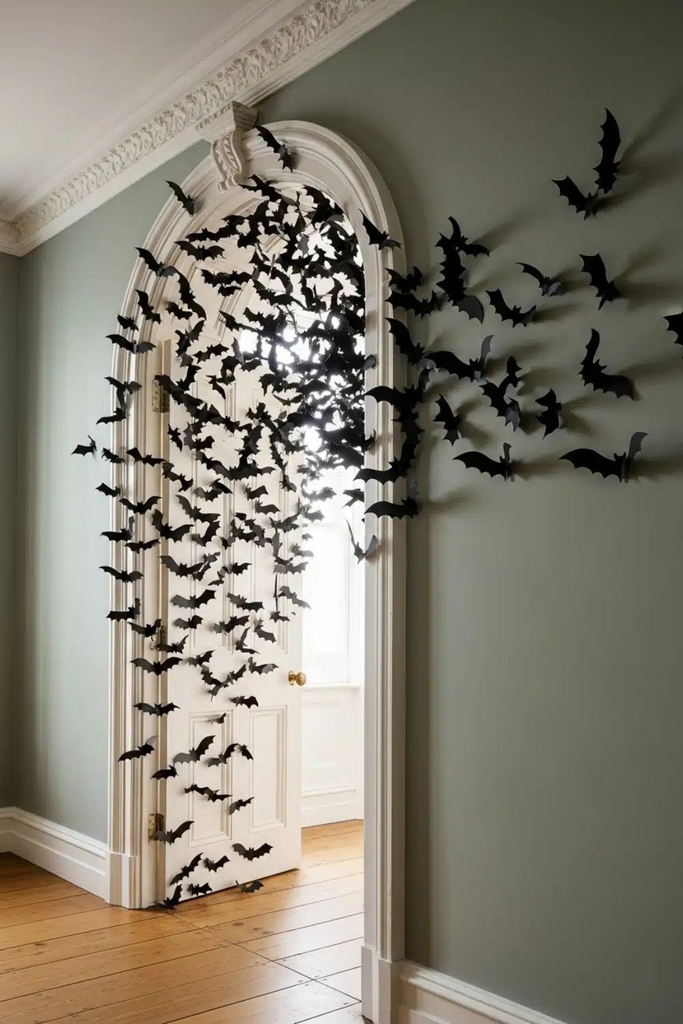
Poster putty is the small, slightly tacky putty that comes in a tin or strip, originally meant for hanging posters without tape.
It’s perfect for paper bats, cardstock silhouettes, and anything under about half a pound, and it peels off clean on most painted surfaces if you remove it within a few weeks. A tin runs about $3-5 and lasts for several Halloweens.
Roll it into a small ball between your fingers before applying, rather than using it straight from the tin in a big clump. A bigger ball holds more weight, but it also leaves a bigger oily mark if it sits too long, so match the amount to how light the item actually is.
Command-Style Adhesive Hooks and Strips Rated for Outdoor Use
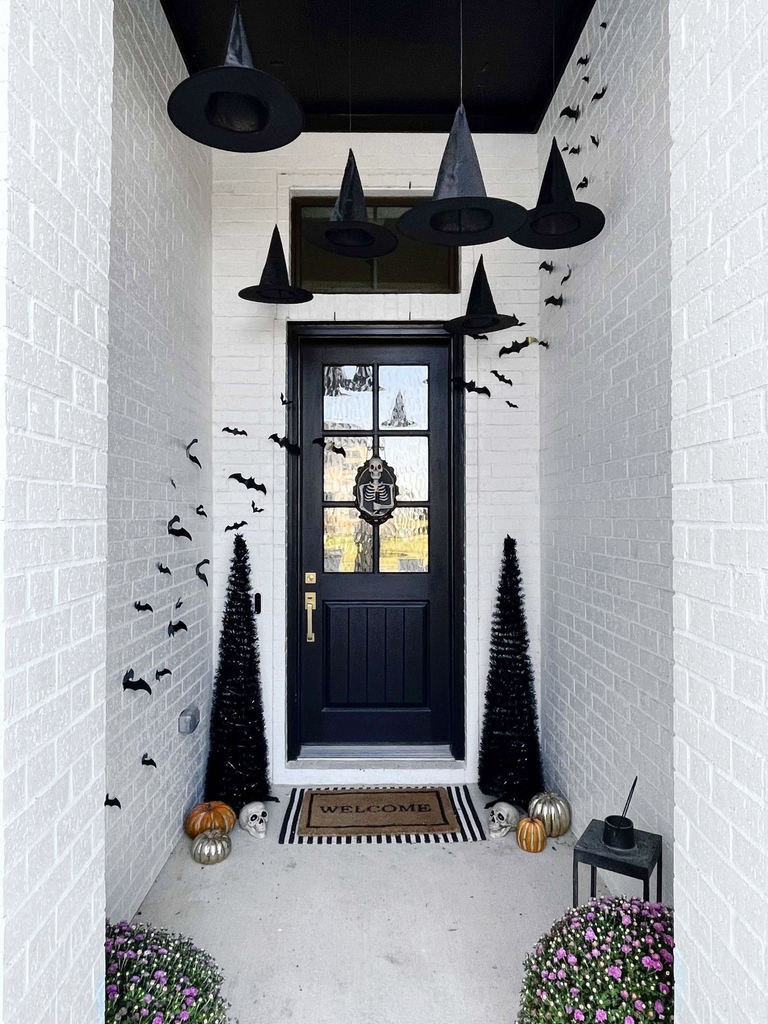
Adhesive strip hooks have come a long way, and the outdoor-rated versions are built to handle temperature swings and some moisture, unlike the indoor ones that can fail in the cold.
Check the weight rating on the package and round down — a hook rated for 5 pounds should really be holding something closer to 3 or 4 for a multi-week outdoor stretch.
The removal technique matters more than people expect: pull the tab straight down and slow, not out and fast, or you risk taking finish with it.
I tested one on a glossy door panel last year, followed the slow-pull method exactly, and it came off with zero mark. A friend yanked hers off in a hurry and left a faint outline that needed touch-up paint.
Tension Rods Across the Door Frame
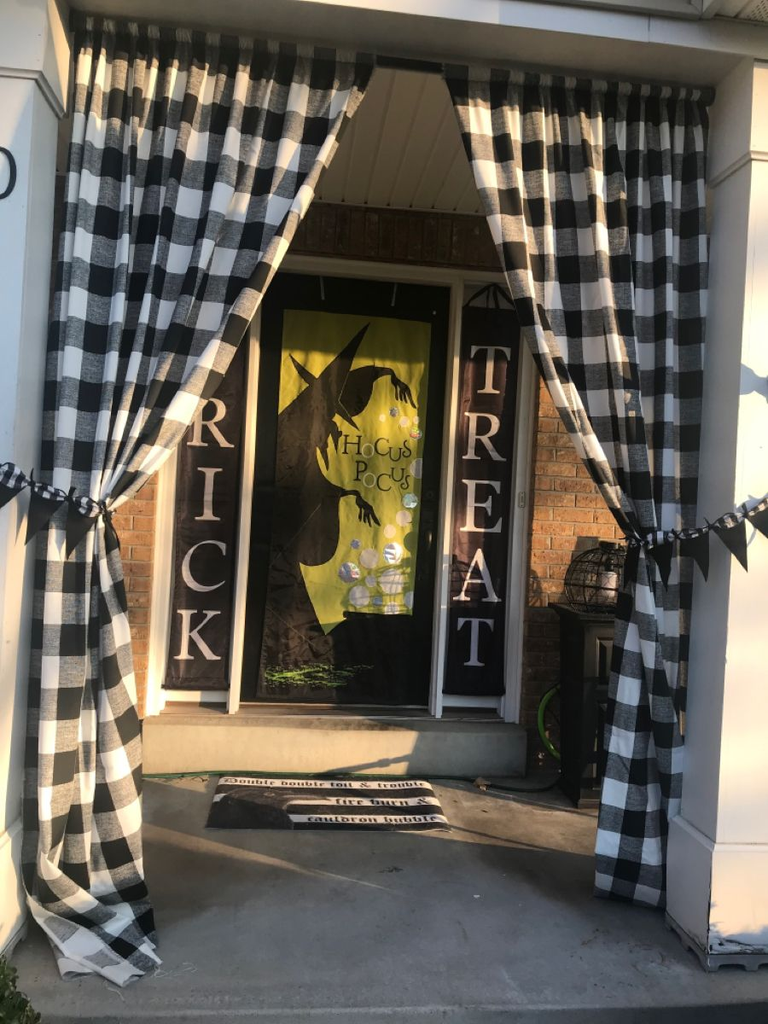
A tension rod, the kind usually sold for closets or curtains, wedges inside your door frame using spring pressure and needs no adhesive or hardware at all.
It’s the method I trust most for anything heavier, like a full-length door cover or a hanging mummy wrap, because you can drape or clip items over the rod itself.
Measure your frame width before buying, since most tension rods extend within a range (commonly around 28 to 48 inches) rather than fitting any size.
This is also the exact trick I use for narrow spaces in general — my Halloween hallway ideas post leans on the same tension-rod approach for a narrow hallway door at the end of the hall.
Suction Cups for Glass Panels and Storm Doors
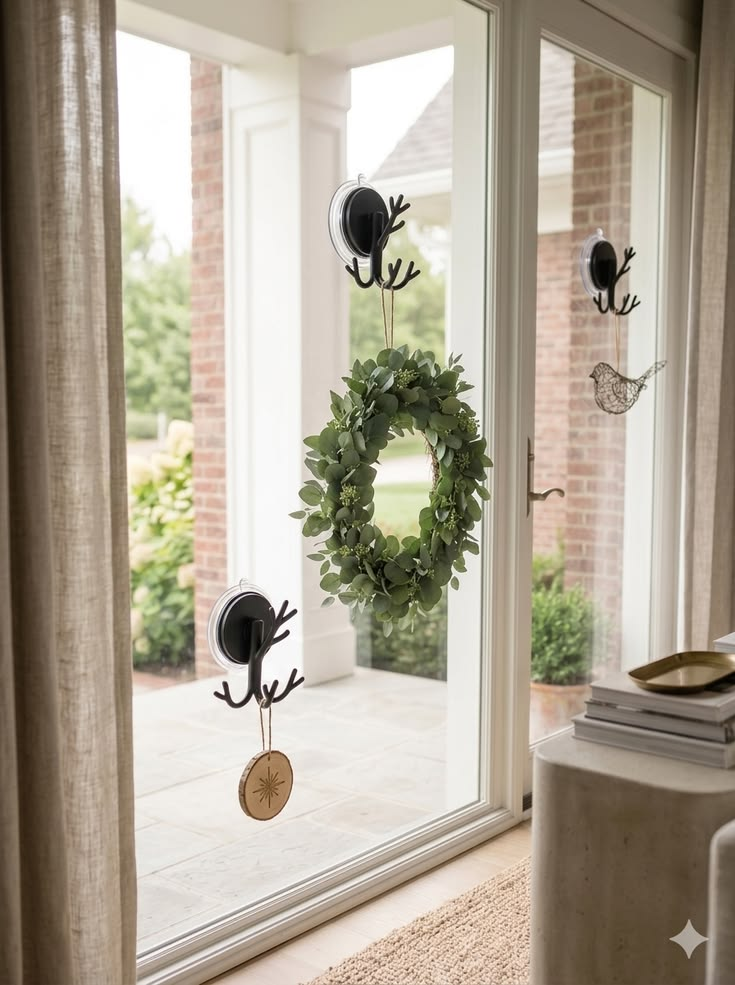
If your front door has a glass panel or you’ve got a storm door, suction cups are the obvious no-damage option, but cheap ones fail more than people expect, especially in cold weather when the rubber stiffens.
Look for ones rated specifically for outdoor or cold-weather use if your storm door gets direct exposure.
Pro tip: Clean the glass with rubbing alcohol before applying suction cups. Any film from regular glass cleaner or dust cuts the grip significantly, and that’s the actual reason most suction cup decorations fall off within a week, not a defect in the cup itself.
Magnetic Hooks for Metal Doors
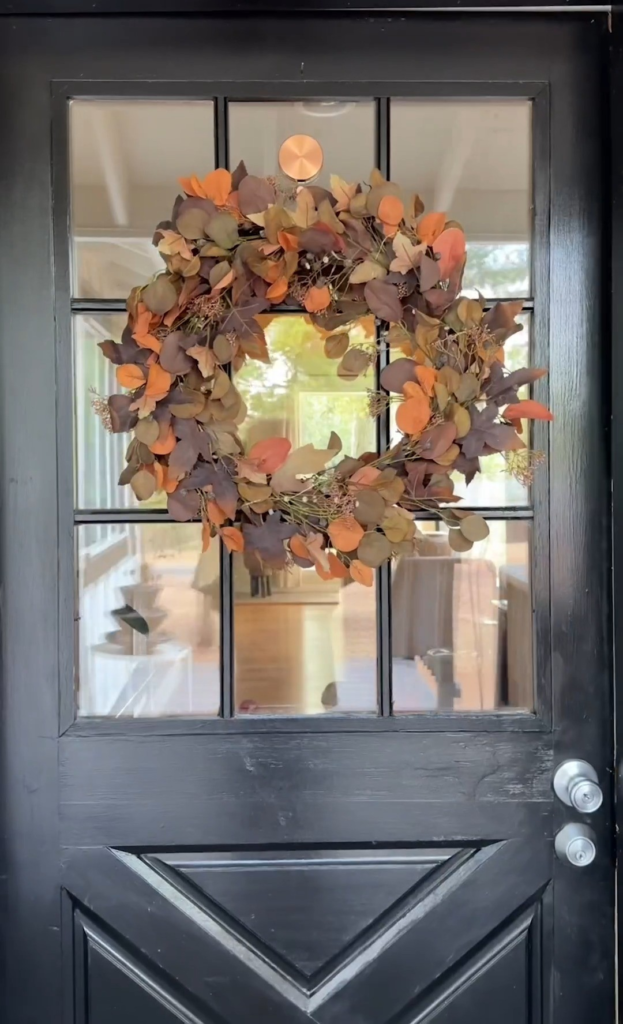
A lot of house front doors, especially newer steel ones, are actually magnetic even though they’re painted to look like wood. A quick test: hold a refrigerator magnet to the door.
If it sticks, magnetic hooks are an option, and they’re genuinely the easiest method on this whole list since there’s no adhesive, no hardware, and no weight rating math — you just reposition as needed.
Magnetic hooks typically hold 5 to 15 pounds and cost about $8-15 for a strong one. They won’t work on wood, fiberglass, or aluminum doors, so test first rather than assuming.
Ribbon, Twine, or Wire Looped Around the Door Knob or Hinge Hardware
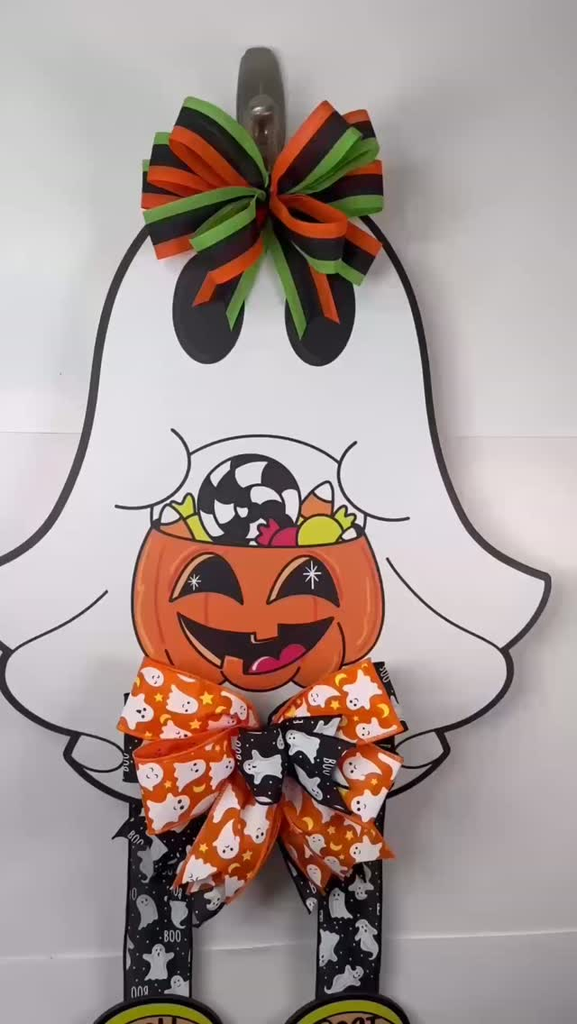
This is the oldest trick and it’s still useful for small, lightweight items: loop ribbon or thin wire around the door knob, the hinge pin area, or an existing handle, and let the decoration hang from that.
It costs essentially nothing and works on literally any door material, which makes it a good backup when none of the other methods fit your specific door.
It only works well for door-knob height placement, and it can interfere with actually using the handle if you’re not careful about where you tie it, so this is best for secondary, smaller accents rather than your main decoration.
Testing Before You Commit to Anything
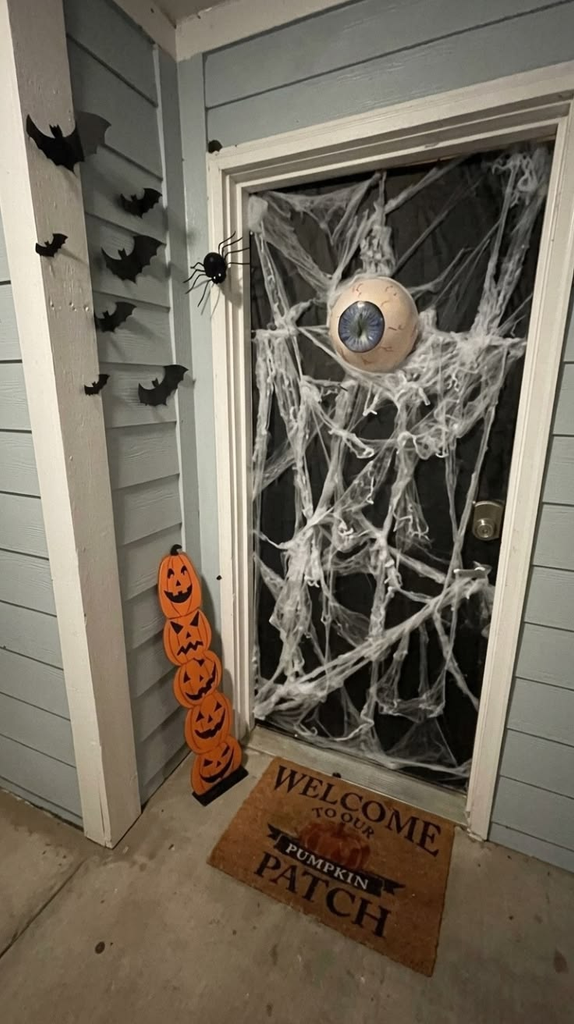
Whatever method you pick, test it on a small, hidden section of the door first and leave it for a full 24 hours before hanging your actual decoration.
I know this sounds like extra work when you just want to get decorating, but it’s the single step that would have saved me that paint flake from the washi tape incident.
Hidden test spots: the bottom edge near the hinge, or the inside edge that faces the frame when the door is open.
Which Method Fits Which Type of Door Decor
| Decor Type | Best Method | Approx. Weight | Cost |
|---|---|---|---|
| Wreath | Over-the-door hook | 1-5 lbs | $6-12 |
| Paper bats, silhouettes | Poster putty | Under 0.5 lb | $3-5 |
| Full door cover (fabric) | Tension rod or over-the-door hook | 1-3 lbs | $8-15 |
| Full door cover (foam board) | Tension rod, clipped on | 2-4 lbs | $8-15 |
| Window clings, silhouettes on glass | Suction cups or static cling (no adhesive needed) | Under 1 lb | $5-10 |
| String lights along frame | Outdoor-rated adhesive clips | Light, distributed | $10-18 |
| Small accent (mini sign, charm) | Ribbon or wire on existing hardware | Under 0.5 lb | Free-$5 |
How to Remove Everything Without Leaving a Mark, Once Halloween’s Over
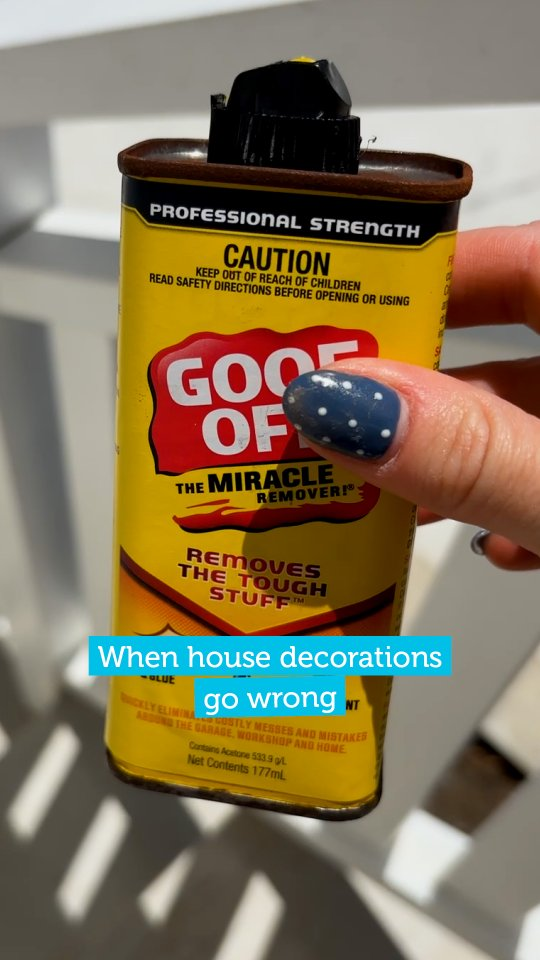
Take decorations down within two to three weeks of putting them up, since that’s roughly where adhesive-based methods start bonding harder and getting riskier to remove.
Pull adhesive strips slow and straight down rather than out, peel putty off and roll any residue away with a fresh bit of putty rather than scraping it, and wipe suction cup spots and magnetic hook areas with a soft cloth just to be thorough, even though they shouldn’t leave residue at all.
If you do get a faint mark anywhere, a little rubbing alcohol on a soft cloth handles most light residue on painted surfaces, though it’s worth testing that on a hidden spot too before going anywhere visible.
If I Were Setting Up My Door From Scratch This Year

I’d use an over-the-door hook for the wreath, poster putty for any paper accents, and a tension rod if I wanted a full cover too — that combination covers basically everything without a single nail, screw, or risky adhesive involved.
It’s also the combination that comes down fastest when November rolls around, which matters more than it sounds like it should when you’ve got a dozen other things to switch back to normal.
The right hanging method isn’t about finding one perfect trick, it’s about matching the method to what you’re actually hanging. For more on dressing up the rest of the entrance once your door is sorted, my Halloween entryway decor and Halloween door ideas posts round things out.
FAQs
What’s the best way to hang a wreath without nails?
An over-the-door hook is the easiest option for most wreaths, since it holds real weight and needs no adhesive or hardware at all. Just check the hook’s weight rating against your wreath, especially if it has a wood or metal base.
Do Command strips damage painted doors?
They’re designed not to when used as directed, but the removal technique matters: pull the tab straight down slowly rather than yanking it off. Glossy finishes and doors with heavy sun exposure carry more risk, so test on a hidden spot first.
Always check the manufacturer’s guidance for your specific surface type before relying on any adhesive product, since ratings and recommendations vary by brand.
How do I hang Halloween decor on a metal door?
Test with a refrigerator magnet first. If it sticks, magnetic hooks are the simplest option, since there’s no adhesive or hardware involved at all and you can reposition freely.
Can I hang decorations on a glass storm door without damage?
Suction cups rated for outdoor or cold-weather use work well on clean glass. Clean the surface with rubbing alcohol first, since dust or cleaner residue is the main reason suction cups fail early.
How long can adhesive hooks stay up before they risk damaging the door?
Two to three weeks is a reasonable window for most adhesive-based methods. Beyond that, especially with sun exposure, the adhesive bonds harder and removal gets riskier.
What’s the cheapest no-damage hanging method?
Ribbon, twine, or wire looped around an existing door knob or hinge area costs next to nothing and works on any door material, though it’s best for small, lightweight accents rather than a full wreath or cover.




Leave a Reply